Sean Murray is the President and Chief Editor of deBanked and the founder of the Broker Fair Conference. Connect with me on LinkedIn or follow me on twitter. You can view all future deBanked events here.
Articles by Sean Murray

Confession of Judgment Bill Still Awaits Governor’s Signature
July 9, 2019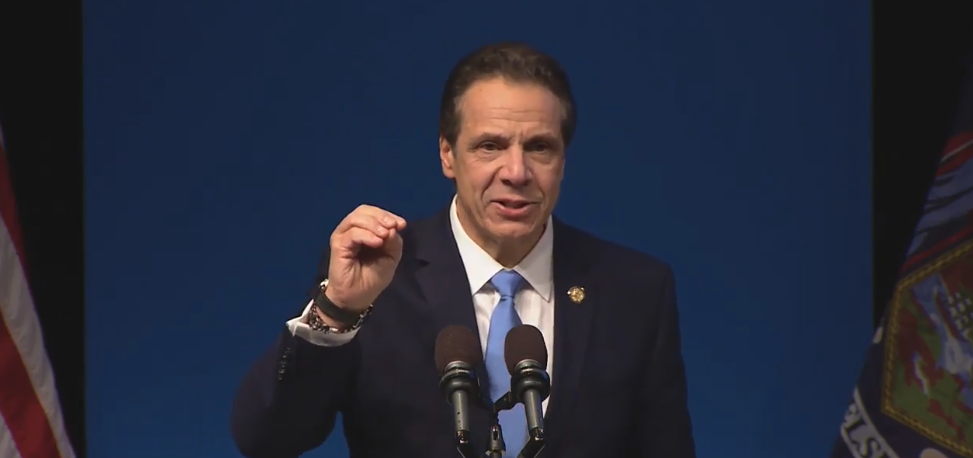 New York State Governor Andrew Cuomo will have only ten days to sign S6395, the bill that prohibits companies from entering Confessions of Judgment in New York against non-New York State debtors, once its delivered to him. Only two possible contingencies could prevent that from happening:
(1) An official veto
(2) a pocket veto
Neither is expected to take place. Reining in the use of COJs was an official part of the Governor’s 2019 justice agenda.
The law only requires that a debtor reside or have a place of business in a New York county and that the judgment only be filed and entered in that county. Whether the filing party is located in New York or Florida or Alaska makes no difference. For a personalized legal analysis, contact an attorney.
The law also only affects a narrow process, the entering of a COJ in New York. It does not prevent parties from filing lawsuits in New York.
As the bill requires the Governor’s signature to become law, the usage of COJs in New York has dwindled but has not disappeared. New York State court records examined by deBanked demonstrate that some companies are continuing to file COJs in New York against out-of-state debtors and that county clerks are continuing to honor them. However, a handful of debtors appear to be challenging previously entered COJs on the basis of S6395’s passage through the state legislature. It remains to be seen how fruitful such defenses might be.
In recent weeks, a number of companies in the small business finance industry have publicly announced that COJs will no longer be required going forward.
You can follow the bill’s path to the Governor’s office here.
This article has been updated to reflect that the deadline rules first require delivery to the Governor
Federal Lawmakers Not Convinced NY Confession of Judgment Ban is Enough
June 25, 2019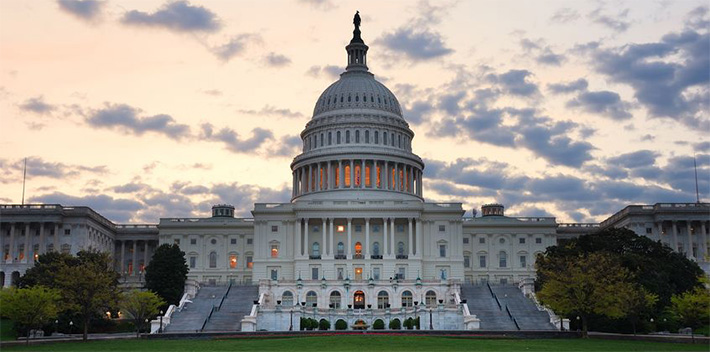
The recent New York State law that effectively ended the era of Confessions of Judgment in the small business finance industry is apparently not enough to satiate the outrage of some federal lawmakers. This morning, Rep. Nydia M. Velázquez (D-NY) and Rep. Roger Marshall (R-KS) introduced the “Small Business Lending Fairness Act” that would outlaw confessions of judgment in small business financing transactions nationwide.
Given the impact the New York law is expected to have, the effort may appear to be duplicative. But not quite. The New York law prohibits COJs from being filed in New York against out-of-state debtors. As New York had the friendliest commercial COJ process, financial companies were using New York courts to file COJs against debtors in all 50 states whether there was a nexus to New York or not. By requiring the debtor be in New York, as the new law requires, the utility of COJs in the New York courts for the other 49 states has been eliminated.
However…
That doesn’t mean that courts in other states don’t allow commercial COJs to be filed in their home states. Some do, such as California and Pennsylvania, for example, but the process isn’t as friendly or as easy as New York’s. (See an analysis of California’s and Pennsylvania’s COJ process here)

That is where the proposed federal law would have the most reach and why a federal bill is not merely an academic exercise at this stage.
The federal bill’s language is not new. It mirrors a bill introduced by Senators Sherrod Brown and Marco Rubio in December. No movement has been made on it since but they reportedly intend to move forward with it.
Velázquez intends to keep the momentum going.
“I was appalled to find out that New York State has become an epicenter for dishonest lenders seeking to swindle small businesses around the country,” Velázquez said. “That’s why I’m proud to introduce this legislation and will be leading a hearing this week to further expose these abusive practices.”
The hearing she refers to is titled, “Crushed by Confessions of Judgement: The Small Business Story” and it’s being held tomorrow at 11:30am on Capitol Hill. It will be livestreamed here.
An alleged victim of predatory lending is among the guest speakers. Mr. Jerry Bush, who was featured in Bloomberg’s controversial series on merchant cash advances, is on the witness list. Bush reportedly lost his business after a series of unfortunate business dealings. Nobody from the small business finance industry is currently appearing to offer any opposing testimony on the matter of COJs. If that changes, deBanked will provide an update.
The hearing will be livestreamed on the deBanked homepage.
Last Chance for VIP Rate on deBanked CONNECT Toronto Room Block
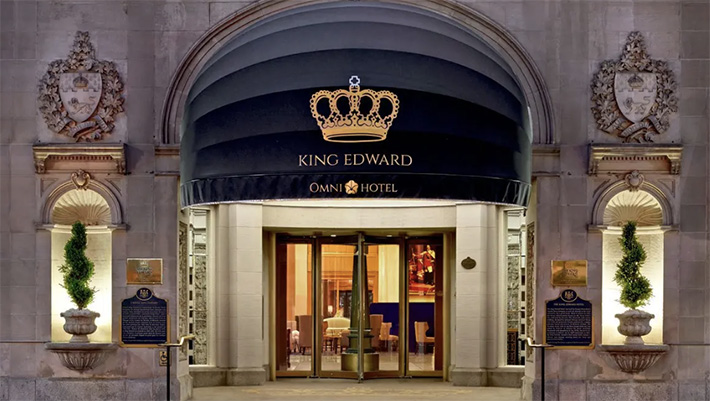
June 24, 2019deBanked CONNECT’s discounted room rate at the Omni King Edward Hotel in Toronto ends today. Don’t wait until the rate goes up! Book your room now for deBanked’s first ever event in Canada!
Omni Hotels Reservations
Business Hours: 8am to 1am EST
Telephone: 1-800-THE-OMNI (1- 800-843-6664)
Group Name: deBanked CONNECT Toronto

It’s Official, The Confession of Judgment Era is Over
June 19, 2019 The New York State legislature passed a bill (S06395) late Thursday night that effectively eliminates Confessions of Judgment (COJ) in the small business finance industry.
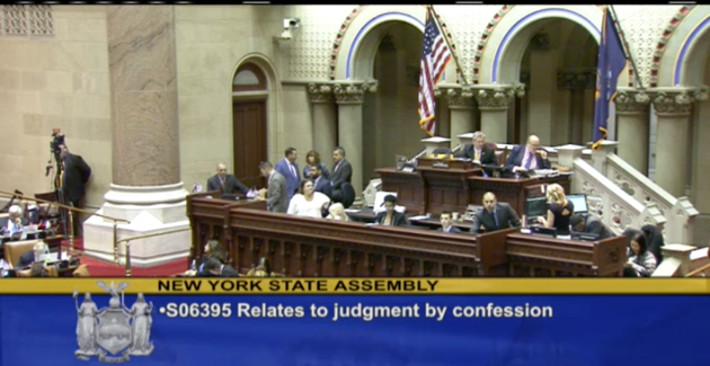
The Senate voted in favor 61-1.
The Assembly voted in favor 83-43.
The new law which goes into effect immediately after Governor Andrew Cuomo signs it, prohibits anyone from filing a COJ against a party that does not reside in New York State. That means if a small business or individual resides in any state that isn’t New York, you cannot file a COJ against them in New York. This matters greatly because 99% of all COJs industry-wide were being filed in New York due to the incredible ease and speed that New York Courts offer to turn those into valid judgments.
Debtors that reside in New York can still be subjected to New York COJs.
A particular sensational story series published by Bloomberg Businessweek created the impetus to change how such New York judgments by confession might impact out-of-state residents. The names of the Bloomberg reporters are written into the Bill’s official memo in the footnotes, memorializing for all time how this law came to be.
Within the small business finance industry, the percentage of funders that required a Confession of Judgment as a condition of their financing was relatively small. And their usage has been limited since COJs were only first introduced as a potential risk mitigation tool on merchant cash advances five years ago in 2014. However, Bloomberg News estimated that COJs have resulted in more than $1 billion in collective judgments over the years, mostly against non-New York businesses.
deBanked has received numerous inquiries regarding what this new law means for COJs already signed but not yet filed. That is a question for an attorney.
Michele Romanow to Keynote deBanked CONNECT Toronto
June 18, 2019Michele Romanow, a TV star on Dragon’s Den and Co-founder of Clearbanc, will be the keynote speaker at deBanked CONNECT Toronto on July 25th. She joins other industry executives speaking at the event from across the business finance industry in Canada.

Tech titan Michele Romanow is an engineer and a serial entrepreneur who started five companies before her 33rd birthday. A “Dragon” on CBC’s hit show Dragons’ Den, Michele is the co-founder of Clearbanc, which in 2018 gave entrepreneurs more than $100 million in funding; SnapSave, which was acquired by Groupon; and Buytopia.ca, ranked #3 on the Profit Hot 50 list of fastest growing companies. Named in WXN’s “100 Most Powerful in Canada” and listed as the only Canadian on Forbes’ “Millennial on a Mission” list, Michele brings her incredible entrepreneurial savvy to every stage.
Michele has driven new digital solutions to many of the world’s leading brands, including P&G, Netflix, Starbucks, and Cirque du Soleil, and she has advised Fortune 100s and governments on innovation, AI, blockchain, and the new economy. She was a finalist for the EY Entrepreneur of the Year Award; the RBC Canadian Women Entrepreneur Awards; and was a Cartier Women’s Initiative Award global finalist.
Awarded Angel Investor of the Year by the Canadian Innovation Awards, Michele is a prolific angel investor who has also co-founded the Canadian Entrepreneurship Initiative with Richard Branson to encourage more women entrepreneurs. Michele In the media, Michele’s work has been profiled in Forbes, The New York Times, Entrepreneur, The Globe and Mail, and Chatelaine.
During her Civil Engineering undergrad at Queen’s University, Michele founded The Tea Room, the first zero-consumer-waste coffee shop. She was also given the Queen’s Tricolour — the highest honour awarded by the university — and, after completing her Queen’s MBA, she founded Evandale Caviar, a vertically integrated commercial fishery.
Michele is currently a director for Vail Resorts, Freshii, League of Innovators, Queen’s Business School and Shad Valley, a transformational program that develops the entrepreneurial potential of exceptional Canadian youth.
Other great executives speaking at deBanked CONNECT Toronto:

That’s All Folks! COJ Ban in New York May Pass on Wednesday
June 17, 2019 The New York legislature has until Wednesday night to pass two bills that would prohibit the use of COJs, one on out-of-state debtors entirely and the other from being used as a condition in a financial contract. Either or both would effectively outlaw their use in the small business finance industry in New York State. If they do not pass a Floor vote by Wednesday night, the clock on the debate would reset until 2020 and the bills would have to be reintroduced in January.
Both bills have momentum. Both bills have a Democrat sponsor. The Democrats control the Assembly, the Senate, and the Office of the Governor. The bills have at least some support from Republicans. By all counts, at least one of these bills should pass this week.
Bill A07500 would prevent COJs being filed against Non-New York parties by requiring that they only be permissibly filed in a county in which the debtor party “resides.” This bill has already sailed through three committees, the most recent of which had unanimous bipartisan support. Its counterpart in the Senate is S06395.
A03636 is targeted specifically at small business lenders and merchant cash advance companies. “This bill will protect small businesses from predatory lenders that often offer loans and cash advances on the pre-condition that they sign a confession of judgment,” it says.
It’s possible the bills could also be reworded at the last minute.
There is no doubt where the impetus for these bills stems from. A07500’s official memo, for example, cites the controversial Bloomberg story series authored by Zeke Faux and Zachary Mider in its footnotes.
If either or both bills pass by Wednesday night, they would still require the signature of the governor. That step, a technicality, would probably provide clarity on the official date of which the amended law would go into effect.
Credit Invisibles Recap – Presented by Canadian Lenders Association in Toronto
June 9, 2019The Canadian Lenders Association’s (CLA) workshop on credit invisibles and credit deserts was held at the Toronto law offices of Blake, Cassels & Graydon on June 5th. Situated in the financial district with views of the CN Tower, Michael Turner of Policy and Economic Research Council (PERC) kicked off the morning with a presentation on credit invisibility.
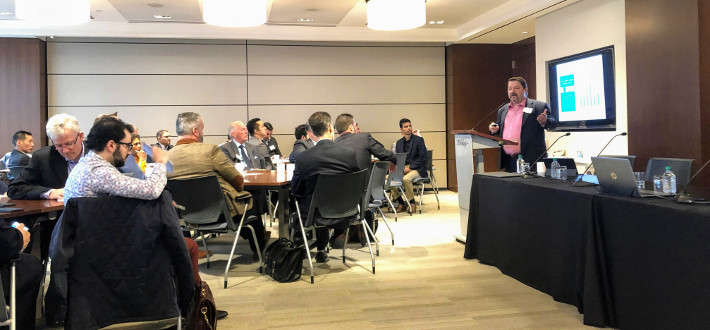
Using data from TransUnion Canada, PERC’s research showed that 36.5% of all credit files in Ontario, the most populous province, have between 0-2 trade lines. Anything fewer than three was considered to be credit invisible. The numbers were similar for Quebec and British Columbia at 33.7% and 37.2% respectively. Meanwhile, in sparsely populated Yukon, the percentage of invisibility is over 65%.
Credit deserts were geographic areas where invisibility was highly concentrated.
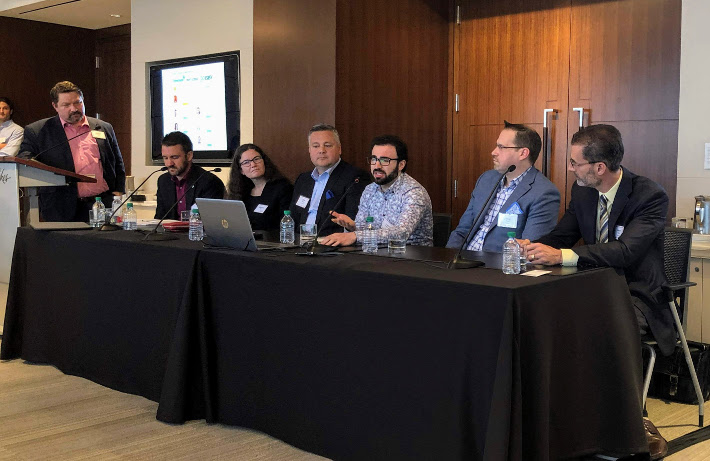
The panel that followed affirmed PERC’s research that there is a lack of available credit data on a significant portion of the population and that geographics play a role. Panelists included Jason Appel, EVP & Chief Risk Officer of goeasy ltd., Glenn Waine, Head of Data Science at TransUnion, Elizabeth Sale, Partner at Blake, Cassels & Graydon LLP, Tony Vardy, COO at Progressa, Vahan Der Kaloussian, Director of Data Science at Capital One, and Christopher Grnak, CRO & EVP and Trust Science.
A video recording of the presentations is below:
Closers: Drink Up to 25 Cups of Coffee Per Day
June 3, 2019 Drink up closers! Research led by Professor Steffen Petersen from Queen Mary’s William Harvey Research Institute suggests that drinking coffee is not that bad for your heart.
The study examined more than 8,000 people across three groups of coffee drinkers, those drinking less than 1 cup per day, those drinking 1-3 cups per day, and those drinking more than 3 cups per day. Those surveyed in the 3rd group drank an average of 5 cups of coffee per day but multiple people reported drinking as much as 25 cups per day (or even more!). Even for them, “no increased stiffening of arteries was associated with those who drank up to this high limit when compared with those who drank less than one cup a day,” the report said.
Wow!
Although the report did not reveal the identities of those surveyed, deBanked suspects the individuals drinking 25 cups of coffee per day are sales closers. For one, these individuals clearly did not put the coffee down.
Dr Kenneth Fung, who led the data analysis for the research at Queen Mary University of London, said “Whilst we can’t prove a causal link in this study, our research indicates coffee isn’t as bad for the arteries as previous studies would suggest.”