Sean Murray is the President and Chief Editor of deBanked and the founder of the Broker Fair Conference. Connect with me on LinkedIn or follow me on twitter. You can view all future deBanked events here.
Articles by Sean Murray

No New SBA Loans Being Accepted. Don’t Understand? We’ll Draw You a Picture
August 23, 2011
On September 27, 2010, the Small Business Administration(SBA) temporarily sweetened the deal on the popular 7(a) loans. As part of the Small Business Jobs Act, government backed default guaranties rose to 90% and many of the major fees were waived.
By late December, the funds for this program had been fully allocated and exhausted. But the announcement was poorly communicated, resulting in thousands of unsuspecting bankers and applicants left stranded and confused. To deal with the drama, the SBA set up queues, where applicants were either placed on standby to take the place of a cancelled Jobs Act loan or to be transitioned into the regular 7(a) loan without the deal sweeteners.
But leave it to the SBA to underestimate the intelligence of their clients. Worried that bankers and business owners might not understand the concept of closing one program and offering them another, they drew a picture.

Actual image being used on SBA.gov to explain the status of Jobs Act loans
In case the phrase “No New Loans Being Accepted” is obscure and cryptic, we can decipher the message using the Daily Transition Phase Alert meter. It’s a state of the art, super genius meter, that was handcrafted by NASA scientists, and topped off with the modern pizazz of a traffic light. Green is GOOD. Red is BAD. Big dollar sign GOOD. Small dollar sign BAD. If the meter is yellow, speed up and try to beat the light but make sure there are no cops behind you first.
Bankers should start using this system en masse. Instead of an outright decline, they can simply inform applicants that their lending ability is in Phase Red. Persistent businesess can take their chances in the underwriting process and battle it out using the Daily Transition Phase Alert meter 2.0. Left foot on $. Right hand on. But watch out for blue because blue is very bad! Blue automatically allows the bank to raise your business checking account fees and increase your credit card processing rates.

The Amazing Daily Transition Phase Alert Meter 2.0!
While your bank is busy playing games with you (they’re not just mind games anymore!), alternative financial firms such as Merchant Cash Advance providers are busy funding applicants in less than 7 days on average. The process is easy, only minimal paperwork is required, it’s credit score flexible, and every business is doing it these days. Want to find out the status of your Merchant Cash Advance application? We’ll hand draw you a picture:

Choose your funding source wisely…
– The Merchant Cash Advance Resource
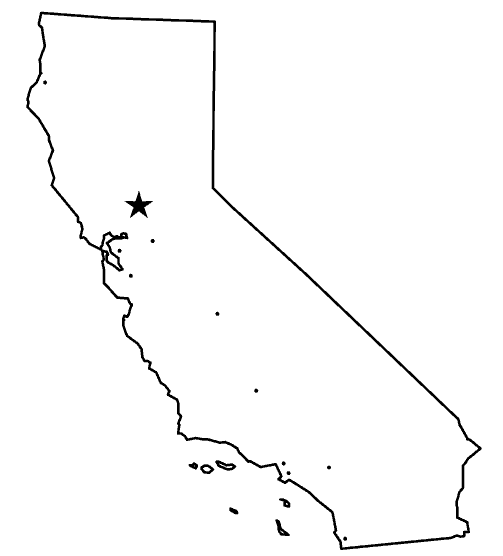
Merchant Cash Advance in California
August 23, 2011
For no reason in particular, we advise you tread carefully in California.
-The Merchant Cash Advance Resource
Debit Interchange Fee Study Act: A Few Good Senators Try to Stop the Madness
August 23, 2011Originally published on March 17, 2011.
What started as a citizen revolt against Wall Street to both punish them for the previous recession and prevent another one, has now morphed and devolved into a personal battle that threatens to eliminate the use of money altogether.
JPMorgan Chase, one of the largest card issuers in the world recently stated the legislation may force them to limit the amount a consumer can spend in a single debit card transaction to as low as $50. Need a full tank of gas? You better bring cash!
The Durbin Amendment of the Wall Street Reform and Consumer Protection Act will instate a flat 12 cent cap on Debit Card “interchange fees” effective as of July, 2011. The media communicated this cap as a “flat swipe fee”, a term used in such incorrect context that it has even confused executives of major card processors. How can public opinion be formed or swayed when the media and quite possibly the Senators and Congressman that passed the law fail to understand what “interchange fees” actually are and who they are paid to?
The original 176 page study and law can be downloaded here. It outlines on page 7 what they believe to be a 5 party system. It actually refers to it as a 4 party system and then corrects itself in the footnotes.
- Party #1 – The Cardholder/Customer
- Party #2 – The Card Issuing Bank (The bank that gave the customer the card. aka Wells Fargo, Bank of America, etc.)
- Party #3 – The Business/Merchant That is Accepting the Card as Payment
- Party #4 – The Acquiring Bank (The bank that allows the merchant to accept a credit card and services their account)
- Party #5 – The Payment Network (Visa or MasterCard or whichever brand’s logo is indicated on the card or used to transfer information from the merchant’s Acquiring Bank over to the customer’s Card Issuing Bank.)
Party #4 consists of multiple layers including companies that do all or just one of: marketing and underwriting the risk of the debit card accounts, processing the payments, receiving and providing settlement for the transactions, and maintaining the reports while offering support to the merchant.
Add that to the fact that the Federal Reserve at times seems to misuse “interchange fees.” Interchange fees are associated only with Party #2, the Card Issuing bank. The bulk of the report does indeed seem to limit the scope of the 12 cent cap to Card Issuing Banks. That implies and makes evident that the overall swipe fee that merchants pay will not have any such cap at all, but party #2 will be greatly affected. Since the Acquiring Banks are not clearly defined as subject to inclusion in the cap (it’s mentioned vaguely in a few paragraphs and footnotes), then the media frenzied reporting of a “12 cent swipe fee” would not be true at all. The Acquiring Banks and all the layers within them could fill the gap and keep the overall swipe fee that a merchant pays, the same. D’oh!
But Card Issuing banks are up in arms because the cap is impossible to sustain and it is even acknowledged in the report. The report quotes, “An issuer with costs above the cap would not receive interchange fees to cover those higher costs. As a result, a high-cost issuer would have an incentive to reduce its costs in order to avoid a penalty.” With millions of people in the industry, does the Federal Reserve really think that banks have at no point considered how to reduce costs already?
Too Rich?
As hard working Americans, we so badly want “Wall Street” and the “Big Banks” to simply be a handful of arrogant individuals in overpriced suits, drinking fine wines, while chatting about their new private jets and weekend trips to Paris. But instead the financial services industry employs millions of individuals, many who make less than $35,000/ year.

How many administrative assistants, customer support reps, technical support reps, risk analysts, underwriters, fraud prevention managers, internal IT & systems support reps, compliance officers, bookkeepers, internal auditors, salesmen, marketers, lawyers, and handlers of human resources do you think are employed in the electronic payments industry?

If these jobs were lost or affected, consider the consequences to the businesses that support them. How many supply companies sell them paper, business cards, printer ink, pens, and staplers? How many accountants do their books? How many IT companies sell them computer hardware and technology? These millions of workers do not starve to death, but rather eat breakfast and lunches at restaurants and cafes near their offices. How many restaurants and cafes depend on their business? How many cleaning services have contracts to maintain their offices? How many dealerships sell these workers cars?
How many of these people are doing the job just to support their families? We are not using the face of the hard working middle class to support our argument, but they will certainly become unwitting victims. While the contributors to our site are involved in the electronic payments industry, we are not executives, higher ups, or even rich. The site’s core message is to guide business owners to get the best deal in an industry that is already highly competitive and tough to understand.
Let us state this: Some banks have excessive profits and some executives in the payment industry are just a little too rich for comfort. But cutting what many experts are saying is $14 Billion dollars worth of revenue as of the result of this legislation isn’t going to affect the big guys, it’s going to clamp down on the little ones.
Didn’t the Article Title Mention Something about Senators?
Some may consider our message to be astroturfing but we’re just explaining the other side of the story. Before we regulate ourselves into a world without debit cards and the loss of a few milliion jobs, we applaud a few good Senators for introducing the Debit Interchange Fee Study Act of 2011. It aims to delay the Durbin Amendment for 2 years until a better system can be created. We like to think of it as taking a deep breath, composing ourselves, and then really trying to tackle the issue.
The sponsors of the Act are:
- Jon Tester D-Montana
- Bob Corker R-Tennessee
- John Kyl R-Arizona
- Ben Nelson D-Nebraska
- Tom Carper D-Delaware
- Chris Coons D-Delaware (What would Christine O’Donnell have done?)
- Pat Roberts R-Kansas
- Mike Lee R-Utah
- Pat Toomey R-Pennsylvania
Everyone wants lower costs but let’s do it right.
– deBanked
Could Your Credit Card Tip Be Hurting Your Server?
August 23, 2011
According to an article on Creditcard.com, “servers’ credit card gratuities may be reduced to offset the cost of interchange fees the restaurant pays to process credit transactions.” Interchange is a large part of the cost that businesses incur for accepting a credit or debit card. It’s charged as a percentage of the total sale, including a tip. That means the larger the tip, the larger the fee.
 Some businesses are reportedly offsetting the costs against the waitstaff’s income, a practice that may seem unfair, but may also be necessary. Take this case for example: One of our contributors is actually great friends with a bartender. Known for being the “cute blonde” behind the bar, her loyal patrons shower her with overly generous tips. A $30 tab is often bolstered by a $20 gratuity, for a total of $50. In one instance a $20 drink order came back with $100 written in for her, along with a personal note and phone number. She thought it was a sweet way for stranger to ask her out but the owner was furious at the end of the night. He kept going on and on about how he was glad the customers loved her, but that the charges on her enormous tips were starting to hurt the bottom line. Though we’re told it’s never gotten to the point where it comes out of her end, she pretends the credit card machine is broken from time to time to encourage cash.
The author at creditcards.com recommends tipping in cash whenever possible. It saves time for the server, allows them to cash out quicker at the end of the night, and is less likely to be recorded as income with the IRS. But if cash isn’t your thing, “when in doubt, just tip well.” It’s always appreciated regardless.
We covered this topic back in December. Full article: Consumers Can Help Businesses Save Money on Their Credit Card Processing
-deBanked
Image Copyrighted by 123RF.com
Get 25% Off Your Next Merchant Cash Advance – Funding Coupons?
August 23, 2011
Still get excited about the coupons tucked neatly into the Sunday newspaper? Savvy shoppers can still spot the special deals. 40% off Post Cereal Products, Buy One Pint of Breyers Ice Cream and Get One Free, and $25 off your next Merchant Cash Advance. Wait….what?
By sheer coincidence, we randomly stumbled across this on the internet:
Get $25 Cash Back Discount on Merchant Cash Group
Merchant Cash Group COUPON

This is as seen on iCouponBlog.com. We have witnessed special promotion offers in the industry before, but never in the form of an actual coupon.
Considering a Merchant Cash Advance is actually a sale of the merchant’s future receivables to the funding provider, one must wonder if Merchant Cash Group would be the one redeeming their own coupon to get an even steeper discount. They are in actuality the buyer in the transaction after all. Food for thought!
Some of you may know Merchant Cash Group as the Direct Funder in Gainesville, FL. Word has it that they are pretty good people. They have not contributed to this article, nor have we informed them of it. We will gladly share any comment they have on this. The same goes for all our readers.
As a special treat, we’re offering this, “Get 50% OFF on Your Next Article Comment!” Limited time offer. Special Restrictions May Apply.
– The Merchant Cash Advance Resource