Sean Murray is the President and Chief Editor of deBanked and the founder of the Broker Fair Conference. Connect with me on LinkedIn or follow me on twitter. You can view all future deBanked events here.
Articles by Sean Murray

Square Eliminates 15% Transaction Fee
August 23, 2011
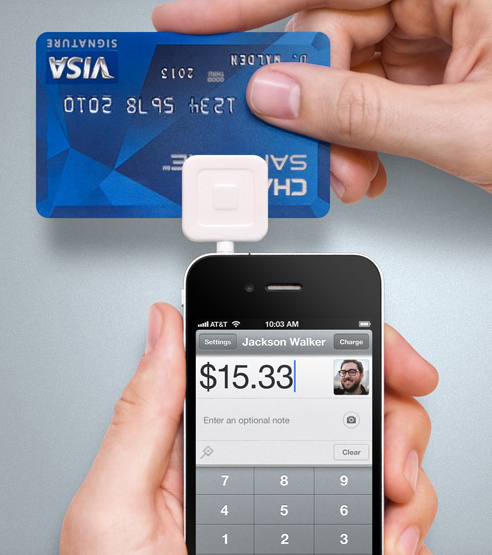
According to their Twitter Feed, Square, the iPhone, Android, and iPad Card Reader has announced the removal of the 15 cent transaction fee. The card swipe rate will remain at 2.75%. For low ticket, high volume businesses, this will significantly improve margins.
About
Square is a revolutionary service that enables anyone to accept credit cards anywhere. Square offers an easy to use, free credit card reader that plugs into a phone or iPad. It’s simple to sign up. There is no extra equipment, complicated contracts, monthly fees or merchant account required.
Co-founded by Jim McKelvey and Jack Dorsey in 2009, the company is headquartered in San Francisco with additional offices in Saint Louis and New York City. They can be found at: www.squareup.com
– deBanked
Still Curious About a Merchant Cash Advance? The Last Article You Will Ever Need to Read
August 23, 2011
You’ve seen the advertisements, received calls with offers for it, researched it online, but you’re still not sure about Merchant Cash Advance(MCA). Every business needs capital but bank loans just aren’t available. Alternative funding sources are out there and they spend millions of dollars every year trying to reach you. The word “alternative” usually causes business owners to put their guard up. Basically, all non-bank loans warrant skepticisim until proven innocent. We here at the Merchant Cash Advance Resource understand your concerns and would like to answer your questions once and for all. We are not a funding source, reseller, or advertiser and thus maintain an independent perspective on the the MCA industry.

image is the sole property of www.merchantprocessingresource.com
- How Legitimate is it?
- Who is Really Using it?
- How Big is the Industry?
- How Widespread is it?
- What is the Application and Underwriting Process?
- Who are the Most Well Known Providers of it?
- Who is Regulating it?
- What Happens if you Default on it?
- How does it Compare to an SBA Loans?
How Legitimate is a Merchant Cash Advance?
The purchase of future credit card sales(Merchant Cash Advance or MCA) has been mainstream since 1998. At that time, Kennesaw, Georgia based funding source AdvanceMe, held the patent rights to a process known as split funding. The patent was later invalidated and AdvanceMe was immediately joined by industry veterans AmeriMerchant, First Funds (now Principis Capital), Merchant Cash and Capital, Business Financial Services, and Strategic Funding. All of these firms have been operating since before 2006. As of 2011, there are now nearly 40 documented direct providers of capital.
MCA funding providers are backed by big name hedge funds, a few at one point by well known investment bank, Goldman Sachs. MCAs have frequently popped up in the news and are openly endorsed by some of the largest payment networks in the world. See for yourself:
 Feb. 11, 2011 – 10 Reasons to Start a Business This Year
 Sept 1, 2009 – Enterpreneurs Turn to Alternative Finance
 Apr. 2009 – Merchant Cash Advance Financing: The Good, The Bad, and The Ugly
 Brochure and advertisement directly From First Data, the largest merchant acquirer in the world.
 Advertisment and endorsement directly from Chase Paymentech
 Program is offered by NAB, one of the nation’s largest credit card processors and the 2008 Detroit Regional winner of Ernst & Young Entrepreneur of the Year Award.
Who is Really Using a Merchant Cash Advance?
Nearly every major national retail or restaurant franchise has used a Merchant Cash Advance. A small sample of the names include the following:
- Burger King
- Domino’s Pizza
- Hooters
- Subway
- Dunkin Donuts
- Taco Bell
- Denny’s
- Wendy’s
- Meineke Car Care
- Maaco
- Aamco Transmissions
- Curves Fitness
Data was obtained directly from Secretary of State UCC-1 filing records. More information on franchise funding can be read in one of our previous articles, “Who is Really Getting a $250,000 Merchant Cash Advance?“
How Big is the Industry?
Experts have predicted that more than $1 Billion in MCAs are being provided to businesses every year. We conducted independent research and was able to validate the size to be greater than at least $500 Million in 2010. Check out the study at, “Complete Merchant Cash Advance Statistics 2010“
How Widespread is Merchant Cash Advance?
The MCA product is not limited to the United States. This product is actively growing in:
- Canada
- United Kingdom
- Australia
- Hong Kong
- Singapore
For a list of international funding providers, take a peek at our article at, “Merchant Cash Advance – Canada, UK, and Beyond!“
What is the Application and Underwriting Process Like?
EASY! We recently released a guide for merchants that breaks the process down step by step. Download the guide here.
Who Are the Most Well Known Direct Providers of Merchant Cash Advance?
The biggest names are compiled in our Funding Directory. Many are BBB accredited and a few are Ernst & Young Entrepreneur of the Year award winners.
Who is Regulating the Merchant Cash Advance Industry?
Since MCAs are a purchase/sale of future credit/debit card receivables, lending laws do not apply. However, most firms belong to a self-regulating body known as the North American Merchant Advance Association. As stated on their website, NAMAA’s purpose is to promote competition and efficiency throughout the industry by:
- Providing education and professional development to its members
- Developing ethical standards and best practices guidelines for the industry
- Evaluating and providing education regarding the development and enforcement of intellectual property rights that affect the industry
- Evaluating and developing improvements to existing business methods and practices
- Developing industry relevant products and services
- Engaging in regulatory and legislative advocacy
What Happens if You Default on a Merchant Cash Advance?
In the case of a legitimate business failure, the merchant’s assets tend to be protected. There is significantly less at stake than a bank loan. We covered this topic once before in an article here, “What Happens When you Default on a Merchant Cash Advance?“
How Do Merchant Cash Advances Compare to SBA Loans?
The Small Business Administration protects banks from defaults for up to 90% of the losses. Despite this wildly generous guarantee, SBA Loans are considered to rank lower than a MCA. How is this is possible and what specific proof is there? Check out our analysis in, “SBA Loan vs. Merchant Cash Advance.“
Conclusion
The Merchant Cash Advance financial product has been in existence for more than a decade and is legitimate, mainstream, endorsed by reputable names, has been used by the most popular franchises in the U.S., is easy to obtain, offers asset protection that loans cannot, is self regulated, and is in many ways BETTER than a loan guaranteed by the SBA. A MCA may not be right for every business, but if it was just uncertainty that was holding you back, fear no more. This thing is for real…
-The Merchant Cash Advance Resource
http://www.merchantcashadvanceresource.com
webmaster@merchantprocessingresource.com
$4 Million Merchant Cash Advance Funded by Strategic Funding Source
August 23, 2011
Very reliable sources indicate that New York based Merchant Cash Advance funder, Strategic Funding Source(SFS), has inked a $4 Million Merchant Cash Advance with a big name business in Las Vegas. Without revealing who the recipient is, they seem to be very pleased with the outcome. They reportedly stated, “Strategic provided us with a very unique financing solution that gave us the final $4 million needed to complete the project and launch the company. Without their help and creativity, especially in this difficult economy, our completion may have not happened.”

To date, this would be the largest Merchant Cash Advance on record. It comes as no surprise that it came from SFS, one of the most experienced firms in the industry. Coincidentally, we recently singled them out in an article (Who is Really Getting a $250,000 Merchant Cash Advance?) as being one of the few firms capable of handling a million dollar deal.
It’s also worth mentioning that SFS is leading the Merchant Cash Advance industry in a new direction, in a way that resembles peer 2 peer(p2p) lending models like Prosper.com. Operating under the name Colonial Funding Network, investors have the ability to contribute their own funds towards a Merchant Cash Advance. The account is then serviced by SFS in return for a fee. Small businesses ultimately benefit since this creates a larger base of funds to draw from. To read more on our thoughts on how the p2p model is reshaping the industry, check out: The Direct Funder Model is SO 2009 or P2P Merchant Cash Advance Model Already Exists. To read up more on SFS and Colonial Funding Network, visit their site directly.
-The Merchant Cash Advance Resource
http://www.merchantcashadvanceresource.com
Photo copyrighted by: 123RF
When Average Credit is Better Than Excellent Credit: Data Points
August 23, 2011
Back in the wild days of Merchant Cash Advance(MCA), credit score was not only unimportant to the underwriting process, but irrelevant altogether. Business owners with FICO scores reaching down into the 300’s were obtaining 150% of their monthly average processing volume without question. That era came to an end and with good reason. Defaults and losses soared and some funding providers went under. If ignoring credit had continued, it may have lead to the industry’s demise.
In some respects, MCA providers overcompensated by making credit score the only factor, rather than simply incorporating it into the complete underwriting analysis. “FICO Under 500? Declined”, “Less than 550? No thanks!” “Under 600, Don’t bother”. This became the status quo during the conservative years of MCA. And yet business owners with credit scores as high as 800 were ending up in default. After much head scratching, some underwriters began digging a bit deeper. A healthy community burns out all at once in February, an entire industry underperforms, historical cash flow activity predicts survival rate, multiple partner businesses do better than sole proprietorships… While these were just an example of conclusions that could be reached, they’re all potentially part of an underwriting system, a system built on data points. We found a great example on an old personal blog of Jeff Mitelman, the CEO of Canadian based funding source, Advanceit. To quote Jeff,
“Here’s a practical application of using data points:
Merchant A has a restaurant in PEI, below average credit, a maxed out credit card & has applied for a $25,000 advance in June.
Merchant B has a restaurant in Southern Ontario, excellent credit & has applied for $50,000 in January.
With this information alone, B is clearly the better decision.
Now consider this new insight into the transactional history of accounts with similar characteristics that only a knowledge base can provide Advanceit has funded 50 restaurants in PEI, 47 of which have repaid without issue. The two of the 3 that didn’t repay stopped transacting in January. The historical credit card sales of restaurants in PEI peek in July & hit their lowest point in December.
Advanceit has funded 25 restaurants in Southern Ontario, 18 of which have gone to collections, 10 of which had write offs below the funded amount. Of the 10 losses, 8 of them occurred in March. The historical credit card sales of restaurants in Southern Ontario peek in December & hit their lowest point in February.
When evaluating the same two merchants through this lens, A is a no brainer & B is a recipe for disaster.“

A lot of the veteran MCA providers already implement a type of data points system, whether it be an objective scoring model or something more subjective. With the surge of many small ISOs putting their skin in the game and funding their own accounts, this advice should be not overlooked. Without data points, you’re shooting in the dark. Do not forget that your data points need substance either. If the only account funded in the State of Wyoming defaults, that should not be sufficient to cast off all businesses in Wyoming.
Credit is not the only factor, nor is it a solid predictor of the future. It’s a solitary piece of the Merchant Cash Advance puzzle. Don’t believe us? Take it from Jeff, it’s a game of “Learning by Losing.” Do your best.
– The Merchant Cash Advance Resource
http://www.merchantcashadvanceresource.com
Image copyrighted by 123RF
A Merchant Cash Advance Company Says ‘Done Deal’
August 23, 2011
New York based Merchant Cash Advance(MCA) provider Merchant Cash and Capital(MCC) is putting their money where their mouth is and getting creative in the underwriting process. A far cry from black and white bank methodology, MCC has approved merchants whose businesses have been to hell and back. While financially sustainable in the long run, these merchants faced short term obstacles that required someone to dig deeper, try harder, and ultimately believe in them.

Coincidentally, we got ahold of this right after publishing an article that criticized ‘credit score only’ underwriting models (When Average Credit is Better Than Excellent Credit – Data Points). MCC offers proof of advanced analysis in a promotional flyer, titled “Done Deal.” The challenges include a restaurant that was temporarily closed, a movie theatre facing frivolous lawsuits, and a tough industry with declining sales. While we can’t comment on their success, it’s the kind of work that requires a big thumbs up from the small business community. Countless merchants have surely found themselves uttering these words at some point or another: “If I can just get the capital to get over this one small obstacle, I know I’ll make it. Who will listen to my story and help?” We urge these merchants to keep the faith and find a MCA provider that suits your needs.
It’s also worth mentioning that 2 of the 3 case studies offered by MCC were six figure deals. We recently singled them out as one of three industry giants (Who is Really Getting a $250,000 Merchant Cash Advance?) that were most capable of funding up to $1,000,000. Right on the mark and right on schedule, Strategic Funding Source, another New York based provider, announced the closing of a $4 Million deal just last week.
Remember where you heard it! The Merchant Cash Advance Resource is providing a play by play of an industry that is quickly gaining ground on their distant, overhyped challenger, SBA Loans. The gap is narrowing and businesses are benefitting. “Done Deal!”
-The Merchant Cash Advance Resource