Sean Murray is the President and Chief Editor of deBanked and the founder of the Broker Fair Conference. Connect with me on LinkedIn or follow me on twitter. You can view all future deBanked events here.
Articles by Sean Murray

The Industry’s Bad Paper
February 8, 2015 Sometimes deals go bad. But what happens next?
I just finished reading, Bad Paper: Chasing Debt From Wall Street to the Underworld on a recommendation from a friend. In it, author Jake Halpern walks readers through the shadowy world of consumer debt collection. It was eye-opening to say the least.
Halpern’s research uncovered that consumer debts with seemingly no original paperwork is sold, resold, and resold again to companies that the debtor never heard of and would not recognize. A debt’s record amounted to some fields on a spreadsheet where the information is not always correct and might even have been collected already by someone else.
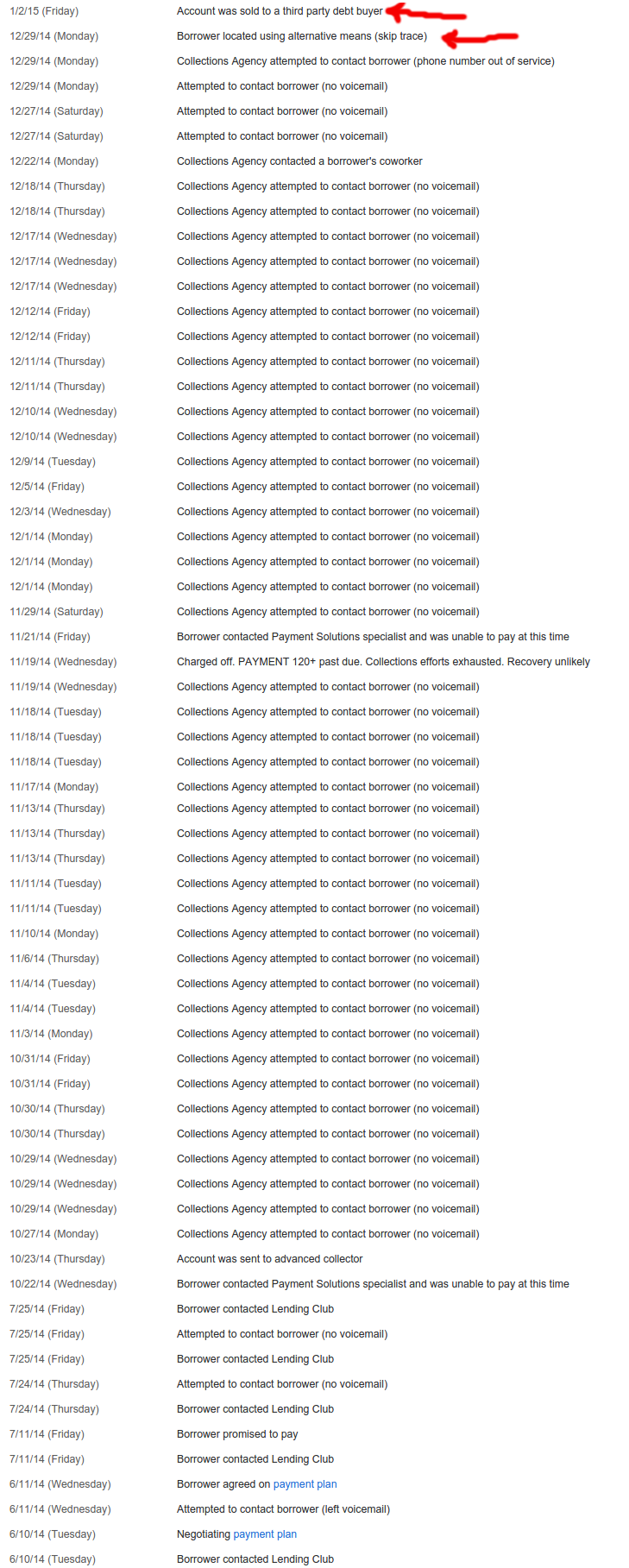 One has to wonder whose hands a Lending Club loan I participated in are in now. It was a $25,000 loan to a nurse. The notes below are from the real collections log provided by Lending Club. After making just 3 full payments on their 3-year loan, this 700 credit borrower went from negotiating a payment plan to off the grid. They called a co-worker, skip traced them, and finally gave up and sold her debt to a third party.
I’ve found that a lot of my defaulted loans thus far have gone bad in the first few months, a pattern that looked more like fraud than borrower hardship. It actually prompted me to call Lending Club and speak to a representative about it, who explained that they’re doing all they can to prevent fraud.
They were pretty relentless on this particular file, a nurse that was making $60,000 a year sounded like a winner. They had virtually no debt but the loan was supposedly used to consolidate outstanding debt into one monthly payment at the rate of 9.67%. The story didn’t exactly add up but since I don’t actually get to talk to the borrowers or look at their paperwork, I’m essentially just playing a numbers game.
That debt has been sold off and I as a note holder do not appear to be entitled to any money on the sale of it, not even pennies on the dollar. Bummer.
Because of platforms like Lending Club, I wasn’t the only one to lose out. 277 other retail investors who I don’t know and have never met participated in it with me. We’re all playing the numbers and we lost on this one.
With 1907 notes acquired on the platform so far, I’m not emotionally invested in any of them. How can I be? I have no idea who the borrowers are. I don’t even know their names! All I can do is diversify and make decisions based off of statistical analysis. If the borrower stops paying, go after them hard whoever they are!
Meanwhile in commercial transaction land
When it comes to merchant cash advance and business lending, the collection rules are different but so are the relationships. Even with strong advancements in automation, phone interviews remain an integral part of the underwriting process. A risk analyst typically calls the business owner, their landlord, and even several of their suppliers. Large dollar amount deals may even be presented to an entire risk committee for approval.
Suffice to say, pesky things like signed contracts do not usually prove elusive when a collector in this world gets their hands on it. Many commercial funding providers even record phone calls with the business owners where they get an additional verbal confirmation to the terms and conditions of the arrangement.
The collections process usually begins with the sales person or sales office that negotiated the terms with the business. Back when was I was an account rep, my commissions were paid in two pieces, upfront and a residual. That meant almost half my pay on a deal was tied to its performance. If a deal started to fall apart or defaulted, I had a personal stake in restoring the business to good standing.
The Fair Debt Collection Practices Act does not cover commercial transactions. And in the case of traditional merchant cash advances, there is likely no debt at all in a default, but rather a possible case of stolen receivables.
In the event where a deal I brokered was suspected of diverting receivables, I’d be the first one to know about it and the first person tasked with fixing it. That meant calls to the business, their home phones, their cell phones, and when necessary their landlord. If none worked, then their suppliers. The first goal was to determine if the business was still operating and in the vast majority of cases where defaults happened, they were.
Hardship was sometimes cited as a reason for breaching the agreement but not always. With a chunk of my paycheck on the line, I had to talk them back into good standing and unlike debt collectors, I didn’t have the ability to renegotiate the terms, lower a payment or cut them slack. It was back to the way it was or nothing.
It escalates
Some returned to good standing and others played hardball. The deal’s original underwriter might then involve themselves and if they failed, then on it went to the internal funder’s portfolio management/collections team.
This is why the situation here on out is different: Imagine a doctor sells you the accounts receivable of all his patients for a discounted price. The doctor gets cash upfront and the buyer will hopefully collect the full value of the accounts receivable to earn a profit.
Now imagine the doctor accepts your cash upfront and then also collects the accounts receivable from the patients and shuts you out. In traditional merchant cash advances, collectors aren’t going after debt, but rather acquired property that is rightfully theirs. The business has shut them out of receivables they purchased.
If internal collection efforts fail, they can attempt to freeze various receivables the business might have. Merchant processing proceeds are usually the first stop. If the business accepts credit cards, the merchant processor can be instructed to freeze all or a percentage of the revenues without a court order. This is easier said than done but it does work and there are even a few third party collection firms that specialize in this.
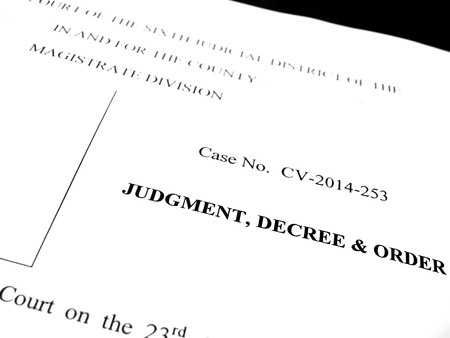 And if that doesn’t work? Well, thousands of lawsuits have been filed against businesses for breaching these commercial transactions. The business owners themselves can potentially be culpable and liable depending on the agreement and the nature of the breach.
Some business owners are shocked to learn that a deal they made over the phone with people they never met will actually track them down and sue them. Unlike consumer debts which might only be a few hundred dollars, commercial transactions are typically tens of thousands or hundreds of thousands of dollars. They will definitely pursue it.
On the largest default I ever presided over as an underwriter, the business owner said something to the effect of, “I stole your money. Let’s see how good you are at getting it back.” He said this just 24 hours after we had wired him the money. Ouch!
That happened more than six years ago but it was something I’ll never forget. A quick Google search today reveals that guy is still alive and kicking as he was recently interviewed about his success in amassing a restaurant empire in Florida.
Over the next couple years, I would hear variations of that “I stole your money” line from other businesses, typically on deals larger than $75,000. These were strategic defaults designed to strong-arm the funding company into a settlement or an attempt to simply walk off with the funds altogether. In other words, fraud.
All this does is raise the cost for the next business that conducts themselves honestly. It’s a damn shame.
Merchants prey on Wall Street
 Critics can say what they want about the sophistication of businesses that enter into merchant cash advance transactions. Running a business requires a great deal of intelligence. And to some savvy businessmen, Wall Street’s money is on the menu as fresh meat.
One experience I had was with the owner of a steakhouse in NYC that flew up from his residence in Brazil to try and close me (as the underwriter) on purchasing roughly $400,000 of his future credit card sales. What he didn’t know is that the night before I checked out the place anonymously by having dinner there with my wife. When the bill came, the server told me they no longer accepted credit cards. The next morning, the owner who spoke only in Portuguese arrived in tow with a translator and a lawyer. They traveled directly from JFK to our office, to which I informed them of the decline. They had stopped accepting credit cards a day too early for their scam on us to work and the restaurant closed two months later.
In another case, a souvenir shop in NYC asked if I would come by to pick up his application and statements in person since we were locally-based. After spending a half hour with the guy at his shop, I returned back to the office only to find out that he gave me doctored bank statements.
And then there’s the owner of a florist that made a career off of robbing merchant cash advance companies. The store, which is close to my hometown, had obtained more than 20 merchant cash advances by late 2008 and defaulted on all of them, netting the business close to $1 million. They hoped to make me victim number 21 but we figured it out in the 11th hour before the funds went out. The business is still there today though I’m unsure if it’s still the same owner.
In 2015, fake documentation is an epidemic. Underwriters in the industry cannot rely on faxed or emailed statements alone. They should be verified through APIs or through direct contact with banks. Many funding providers go a step further and actually request the usernames and passwords to business bank accounts just to be absolutely sure that what they’re seeing is what they’re getting.
But as tech-savvy millenials become the face of American small business, the ante is being upped on fraud. One underwriter told me they saw something even more worrisome, a fake bank website.
The scam is this: Knowing the underwriter is going to request the username and password of the business bank account to verify the statements, the applicant has designed a functional replica of a bank website on a web domain they own, one that looks like the bank name. The unsuspecting underwriter logs in to it and verifies the account data. There’s only one problem, it’s all fake.
While this appears to be an isolated event, it just goes to show that the war on bad paper is entering another phase.
Bad paper
While fraud is a substantial cause of the bad paper in the merchant cash advance and business lending industries, hardship does have its place. It is perhaps fortunate that in the commercial space, the paper isn’t sold off into some convoluted world of debt collection. More than likely the business will be dealing with the actual funding provider the entire way through the collections process, not a debt buyer ten levels down the chain. That’s good and bad for them.
It’s good because the owner will able to discuss matters related to the default with the party directly familiar with the original contract.
It’s bad because any chance that the contract and proof of the agreement will somehow get lost in the shuffle is pretty much nil.
Jake Halpern discovered that debtors can win lawsuits by simply challenging the debt buyer to produce evidence the debt is owed. That might work in the consumer world where debt changes hands ten times. On the commercial side, bad paper is an enduring companion. It may be business-to-business but somehow it’s more personal.
Contrast that with the Lending Club nurse who I know only as Member XXXXXXX. His/her debt is in the wind. I have no idea who they are, nor anything about the 277 other people that invested with me.
Halpern spent 256 pages tracing the path of a debt, the companies that bought it, sold it, stole it, and sued for it. It’s amazing how complex it is.
If he were to do a book on bad paper in merchant cash advance, it would go like this:
The business defaulted, the funding provider tried to collect and then sued. The End.
A Bitcoin Moment
February 1, 2015 I had a moment recently. It was late at night and I was ready to hit the hay.
“Oh wait, there’s something I need to get out of the way,” I told myself.
I had kept delaying the purchase of a new printer cord to replace the one I mangled. It was time to end that procrastination now! Even though it was 1 AM, I was sure that it would only take a few minutes to place an online order and I summoned the motivation to go for it.
Addicted to Amazon’s 1-Click ordering feature, I was bummed to discover they didn’t have the cord I needed. With no time to waste, I used Google to find a site that did carry it.
Found one.
Add to shopping cart.
Select payment method.
Ugh…
I didn’t have my credit card number memorized and I looked across the unlit room to see if my wallet lay nearby. It was somewhere in a pile on the coffee table, or maybe it was upstairs, or maybe I left it in my pants pocket. Unsure and too tired, I selected PayPal to speed things up, a service I hadn’t used in a while.
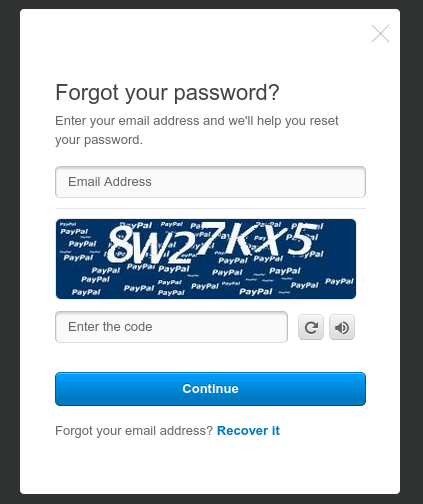 Incorrect password.
Ugh…
I entered my email address and completed a captcha.
No email…
Refresh email.
Still nothing.
Refresh email again.
Nothing.
Agitated, I started Googling for help about not receiving a PayPal password reset email and instead ended up on a message board where people griped about PayPal in general.
After perusing that forum like a zombie, I got up and walked around. My wallet wasn’t downstairs or at least I couldn’t find it.
Thirty six minutes had gone by since I first encountered the checkout screen. I stopped caring about the cord and I resolved to never print anything ever again.
Before shutting down the computer for the night, I checked my phone. The only news alert I had was about bitcoin. I laughed out loud and went back to the checkout screen. Bitcoin was a payment option. I selected it, copied and pasted the payment address and sent bitcoins stored on my computer to it.
Order placed.

—–
tl;dr
I needed to buy a cord online. Credit card was out of reach. PayPal password was forgotten. Bitcoin saved Gotham.
What’s up (or down) with OnDeck? [ONDK]
January 29, 2015 OnDeck took the market by storm back on December 17th, achieving a high share price of nearly $29. If 2014 was the breakout year for alternative lending, then early 2015 is feeling a bit like a hangover.
OnDeck closed at $14.75 today, down almost 50% from its high and well below its IPO price of $20.
With stock analysts mostly bullish about the company’s prospects, retail investors may be wondering why the tide is moving in the other direction.
$ONDK weird stock sold im out..
— BullyBear13 (@BullyBear13) Jan. 22 at 09:59 AM
Q4 Earnings will be announced on February 23rd at 5pm EST. Anyone can listen in to it as the event will be webcast live on the company’s Investor Relations website or can be accessed toll free by dialing (877) 201-0168 for calls within the U.S, or by dialing (647) 788-4901 for international calls, and using conference ID 71535376.
OnDeck sailed into the market on Lending Club’s coattails just as investors were celebrating platform and marketplace lending. Lending Club is down 33% from their high.
The two have largely been lumped in together as disruptive financial technology companies, but as Stern Agee analyst Henry Coffee pointed out, OnDeck “should be considered a high-growth specialty finance lender.”
Perhaps worried that description might stick, OnDeck countered two weeks later with news that their Marketplace Platform would become generally available to institutional investors. While clearly trying to communicate what they want to be known for, investors seem skeptical.
Welp, you can now get in $ONDK under the price Tiger paid to lead the pre-ipo private round // @pkedrosky
— Justin M. Overdorff (@jmover) January 29, 2015
So is a share of OnDeck on the cheap right now? It’s hard to say. Investors seem confused by it all. That might complicate plans for CAN Capital and Prosper who are rumored to be next in line for IPOs.
Given OnDeck’s long history of losses, many will be wondering if they can reproduce the magic of 2014’s Q3, the first time they ever recorded a profit. We’ll find out on February 23rd.
—-
Note: I do not own stock or have a market position in OnDeck or Lending Club
Shark Tank, The Profit and Kitchen Nightmares
January 29, 2015 What do Shark Tank, The Profit and Kitchen Nightmares have in common? They’ve all featured merchants who’ve used merchant cash advances. Statistically it’d have to happen but there’s nothing more wild than watching Marcus Lemonis try to save a failing business I actually declined for funding.
One deal I personally worked on has appeared on The Profit and there were a couple others that I’ve seen shopped around in the MCA space. Not sure if that restaurant on Kitchen Nightmares has used merchant cash advances? Just conduct a UCC search and find out!
No amount of underwriting could ever give you the perspective you get on TV. In between the lines of a business wanting help is usually a disaster or series of disasters that has the business on edge; All the employees are about to quit, the landlord wants them out, their vendors are mad at them, the owner’s an intolerable jerk, they don’t know how to market themselves, or the customer experience is horrible. It’s always something.
At least on Shark Tank the only thing scrutinized is the presentation of the product and the viability of it. On The Profit and Kitchen Nightmares, all the secrets are laid bare.
On the one hand it’s a glimpse into the struggles of running a small business, an experience I know firsthand from growing up working at two family owned restaurants. On the other hand, it’s a sobering reminder that there is so much risk in lending them money.
On The Profit, Lemonis hedges his risk by typically taking 50% (OR MORE!) equity in return. His famous pitch to these merchants who always come across as shocked is that, “I’m not a bank. I’m not a consultant. And I’m not the fairy godmother.”
"I'm not a bank. I'm not a consultant. And I'm not the fairy godmother." –@MarcusLemonis #theprofit https://t.co/sIUH2Tj21p
— CNBC's The Profit (@TheProfitCNBC) November 18, 2014
Deals go bad
And even that approach carries risk. Early last year on the show, Lemonis wired $190,000 to Brooklyn-based business A. Stein Meat in return for 100% of their Brooklyn Burger Brand. The business used the cash to make payroll and reneged on the transfer of the burger brand, claiming they thought the money was a loan. They never made any payments back on it.
Lemonis filed suit against them in the United States District Court for the Eastern District of New York which opens by stating:
This is an action to enforce the straightforward, bargained-for agreement entered into by and between defendant Stein Meats and Lemonis, by which Stein Meats agreed to sell its “Brooklyn Burgers” brand of hamburgers to Lemonis. The agreement is unequivocal, and was witnessed by the millions of viewers who have watched Episode 2 of the second season of the CNBC reality television series “The Profit” that first aired on March 4, 2014.
However unequivocal it may have appeared, the case is still going. A peek at the court records show bitter and unrelenting litigation. At the time of filming, Stein Meats was only 2 weeks away from bankruptcy and was reportedly sold to its competitor, King Solomon. King Solomon is also named as a defendant.
The Brooklyn Burger brand is still in use as I enjoyed one of their tasty burgers at a Nets game last month.
Wait, don’t I know this deal?
In another episode of The Profit, the owner of a business I declined for a merchant cash advance is fingered as a bad guy. He was unrepentant, suggesting that the bridges burned, lives ruined, and debts defaulted on along the way were worth it to get the business to where it was now. I distinctly recall being shocked by their mountain of debt, which became the reason I declined it. Their debt problems were even highlighted on the show!
I had the luxury of examining their Balance Sheet since their request was sizable. Had the request been smaller, it wouldn’t have been required. Thankfully they were transparent about their debt. Of the thousands of applications I’ve underwritten in my day, I learned that it is incredibly hard for a small business to supply a financial statement, and of the ones I got, it was difficult to ascertain their accuracy. I’ve seen Balance Sheets that didn’t balance, numbers that were completely illogical, or statements that were missing major line items.
I see only two ways to approach something like this. It’s either a decline or it’s going to be expensive. I don’t care what my algorithms say their social media score indicates. If the business doesn’t keep good books then I have no idea what I’m exposing myself to.
The real world’s not so bad after all
I can’t help but notice that one of the best guys in the small business space takes a similar no-nonsense approach. You give Lemonis half of your business or he walks. Being on the show might boost sales but taking his money is not charity.
The only difference I’ve discovered between business financing deals made in real life and ones made on TV is that the ones on TV are more expensive. It’s the opposite of what you might expect.
If Lemonis thought his agreement witnessed by millions of people was unequivocal, then shouldn’t an online lender who has never met their client, nor visited their business, feel slightly less comfortable about their agreements?
I would think so.
Inc reports that Lemonis spends eight full days with each business but on twitter he claims it’s much more than that.
“@DominoTheGreat: how long do you film each show for? Few days, week? Does it vary from show? #asktheprofit #TheProfit” couple months
— Marcus Lemonis (@marcuslemonis) October 15, 2014
During filming, Lemonis can be seen going through the financial statements, interviewing employees, negotiating deals with vendors, trying out the products, and scrubbing toilets. With that experience and knowledge under his belt, he presents his cold hard deal, money for a massive equity stake. The terms are aggressive but he’s steadfast in his role as a businessman and not a fairy godmother.
Contrast that experience with a merchant cash advance company that has almost nothing to go off of by comparison; a few bank statements, a credit report, and maybe some online data points. With only this, they’re supposed to wire out $5,000, $50,000 or $150,000 to a business across the country and get no equity in return.
The two things that I’ve learned from these celebrity businessmen is that their underwriting is more personal and they manage to be even more expensive. They promise their expertise is what makes up the difference.
I’d love to say that every situation is different but it’s gotten to the point that we’re working on the exact same deals. If a merchant can get a better deal off TV than on it, I’d say things are pretty good right now.


deBanked Magazine
January 22, 2015The world of alternative finance is coming to print. Interested in subscribing to the industry magazine for FREE?
SIGN UP


SUBSCRIBE FREE
Discuss The Future of the Industry
January 20, 2015 The alternative business financing industry is made up of several thousand companies nationwide, but what holds it all together?
With non-bank financing now in the mainstream, the general investing public and politicians are starting to ask questions. Can we answer them coherently?
January 2015: Rahm Emanuel pledges to lobby for state and federal regulations on business-to-business financing.
September 2014: Former head of the SBA recommends regulations for non-bank business lenders and merchant cash advance companies.
August 2014: NCRC recommends the Consumer Financial Protection Bureau regulate merchant cash advance companies.
May 2014: Merchant cash advance companies banned from factoring associations.
Let’s work together as an industry! The Law Office of Pepper Hamilton is hosting a lunch from 10am to 2pm on January 27th in their office in New York City.
If you’d like to attend, email me at sean@debanked.com.
ACH is the Annoying Little Thing We Can’t Live Without
January 19, 2015 A few months ago I paid an invoice via ACH. The vendor was used to getting paid by check and didn’t accept credit cards. When I mentioned the funds would be paid overnight, they got excited but were suspicious. Would there be a fee to receive the money like a Fed wire might? “Nonsense,” I told them.
When the banks opened the next morning, they didn’t see it. The funds had been withdrawn from my account and I double checked that the account and routing number matched their voided check. They took no comfort in that verification of course because they didn’t see the money on “their side.” That put the burden on me to convince them nothing had gone wrong or that I wasn’t lying. “It should be there,” I told them. “Who knows, depending on your bank it might not post until tomorrow.”
Let’s spend all day researching this payment
Putting the blame on the recipient’s bank or the ACH system as an imperfect fluid thing that comes with no guaranteed delivery schedule only heightened their levels of suspicion.
If you’ve been in this situation before particularly when funding a merchant who claims the funds are not there, there is only so much you can say or do to pacify them.
“Can you give me some kind of confirmation number?” they ask. Ahh, the mythical confirmation number.
So you call your bank, get some kind of number and pass it along to them which their bank does nothing with because they have no record of any incoming payment.
At the vendor’s behest, I went back and forth between my bank and their bank to try and locate these funds. The quest to find the missing deposit took up the first six hours of my day. Honestly I wasn’t worried about it. I was pretty sure it would show up eventually, but the vendor was freaking out.
With the work day almost over, the receiving bank finally logged a pending deposit in the vendor’s account.
It was good enough for them. They finally believed me. Phew.
You got the money, right?
How do I know my vendor actually got the money? Well because they told me they did…
Good enough perhaps, but a few years ago I helped a merchant get financing that claimed they did not receive their funds even though I was pretty sure they did. I went through the whole shebang, ACH system this, your bank that, confirmation number this, let me double check that, etc.
 Three days later they claimed they still had not gotten it. It turns out they had but they knew without direct access to their bank account, we couldn’t confirm it, at least not in time to try and reverse the transaction successfully. Did we screw up somewhere? Was the routing number right? It’s a horrible feeling to believe you didn’t deliver what you promised you would to a merchant.
After more than a week we had figured out he not only received the cash, but had moved the money out of the account and bailed.
Once the money goes into the ACH system, you really don’t know anything. Some alternative lenders can confirm clients received deposits by requesting the client’s username and password to log into their bank account. This is a terribly flawed system.
Out there in the regular world I couldn’t have asked my vendor for the credentials to their online banking. Oh you didn’t get the ACH? Give me the password to your bank accounts, I’ll go have a good look.
You call this efficient?
In 2015 I can send money and have no idea if the other person got it. Somehow this is standard. It’s like e-mail in a way. I know I sent it but until they tell me they received it, who really knows.
There are obviously options to transfer money instantly but it comes at a great cost. And someone still has to tell me it got to the other side. I can’t confirm it myself.
In the age of the Internet, it’s amazing how inefficient payments are. We refer to modern payment processors as disruptive services, but it’s same problem with a different twist. Somebody pays you by credit card and the payment processor flags the sale, causing you to have to send documentation to their risk department to review. If rejected, the funds are held for six months and quite possibly your merchant account terminated. The customer won’t know all this though. All they knew is that their card was charged.
Intermediaries make transaction processing easy but they also make it really hard. The alternative lending industry spends entirely too much time managing payments.
The ACH debit was successful… or was it? Let’s wait 3 days to find out if it gets reversed before we really know for sure.
Did they get the money? Let me call them to confirm. Oh they didn’t pick up. I’ll write them an email asking them to confirm that they got my ACH.
They said they sent the money but I don’t see anything. Can you send me a confirmation number?
I sent you that email on thursday, you didn’t get it?
We’re used to a system where the only thing you can confirm is that something was sent and so we spend countless hours and money trying to figure out if they were received.
Meanwhile, in the future…err present day
 One of the most remarkable features about the Bitcoin system is that I can confirm that the money I sent was received by the other person. Everyone else in the world can confirm it too. The dollar/bitcoin balance of all bitcoin addresses are public and anyone can create a near infinite number of bitcoin addresses.
I joked before that in order to truly see with my own eyes that a vendor did not receive my ACH was to request the credentials to their online banking and log in. But all they need to do is generate a one-time use bitcoin address for the transaction and when I send funds, both they and I will see it deposited there, instantly.
Money sent, they got it instantly, I see it there, end of story.
Recently, .01 BTC was sent to this bitcoin address of mine: 19kzD1RkC8MjazfCkCJkfx7369ULCyPsg1
Check it out here: http://bitref.com/19kzD1RkC8MjazfCkCJkfx7369ULCyPsg1
or here: https://blockchain.info/address/19kzD1RkC8MjazfCkCJkfx7369ULCyPsg1
If you needed to pay me, I would click a “generate address” button on my computer, you send bitcoins to it, and there will be no doubt that they were received because you can view the balance of it yourself. I can keep the funds in that address or move them to another one. Even if moved, the paper trail that they were there remains. There is no uncertainty or research required.
So who confirms the transactions? Not the Automated Clearing House thank God. Bitcoin miners and nodes do. You can read about my experience as a miner here.
At present, the standard bitcoin network transaction fee is .0001 BTC, the equivalent of 2 cents. Transactions are also irreversible! No chargebacks!
You can send me a thousand dollars or a million dollars instantly for the price of 2 cents and view the balance in my receiving address as proof that I got it. Thousands of people do this every day.
Bitcoin’s adoption has been slow, it’s history volatile, and its reputation murky, but I pray everyday that a decentralized technology like this will last in the mainstream. The bureaucracy, inefficiency, and lack of transparency in other forms of payments are a drag on commerce.
If you’ve ever spent longer than a minute trying to figure out if money made it from point A to point B, you need to start learning about the Bitcoin system. If you’ve ever spent more than 2 cents sending money, you need to start learning about the Bitcoin system. And if you’ve ever had a payment processor give you a hard time about a transaction, you need to start learning about the Bitcoin system.
You might be happy with ACHs for now but we were all happy with telegrams once. That’s about the level of sophistication the mainstream payments industry has now. I can’t wait until this era is over.
Mayor Rahm Emanuel Declares War on Merchant Cash Advance
January 16, 2015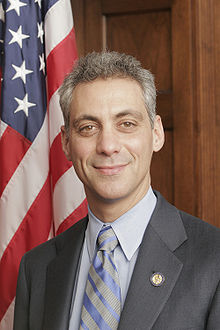 FOX 32 in Chicago is reporting that Mayor Rahm Emanuel is going on the offensive against merchant cash advance companies. Specifically it says,
Mayor Rahm Emanuel will call on state and federal agencies to regulate business to business lenders. Emanuel said cash advance companies have accelerated their marketing efforts in recent months, resulting in small businesses taking loans they cannot afford.
The article states that business owners have turned to the City of Chicago for help in paying back loans with high rates of interest.
While the mention of APRs reaching into the ranges of triple digits is supposed to shock you, one business lender that charges such rates recently went public and had been backed by Google Ventures, Fortress Investment Group, Goldman Sachs, and Peter Thiel.
Less than 30 days ago we were celebrating these companies as the solution to a problem that has plagued small businesses for all time, access to capital.
While Emanuel is obviously famous for being the 23rd White House Chief of Staff and Obama’s right hand man for a period in his first term, he is not the first mayor to consider the role merchant cash advance companies and high interest business lenders have in cities across America.
All the way back in 2008, the U.S. Conference of Mayors (USCM) adopted a resolution titled, Protecting Main Street Small Business Owners from Predatory Lenders, from which some of the excerpts below are from:
WHEREAS, merchant cash advance companies have already lent approximately $2 billion at egregious rates and have been quoted in leading main stream media publications such as Forbes, Business Week, Dallas Morning News, and American Banker claiming that their new originations have increased 75% in the first half of 2008
WHEREAS, as with payday lenders and predatory lenders in the home mortgage community, Mayors need to take a leadership role to scrutinize predatory merchant cash advance companies, educate small business owners of the dangers posed by these firms, and increase awareness and promotion of alternative, more affordable funding sources to support this vital segment of our economy
BE IT FURTHER RESOLVED, that to protect the general health and viability of their small business communities, cities should investigate whether they can effectively regulate or ban merchant cash advances.
3 months after this resolution was passed, Lehman Brother’s collapsed and the economic crisis was in full swing.
 According to a few industry leaders familiar with the 2008 mayoral resolution, UCSM privately retreated from their stance when all other types of commercial lending had dried up. Their seeming reversal, though not publicly stated invited merchant cash advance companies into their communities at the moment when Main Street was arguably at its weakest.
Who do they think rolled up their sleeves and kept local economies alive when things were at their worst?
While non-bank funding can obviously be expensive, countless business owners have praised merchant cash advances in particular as a solution that came through when none other were available.
Emanuel will learn that companies such as Square and PayPal are part of the crowd that provides merchant cash advances. This is not a shadow industry. Non-bank business-to-business financing is already becoming less expensive nationwide.
According to Fox, the Commissioner of the Chicago Department of Business Affairs and Consumer Protection said the goal is to offer small business owners loans at affordable rates with full disclosure.
Merchant cash advance companies would undoubtedly feel the same way. The dilemma is that advocates of affordable rates tend to really mean single digit rates. When single digit rates are not possible given the risk, they seem to argue that no financing should be given at all, leaving the business to fail or miss out on an opportunity. That’s the exact type of flawed thinking alternative financing companies address…
Ironically, a report from the Federal Reserve Bank of Cleveland last week concludes that small business job creation is lagging with a possible culprit being a lack of access to credit.
Coming out of the most recent recession, however, job creation by small businesses has lagged, and the new business formation rate continues to fall. While it is not clear that these trends are driven by weaker borrowing or limited access to loans, it is evident that businesses need adequate credit to succeed and grow. As such, policy makers should not lose sight of the trends related to small business credit, even with the recent positive reports showing improvements.
And of course in a supposed exposé on merchant cash advances that aired on Chicago Public Radio in November, clips of an interview I did with them were aired to fit the narrative of merchant cash advance as predatory. When asked by the interviewer what a small business owner should do if they didn’t understand a contract, I advised that they hire an attorney or an accountant, and if they couldn’t afford those then to find somebody they felt qualified to offer an opinion. “They should always get a 2nd set of eyes to review a contract if they don’t understand,” I said.
My advice did not air, nor did my explanation that there were two separate types of products that they were confusing as one, one being loans and the other being purchases of future receivables. I suppose it didn’t fit the characterization they were going for.
As quoted in Fox, Financial Advisor Kent Travis advised business owners to “read the documents, don’t sign anything on the spot, make sure you read it thoroughly and if you have trouble understanding it seek the advice of an advisor, CPA, an attorney or a financial planner.”
I couldn’t have said it better myself because I already did.
And in an interview I had with former Congressman Barney Frank, a chief architect of the Dodd-Frank Wall Street Reform and Consumer Protection Act, Frank voiced his opposition to regulations on business-to-business lending in early 2014.
There’s one thing the Fox story does mention that’s hard to argue with and that’s the need for greater transparency. I am all in favor of that.
—————–
For those that haven’t already signed up, this is a reminder that the Law Office of Pepper Hamilton LP is hosting a lunch at their office in New York on January 27th to specifically discuss the merchant cash advance industry’s future.
Interested in discussing legal issues, best practices, and the path forward for alternative business financing? Are you an ISO or funder interested in sharing your thoughts? Send me an email to let me you know if you’d like to attend. sean@debanked.com.
—-
Watch the Fox news report about merchant cash advances: