
Articles by deBanked Staff

PeerIQ Report Shows Mixed Signs for Non-Bank Lending
June 7, 2018PeerIQ released its 2Q2018 Lending Earnings Insight Report today, presenting forward-looking insights into the FinTech & non-bank space.
The report said that CEOs and CFOs see tax reform as increasing consumers’ disposable income. However, “an increasing supply for credit and demand for credit, as well as re-normalization trends and increased competition are leading to higher charge-offs.”
Credit performance this quarter is mixed, the report says. The analysts observe improvements, yet also record low delinquencies from OnDeck, OneMain Holdings and FinTechs in particular. At the same time, LendingClub expects 31 bps lower charge-offs moving forward due to tighter credit standards. At Discover – which is typically a bellwether for personal loan performance – the net charge-off rate jumped 92 basis points year over year to 3.62 percent. This is the largest increase in several years.
According to the report, card issuers are increasing loan loss reserves at a higher rate than loan growth, indicating expectations of higher losses moving forward. The report also notes that banks are either partnering with FinTechs or investing in ramping up their technology capabilities in payments, lending, digital banking and wealth management.
Lenders are taking actions to pass rising rates on to borrowers to protect margins and investor returns, the report says. Lenders are also trying to reduce all-in funding costs by reducing the credit spreads on their securitizations.
On the brighter side, the report said that “FinTech and Non-Banks overall posted good revenue growth [in Q1 2018] in the range of 7% to 25% and most expressed optimism about the exceedingly good credit environment we find ourselves in.” Enova, OneMain Holdings and OnDeck saw some of the lowest charge-offs, with Lending Club indicating that expected charge-offs across grades would be up to 31 bps lower, according to the report.
$400M A Year: Fora Financial / US Business Funding Deal to Make Fora an Originations Leader
June 5, 2018 Fora Financial’s newly acquired stake (a significant one) in US Business Funding will put them on track to originate $400 million a year, the company said. Those numbers will place them on the list with industry titans like BFS Capital, Strategic Funding and National Funding.
The co-founders of Fora were previously featured on deBanked’s Jan/Feb 2016 magazine issue.
US Business Funding (USBF), who is based in Santa Ana, CA facilitates different financing products for small businesses including vendor programs, capital equipment loans, and leasing solutions.
“This is an exciting time for all of us at US Business Funding,” said USBF CEO Peter Ribeiro in a published statement. “We have rapidly built one of the top sales organizations in the industry, and now we have the opportunity to leverage the expertise and resources of Fora Financial to fuel our growth even further. Jared and Dan have established Fora Financial as one of the top lenders in the space, and we are motivated to build on our terrific relationship with them to create even more opportunities for our companies to succeed.”
Yellowstone Capital Funded $64.5M in May
June 4, 2018Yellowstone Capital originated $64.5M in funding to small businesses in May, according to the company. The figure topped their previous month of $61M.
IOU Financial Has Profitable Q1
May 29, 2018 IOU Financial reported a net income of $797,198 (CAD) in Q1, according to their latest quarterly financial statements. Despite primarily lending to US-based small businesses, IOU is headquartered in Canada, where the company is listed on the TSX Venture Exchange. IOU’s market cap at the market’s close on Friday, was less than $15 million. For comparison’s sake, rival small business lender OnDeck, currently has a market cap of $438 million.
IOU originated $24.5M (CAD) in loans in Q1, up $2.5M from the same period last year. $21.8M of those loans were sourced “via relationships with third-party business loan brokers,” according to their report.
The company proudly noted a 50% reduction in their provision for loan losses. “This decrease is primarily attributable to lower defaults by borrowers as well as by the smaller size of the loan portfolio,” the report said. “The improvement in the provision for loan losses (net of recoveries) is a result of changes made in 2017 in the Company’s lending policies and in the loan servicing and collection process, which includes an aggressive litigation strategy against businesses who default on their loan obligations.”
In a published statement, IOU CEO Phil Marleau said, “Following the positive results in the fourth quarter of 2017, IOU has delivered even stronger results in the first quarter of 2018. This is a testament to the measures taken to bring down loan defaults and control costs. IOU expects to continue to grow loan originations and generate profits over the coming quarters.”
StreetShares to Change Fee Policy
May 22, 2018StreetShares sent out an email on Monday saying that they will no longer automatically deduct origination fees from their loans to small businesses. Instead, according to the email, merchants will receive their full amount and it will be up to the merchant to decide whether they would like to pay off the origination fee immediately or include it in their weekly payment.
Kabbage Reveals Plans for a ‘Reverse Play’
May 22, 2018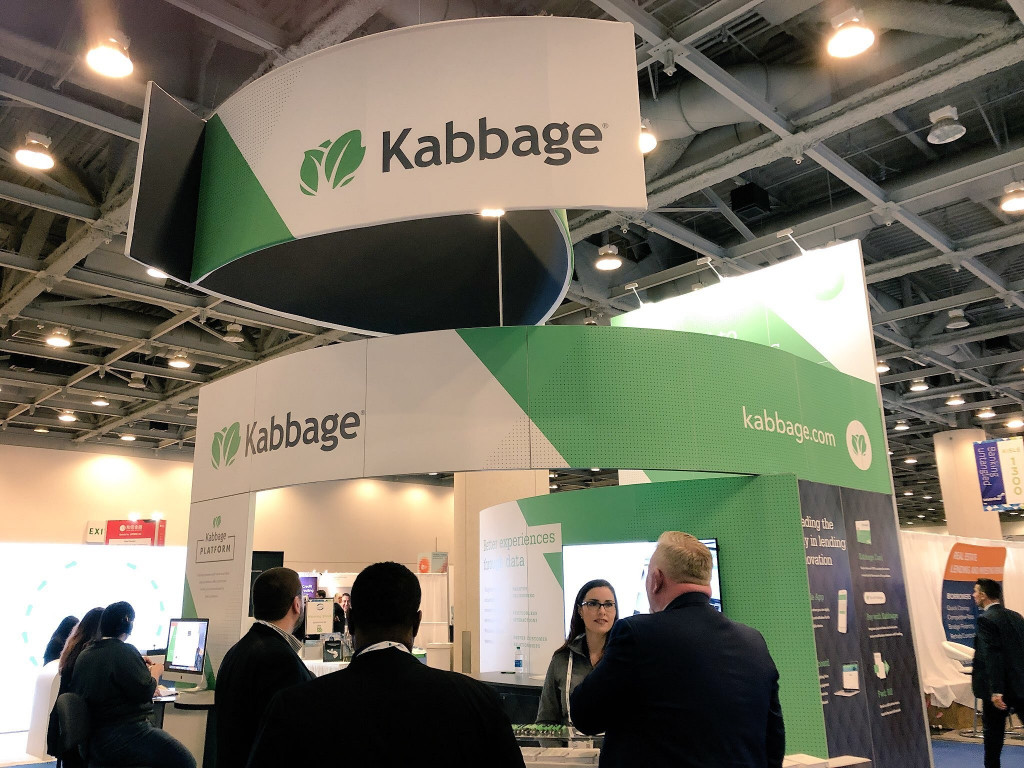 When it comes to lending, the business models of Square and PayPal may be too good to ignore.
According to Reuters, Kabbage plans to launch its own payment processing service by year-end. “The monoline businesses have a hard time succeeding long term,” Kabbage co-founder Kathryn Petralia is quoted as saying.
While Square and PayPal started off in payments and added lending, Kabbage sees the value proposition of the reverse play, to start off in lending and add payments.
But another Square and PayPal rival may not. Back in October, deBanked questioned OnDeck CEO Noah Breslow during an interview about this very thing. At the time, Breslow responded that they were not going to sell merchant processing. “Never say never,” he said, “but not in the near future.”
Square and PayPal’s lending businesses differ from other online lenders in that they can solicit their existing payments customer base at virtually no cost. OnDeck, meanwhile, spent $53 million last year alone on sales and marketing to acquire loan customers.
Square’s acquisition of payments customers is not cheap, however. The company spent $253 million in sales and marketing last year. The advantage is in not needing to shell out additional cost to convert them into loan customers.
OnDeck still held the lead over both Kabbage and Square last year in loan originations at $2.1B vs $1.5B and $1.17B respectively. PayPal was not ranked.
Eaglewood Not Happy About World Global Financing Bankruptcy
May 21, 2018A new complaint filed by Eaglewood SPV I LP suggests they’re not happy with ailing merchant cash advance company World Global Financing (WGF). Eaglewood originally sued WGF on March 28th in the New York Supreme Court and secured an injunction on May 2nd to turn over the cash and proceeds from receivables owed to Eaglewood. According to Eaglewood, WGF proceeded to ignore the court’s order and Eaglewood hasn’t been receiving anything. On May 8th, WGF filed Chapter 11.
The new complaint alleges that WGF and the company’s owner have engaged in fraud and that Eaglewood has been damaged to the tune of $6.5 million.
Sneaky Debt Settlement Company Temporarily Restrained by Judge
May 20, 2018 A debt settlement company has sunk to new lows, according to a petition filed by Yellowstone Capital in Nassau County. Defendants SMCA, Inc. DBA Settle My Cash Advance, Thassos.com Corp DBA Thassos.com, and George Alexander, have been accused of fraudulently transferring funds owed to Yellowstone Capital to themselves while trying to mask the evidence in the process.
Unlike other purported debt settlement schemes, the Settle My Cash Advance defendants are alleged to have first actively coached a merchant to hide his money in new bank accounts rather than pay his judgment. This, according to emails attached as exhibits, included instructions by the defendants on how to cover up the paper trail so that the money could not be traced. Once this was successfully carried out, the defendants then absconded with the merchant’s money, leaving him broke and the judgment still unpaid.
According to the merchant’s sworn affidavit, Settle My Cash Advance lured him into believing that they not only had a relationship with Yellowstone but that they would also reduce the judgment entered against his business by 25% – 70%.
“SMCA (Settle My Cash Advance) told me to transfer all funds, as my business and I earned them, to SMCA to hold them for us so that Yellowstone could not collect on its judgment,” the merchant wrote. “The deal that SMCA represented to me was that SMCA would take the funds, hold them in trust, and use them to settle our obligations with Yellowstone for a small contingency fee.”
What happened instead is that the defendants ran off with the money held in trust and did nothing to help with Yellowstone, the documents say.
Presented with the facts laid out before it, the Court ordered that the funds held by Settle My Cash Advance be restrained pending a May 30th hearing.