Related Headlines
| 08/20/2024 | CFPB releases new 1071 guide |
| 05/17/2024 | CFPB delays 1071 compliance |
| 04/12/2024 | Finastra launches 1071 compliance tool |
| 12/01/2023 | NFIB: drop CFPB's Section 1071 |
| 11/01/2023 | SMBs: we don't want Sect 1071 either |
Related Videos
Is Section 1071 Going Away? | Section 1071 Symposium |


Stories
Wait, Is Section 1071 On The Verge Of Being Cancelled?
December 1, 2023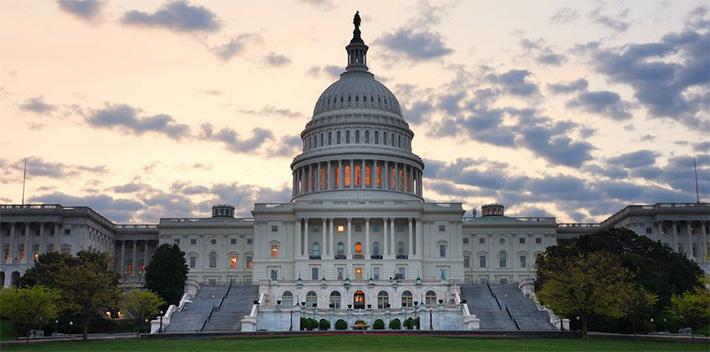 After the CFPB spent 13 years trying to figure out how to implement a wide-reaching poorly-worded law, the ensuing 888-page handbook full of rules for small business lenders to follow so the government can measure disparities in commercial loan underwriting processes, may have all been for naught. Congress wants the rules gone.
The rules in question were mandated by Section 1071 of the Wall Street Reform and Consumer Protection Act of 2010 (Dodd-Frank) at a time when the bill’s drafters assumed that all business financing products were loans and all loans came from banks. The consequence has been endless rounds of debates, RFIs, hearings, committees, consultations, explainer guides, and lawsuits. Most recently there was a court-ordered injunction put in place to delay implementation of these rules.
Today, however, the House followed the Senate in voting to strike down the relevant rules. Though it was close in both chambers of Congress, Democrats did join Republicans in reaching this outcome. Nevertheless, reports say that Biden is expected to veto their resolution.
Notably, the passed legislation disapproves the rules submitted by the CFPB, not the underlying section of the law that mandates they draft a set of rules. This is important because it’s not Section 1071 that they’ve voted to undo, but rather the final rules that the CFPB has issued as part of its obligation to Section 1071.
According to House republicans, “By overturning the final 1071 rule, Congress will force the CFPB to reengage small businesses and their lenders to create a rule that is better tailored to their concerns and less likely to reduce the availability of credit.”
This effectively means that Section 1071 itself is safe (unless a court rules it or the CFPB unconstitutional). If the President does not veto it the legislation would force the CFPB to go back to the drawing board on rules it took 13 years to come up with in the first place.
ELFA Wins Nationwide Relief from Section 1071 for Equipment Finance Industry
October 26, 2023 WASHINGTON, D.C., October 26, 2023 – In a major victory for members of the Equipment Leasing and Finance Association and the entire equipment finance industry, today the U.S. District Court for the Southern District of Texas issued a nationwide injunction delaying implementation of Section 1071 for all covered financial institutions. This action is in direct response to the efforts of ELFA and the other parties that intervened in the case in recent months. Functionally this means that the deadlines for compliance with Section 1071 are delayed by approximately 10 months for all ELFA member companies.
In response to the Court Order, ELFA President and CEO Ralph Petta said, “This is a big win for ELFA members and the equipment finance industry as a whole. We applaud the action taken by the court today, which underscores the value of our association’s ongoing efforts to ensure Section 1071 doesn’t make it more burdensome for our members and their customers in the $1 trillion equipment finance industry to do business together.”
Earlier this year the court had issued a partial injunction in response to litigation filed by Rio Bank, the Texas Bankers Association and the American Bankers Association. That initial injunction had, until that point, only covered those three entities. In August ELFA intervened in the lawsuit to ensure that the initial relief provided by the judge would apply equally to all ELFA members.
The action taken by the court today broadens the injunction to delay implementation of Section 1071 for all financial institutions covered by the rule. The delay will last until the Supreme Court issues a decision in a different, but related, case. The Supreme Court decision is expected in the spring/summer timeframe of 2024. This means that compliance will likely now be pushed out approximately 10 months from all the dates published in the original rule.
ELFA has been working for over a decade to improve Section 1071. The association has been proactively engaged in both the legislative and regulatory arenas to defend its members’ interests and reduce the measure’s onerous reporting regulations. Section 1071 is a part of the Dodd-Frank Act, which when implemented by the Consumer Financial Protection Bureau (CFPB) will require commercial finance companies to collect information about credit applicants and report it to the CFPB on an annual basis, along with extensive financial data associated with the application’s disposition, including extensive pricing information.
The “Order Granting Intervenors’ Motions for Preliminary Injunction” is available on the ELFA website at https://www.elfaonline.org/1071. ELFA will be sharing more information with its members in the coming days and weeks about the implications of this ruling.
About ELFA
The Equipment Leasing and Finance Association (ELFA) is the trade association that represents companies in the $1 trillion equipment finance sector, which includes financial services companies and manufacturers engaged in financing capital goods. ELFA members are the driving force behind the growth in the commercial equipment finance market and contribute to capital formation in the U.S. and abroad. Its 580 members include independent and captive leasing and finance companies, banks, financial services corporations, broker/packagers and investment banks, as well as manufacturers and service providers. ELFA has been equipping business for success for more than 60 years. For more information, please visit www.elfaonline.org.
Media/Press Contact: Amy Vogt, Vice President, Communications and Marketing, ELFA, 202-238-3438 or avogt@elfaonline.org
CFPB Initially Proposed to Exclude MCAs, Factoring, and Equipment Leasing From Section 1071
December 17, 2020 After ten years of debate over when and how to roll out the CFPB’s mandate to collect data from small business lenders, the Bureau has initially proposed to exclude merchant cash advance providers, factors, and equipment leasing companies from the requirement, according to a recently published report.
The decision is not final. A panel of Small Entity Representatives (SERS) that consulted with the CFPB on the proposed rollout recommended that the “Bureau continue to explore the extent to which covering MCAs or other products, such as factoring, would further the statutory purposes of Section 1071, along with the benefits and costs of covering such products.”
The SERS included individuals from:
- AP Equipment Financing
- Artisans’ Bank
- Bippus State Bank
- CDC Small Business Finance
- City First Bank
- Floorplan Xpress LLC
- Fundation Group LLC
- Funding Circle
- Greenbox Capital
- Hope Credit Union
- InRoads Credit Union
- Kore Capital Corporation
- Lakota Funds
- MariSol Federal Credit Union
- Opportunity Fund
- Reading Co-Operative bank
- River City Federal Credit Union
- Security First Bank of North Dakota
- UT Federal Credit Union
- Virginia Community Capital
The panel discussed many issues including how elements of Section 1071 could inadvertently embarrass or deter borrowers from applying for business loans. That would run counter to the spirit of the law which aims to measure if there are disparities in the small business loan market for both women-owned and minority-owned businesses.
One potential snag that could complicate this endeavor is that the concept of gender has evolved since Dodd-Frank was passed in 2010. “One SER stated that the Bureau should consider revisiting the use of male and female as categories for sex because gender is not binary,” the CFPB report says.
But in any case, there was broad support for the applicants to self-report their own sex, race, and ethnicity, rather than to force loan underwriters to try and make those determinations on their own. The ironic twist, however, according to one SER, is that when applicants are asked to self-report this information on a business loan application, a high percentage refuse to answer the questions at all.
The CFPB will eventually roll the law out in some final fashion regardless. The full report can be viewed here.
An Update on Section 1071 of Dodd-Frank
October 23, 2020 After more than a decade, Section 1071 of The Wall Street Reform and Consumer Protection Act (AKA Dodd-Frank) is finally moving along. The law expanded the Equal Credit Opportunity Act to require that the Consumer Financial Protection Bureau collect demographic data from small business finance companies. For ten years, a whole lot of nothing happened to roll it out, so you’ll be forgiven if it seems like the latest updates are a bit vapid.
But then the CFPB got sued for its failure to carry out its duties and it resulted in a settlement that requires the agency to hit certain milestones by certain timelines. Section 1071 is all about collecting loan applicant data in commercial finance to measure if there are disparities in the ability to access credit, particularly for female-owned and minority owned businesses. It necessitates a mechanism to comply, which will
ultimately cost time and money.
But in the meantime, the milestones to even get to the point where data collection is being carried out, are roughly as follows:
1. Convene a panel of small business lenders
2. Have that panel issue a report
3. Propose what the rules on collection will be
4. Collect feedback on the proposal
5. Formulate a final rule
6. Issue a rule
7. Set a time for when that rule will go into effect
We spoke with one alternative finance company that has been engaged in the process.
“I am representing, and Greenbox Capital is essentially representing, the industry,” CEO Jordan Fein told deBanked in regards to his role as a Small Entity Representative to the CFPB’s panel of small business lenders. “There are some banks, there’s Funding Circle, but other than that, it’s Greenbox Capital serving in the industry.” Fein said that panelists give their opinion and engage in discussion on how companies will be impacted. He also said that he was very happy to participate in the process.
“It’s an honor to be selected to the industry panel providing feedback on section 1071 of the DoddFrank Act ensuring fair lending laws to women- and minority-owned businesses,” said Fein. “Over 2 million businesses across the U.S. are either women or minority owned and it’s vital they can secure funding as easily as non-minority owned businesses.”
The panel must complete a report within 60 days of convening. With several more milestones to go, a final rule is unlikely to go into effect prior to 2022. But until then, know that Section 1071’s implementation will probably happen during your lifetime.
Greenbox Capital on Official Panel to Aid Section 1071’s Rollout
October 21, 2020 This week, Greenbox Capital, the Miami-based alternative finance company known for its MCA and SMB financing, announced they are serving as a Small Entity Representative (SER) to the Consumer Financial Protection Bureau (CFPB) as the organization proceeds with the rollout of Section 1071 of the Dodd-Frank Act.
“I am representing, and Greenbox Capital is essentially representing, the industry,” CEO Jordan Fein said. “There are some banks, there’s Funding Circle, but other than that, it’s Greenbox Capital serving in the industry.”
Fein, who founded Greenbox in 2012 and has since facilitated MCAs and business loans across America, Puerto Rico, and Canada, wrote in a press release that it was an honor to be selected to provide feedback on Section 1071.
“Over 2 million businesses across the U.S. are either women or minority-owned,” Fein wrote. “It is vital they can secure funding as easily as non-minority-owned businesses.”

Congress passed the Dodd-Frank Act in 2010 in response to the Great Recession. To further protect consumers, the CFPB was born. Section 1071, an amendment to the 1974 Equal Credit Opportunity Act, mandates financial institutions report demographic information to the CFPB. But much was left undefined about how to go about doing that and who would technically be subject to it.
Ultimately, the intent behind the law was to measure potential disparities among factors like the race and gender of applicants. Ten years later, the rollout is finally moving along.
As part of this, the CFPB created a board of firms representing the affected industry, on which Greenbox sits, to ensure the law works with the industry, not against it. The first panel was on October 15, in compliance with the 1996 Small Business Regulatory Enforcement Fairness Act (SBREFA.)
“They’re going through the SBREFA process, which is a structured process where they have a panel of industry representatives, and they share what they’re planning to do,” Fein said. “They run it by companies like us and we give our opinion and talk about how we think companies will be impacted.”
According to an invitation letter the firms received, they will have until November 9 to respond.
Fein said Greenbox would ensure any suggestions it made would positively impact the industry. Especially during a pandemic, Fein said it is essential to create regulation with firms in mind.
Section 1071 is Back and The CFPB Wants to Know How Much It Will Cost You to Comply
August 25, 2020 At some point in this century, small business finance companies will be expected to comply with Section 1071 of the Wall Street Reform and Consumer Protection Act that was passed in 2010.
In the wake of the ’08-’09 financial crisis (remember that?!), lawmakers passed the above act that has become colloquially known as Dodd-Frank. Section 1071 gave the Consumer Financial Protection Bureau the authority and the mandate to collect data from small business lenders (and similar companies).
The costs, risks, and challenges with rolling out this law have been discussed on deBanked for 5 years, yet little progress has been made to finally implement it. But it’s starting to move along and the CFPB would now like to know how expensive it will be for businesses to comply.
If you are engaged in small business finance, you should seriously consider submitting a response to their survey. The CFPB is specifically cataloging responses from merchant cash advance companies, fintech lenders, and equipment financiers.
Was Section 1071 of Dodd-Frank a Massive Mistake?
August 23, 2017Did Congress make a huge mistake by thinking small business loans were easily commoditized?
Pursuant to Section 1071 of Dodd-Frank, the CFPB is planning to collect data from companies engaged in small business finance in order to potentially screen for discrimination against women and minorities. Before deciding how exactly they’re going to do that, they’ve asked the public for comment, and the public… isn’t showing the law much love. Below are some excerpts of the nearly 300 responses already submitted.
We can tell all the stories we want, and hold all the hearings imaginable, and there is still no way to disguise the fact that implementing a HMDA-like reporting requirement will add cost, complexity, and rigidity to our amazingly customized lending
– Alan Gay
A loan priced properly for the risk may be acceptable for one institution and not acceptable to another. For example a client requests funds to open their second doughnut shop in town. One bank declines the loan because they do not specialize in food service business per lending policy and the banks appetite for risk. Another bank would consider the loan, however after reviewing the current competition decides that the market is saturated and the loan is too risky based on the three competitors within five miles. The third bank is willing to loan the money based on the cash flow of the owner and her husband, but will not take into account the expected cash flow from the business, and will require the collateral to include the primary residence of the client. The fourth bank is an SBA lender and proposes the client use the SBA program to mitigate the risk for the bank. The fifth bank declines the loan due to cash flows. They will not consider the revenues from the new location, because it is considered a start-up business. As I understand it the CFPB will collect the data from all five banks to determine “Fair Lending” similar to the consumer lending program. I find this problematic on many levels: I believe in the scenario presented all the lenders were fair. The data is redundant and will not show the result of credit search on the commercial loan request or accurate results.
– Doug Mitchell
Creating additional documentation and regulation only makes those in Congress and the CFPB feel better without truly adding benefit to our community and it’s businesses.
– Joseph Williams
COLLECTING AND AGGREGATING THIS INFORMATION WOULD BE A BURDEN THAT WOULD REQUIRE ADDITIONAL STAFF AND NOT CHANGE OUR HISTORY AND BUSINESS MANDATE OF SERVING OUR SMALL TOWN BUSINESSES.
– Dee Baertsch
As a community banker in rural Ohio I strongly urge the repeal of Section 1071 of the Dodd-Frank Act. The addition of another report will be counterproductive to lending to small businesses.
– Chuck Dixon
Commercial lending is a completely different animal from consumer lending, and has so many different aspects to consider. While a consumer loan is typically viewed from and ability and intent to pay by reviewing a consumer credit score and debt to income calculation, a commercial loan is viewed from not only current earnings but also projected earnings, the economic conditions surrounding the specific business/industry, competitiveness in the market, and the speed of obsolescence of the business’ products and services. It is so much more than pulling a credit report and getting the last two pay stubs.
– Brian Smith
The Race and Sex questions should be eliminated from all loans.
– David Ludwig
Our bank in particular will be unduly burdened by small business lending data collection.
– Casey D. Lewis, CRCM, First Bank & Trust
This new requirement will place a large burden on our small bank and staff as more time will be spent on data collection and reporting rather than giving the value added service to our actual customers. It also may increase the cost of credit to our borrowers in order to offset the increased compliance cost to comply.
– Anita Drentlaw
These regulation proposed by the CFPB will only act to hamper and restrict our ability to continue meet the credit need of our communities and will not provide any meaningful benefit to anyone.
– Jim Goetz
Adding new requirements to collect and report data related to these loans much like HMDA diverts time of our limited staff away from serving our customer needs and expends resources that do not help our community.
– James Milroy
The last thing I need is to spend even more of my time collecting data similar to the HMDA data we collect on other loans. It is a timely, costly and inefficient use of our resources which could be better utilized for spending more time with potential and current customers and lowering their interest rates. Very few businesses are the same which would lead to misrepresentation and baseless fair lending complaints.
– Daniel Mueller
By making our jobs harder, you are making it harder for small businesses to thrive.
– Joy Blum
I have seen first hand the negative effects of the HMDA collection and reporting to our bank. The increased work for our small bank has driven up our costs and is making it harder for us to compete. In addition to the negative impact on our bank mortgage customers pay a cost and as more and more community banks decide they can no longer provide these services the community will be left with fewer options.
– Jeff Southcott
Stop all the paper work to get a commercial loan. Enough is Enough!
– Jeff Spitzack
We are a small $65 Million dollar bank with limited personnel now being asked to police another segment of our customer base. We do not have the resources to carry out more regulatory burden.
– Girard J. Hoel, Chairman, The Miners National Bank of Eveleth
Commercial lending cannot be “commoditized” in the way that consumer lending can, nor can it be subject to simplified, rigid analysis which may generate baseless fair lending complaints.
– Steve Worrell
We are so heavily burdened with keeping up with all the changing regulations and requirements, it would be very burdensome for not only our bank, but many other community banks. There has to be a way to ensure the end results that you are looking to achieve without making it so hard on Community Banks. We feel that we have to really analyze if it is cost prohibitive to actually make the loan – and how does that help the small businesses?
– Margi Fleming
We would never decline a profit making loan because of the race or sex of the applicant. You would be appalled to know how little attention borrowers pay to the dozens of pages of disclosures required by regulation. Over disclosure is no disclosure.
– Douglas Krogh
Community banks simply do not have numbers on our side, either in manpower or funding, to seamlessly and efficiently absorb the vast and sweeping regulatory changes.
– Cheryl Hiller, 1st National Bank of Scotia
The new data collection will add additional staff at our institution. This salary will be passed on in the form of origination fees or increased rates to our small business customers. This is not fair to them, but with the increased regulatory demands by the CFPB on small business lending if this is adopted will increase their borrowing cost.
– Russell Laffitte
The burden of data collection and reporting would in effect end up costing our customers more to get a loan.
– Shannon Fuller
This tracking will be onerous on a small bank that stays competitive by maintaining a small staff like ours
– Jim Legare
Section 1071 will have a chilling effect on lenders’ ability to price for risk. This, in addition to the expense of data collection and reporting, may impact community banks’ ability to provide affordable commercial lending products and curb access to small business credit, an engine of local economic growth and job creation.
– Freeman Park
Please make every effort to prevent the added burden to small business lending and community bank processes by repealing Section 1071 of the Dodd Frank Act.
– Julie Goll
Puerto Rico Bankers Association Calls Section 1071 Absurd and Unreasonable
June 28, 2017Section 1071, the law that grants the CFPB authority to collect loan application data on minority and women-owned businesses, is under fire, again. This time it’s the Puerto Rico Bankers Association in response to the CFPB’s RFI on the matter. In a letter, the PRBA points out the sheer irony of conducting costly disparate impact studies on minorities in minority-only communities.
An excerpt from their statement:
According to the 2010 US Census Bureau, 99% of the population of Puerto Rico is Hispanic.
[…]
The direct and evident effect of Section 704B of ECOA for the financial institutions in Puerto Rico will inevitably be the collection, recordkeeping and reporting of virtually all commercial loan applications received within the Puerto Rico marketplace, since most of such applicants would be regarded as “Minority Owned Business”, in accordance with Section 704B.
The PRBA believes that this absurd and unreasonable result must not have been intended by Congress when it enacted Section 1071 of the Dodd-Frank Act. The data so collected, maintained and reported will not serve the purposes for with Section 1071 was enacted since, for the reasons set forth above, it will be completely inaccurate and unreliable. The potential complexity and cost of compliance with the minority-owned businesses data collection and reporting requirements of Section 704(B), will impose on our banks an unintended and unreasonable burden.
Other responses to the CFPB’s RFI have so far called Section 1071, “literally impossible to comply with” and a duplicated effort.

See Post... what do you look like ?, , fat kid with a marcus mask on... |
See Post... i need to compete with 15mo 150k from quarterspot?, merchant wants 18months 160k, , sba - $150k @ 8.25% - 120 payments - estimated payment - $1835.00 ... |
See Post... i need to compete with 15mo 150k from quarterspot?, merchant wants 18months 160k, , several a paper guys will offer those terms...but you are leaving ... |