Archive for 2019
Amazon Now Among The Top Online Small Business Lenders in The United States
May 8, 2019
Amazon has joined PayPal, OnDeck, Kabbage, and Square as being among the largest online small business lenders. On Tuesday, Amazon revealed that it had made more than $1 billion in small business loans to US-based merchants in 2018. Amazon says the capital is used to build inventory and support their Amazon stores.
By selling on Amazon, “SMBs do not need to invest in a physical store or the costs of customer discovery, acquisition, and driving customer traffic to their branded websites,” the company says. Small and medium-sized businesses selling in Amazon’s stores now account for 58 percent of Amazon’s sales. More than 200,000 SMBs exceeded $100,000 in sales on Amazon in 2018 and more than 25,000 surpassed $1 million.
You can view the full report they published here.
| Company Name | 2018 Originations | 2017 | 2016 | 2015 | 2014 | |
| PayPal | $4,000,000,000* | $750,000,000* | ||||
| OnDeck | $2,484,000,000 | $2,114,663,000 | $2,400,000,000 | $1,900,000,000 | $1,200,000,000 | |
| Kabbage | $2,000,000,000 | $1,500,000,000 | $1,220,000,000 | $900,000,000 | $350,000,000 | |
| Square Capital | $1,600,000,000 | $1,177,000,000 | $798,000,000 | $400,000,000 | $100,000,000 | |
| Amazon | $1,000,000,000 | |||||
| Funding Circle (USA only) | $792,000,000 | $514,000,000 | $281,000,000 | |||
| BlueVine | $500,000,000* | $200,000,000* | ||||
| National Funding | $494,000,000 | $427,000,000 | $350,000,000 | $293,000,000 | ||
| Kapitus | $393,000,000 | $375,000,000 | $375,000,000 | $280,000,000 | ||
| BFS Capital | $300,000,000 | $300,000,000 | $300,000,000 | |||
| RapidFinance | $260,000,000 | $280,000,000 | $195,000,000 | |||
| Credibly | $290,000,000 | $180,000,000 | $150,000,000 | $95,000,000 | $55,000,000 | |
| Shopify | $277,100,000 | $140,000,000 | ||||
| Forward Financing | $210,000,000 | $125,000,000 | ||||
| IOU Financial | $125,000,000 | $91,300,000 | $107,600,000 | $146,400,000 | $100,000,000 | |
| Yalber | $65,000,000 |
FTC Forum on Small Business Financing & Merchant Cash Advances
May 7, 2019At the FTC Forum on Small Business Financing & Merchant Cash Advances this morning, FTC regulators asked questions of a panel of industry representatives about controversial topics, including the use of COJs. Below are some closely paraphrased responses.
On Confessions of Judgment (COJs)
Scott Crocket, Founder & CEO, Everest Business Funding
The role of COJs is a conversation worth having. What’s the right balance?
We choose only to use them for deals of $100,000 or more. And COJs apply for only 3% of our business. So if there was a ban on COJs, it wouldn’t really affect us. It might just limit the amount we would fund.
The Bloomberg stories are not representative of what we do. We don’t file a COJ when a business is slowing down, but only when we suspect fraud.
Jared Weitz, CEO, United Capital Source
90% to 95% of our deals do not include COJs. And for those where we do use COJs, we give merchants a document that has a description of what it is so that they’re comfortable with it. We tell them that they have to be comfortable with it before they take it.
Jesse Carlson, Senior Vice President & General Counsel, Kapitus
After we saw the extent of the use of confessions of judgement by certain individuals/companies, as a trade association, we at the Small Business Finance Association (SBFA) decided to include in our code of conduct a ban on the use of confessions of judgement if you’re a member of the SBFA.
Part of the reason why we do include COJs is because we’re very careful with our underwriting.
On True-ups
Jesse Carlson
We have 5 to 10 employees who speak with merchants when they are having unforeseen financial challenges and we’ll adjust their ACH repayment. Some companies treat the percentage of the company’s sales as an absolute. We’ll offer them modifications.
Scott Crocket
We remind merchants that the true-up is available.
Ami Kassar, Founder & CEO, Multifunding LLC
Many funders are not as forgiving as these funders say they are.
Kate Fisher, Partner, Hudson Cook
Some MCA funders reached out to merchants affected by the hurricane in Texas and the forest fires in California to adjust their payments.
Jared Weitz
Other funders stopped requesting payments altogether from merchants who were affected by these natural disasters.
Brokers / Aggressive Marketing
Jared Weitz
A broker of an MCA deal has to give the commission back if the merchant fails within 90 days.
Jesse Carlson
We work with about 100 brokers/ISOs at a given time and we do background checks on them.
Scott Crocket
We do background checks on brokers and we monitor their behavior. We don’t hesitate to cut off a relationship with an ISO. We do spot checks, but we don’t monitor every ISO every day.
The Federal Trade Commission hosted a forum on small business financing including loans and merchant cash advances to examine trends and consumer protection issues in this marketplace.
The forum began at 8:30am and concluded at 1pm. Among some familiar names that spoke are:
- Jared Weitz, CEO, United Capital Source
- Scott Crockett, Founder & CEO, Everest Business Funding
- Christian Spradley, Head of Policy & Senior General Associate Counsel, OnDeck
- Kate Fisher, Partner, Hudson Cook
- Ami Kassar, Founder & CEO, Multifunding LLC
- Jesse Carlson, Senior Vice President & General Counsel, Kapitus
- Sam Taussig, Head of Global Policy, Kabbage
- Lewis Goodwin, Banking Lead, Square Capital
Broker Fair 2019 Speaker Lineup
May 5, 2019Broker Fair 2019 check-in begins at 7:30 am on Monday morning. With nearly 700 people registered to attend, it’s going to be a packed event! If you’ve got a ticket, here’s who you can expect to hear from:
A deBanked Event is Coming to Canada
May 4, 2019Toronto, Ontario – deBanked is coming to Canada. A deBanked CONNECT networking event will be taking place at the Omni King Edward in Toronto on July 25th. The event will cater to the Canadian online small business lending and merchant cash advance industry. Tickets are already available for sale at https://www.debankedcanada.com. Early bird pricing is available until May 30th.
Conference President Sean Murray said of the event, “We have had a lot of success with events for this market in the United States and I believe we can provide value in Canada where the industry has many similarities. Tickets and sponsorships are priced in Canadian dollars.”
Registration on July 25th will begin at 1:30pm and the event continues all day until 8pm. The conference has a special discount room rate at the Omni King Edward that is available until June 24th. Book using group name: deBanked CONNECT Toronto.
About deBanked CONNECT Toronto
deBanked CONNECT events are produced by Foinse, LLC, a Delaware, USA organization. Foinse is registered under Canadian BN: 700629710. Prior events have been hosted in New York City, Miami, and San Diego. To learn more, email events@debanked.com or call 917-722-0808. Register for the event online at https://www.debankedcanada.com.

OnDeck Slips To #3 in Tight Pack of Top Small Business Lenders
May 3, 2019 With most 2019 Q1 earnings in for public companies, the industry’s biggest lenders are off to the races. Square reported on Wednesday that Square Capital, its business lending arm, originated $508 million in loans in the first quarter of the year. Meanwhile, OnDeck originated $636 million this quarter, according to its earnings report released yesterday. Kabbage, which is not a public company, has been trailing very closely behind OnDeck for the last few years but someone familiar with the company said that Kabbage’s originations in the first quarter of this year surpassed OnDeck’s.
Then there is PayPal, which has not released official origination numbers for 2019 Q1. But earlier statements from PayPal that they had surpassed a billion dollars in quarterly small business funding in 2018 (already more than OnDeck), would put it in the #1 slot for originations. Additionally, a comment made by PayPal CEO Dan Schulman during the company’s earnings call last week implied that its Q1 2019 earnings are again over a billion dollars.
PayPal’s estimated originations number represents its US and international originations, including their business financing products available in the UK, Australia, Germany and Mexico. Likewise, OnDeck’s number represents originations from the US along with its smaller markets in Australia and Canada.
Square Capital operates exclusively in the US, so its originations number is US-only. And Kabbage’s undisclosed estimated originations number represents purely US originations.
| Company Name | 2019 Q1 Funding Volume |
| PayPal | $1,000,000,000+ |
| Kabbage | $650,000,000* |
| OnDeck | $636,000,000 |
| Square | $508,000,000 |
OnDeck Originations Slide in First Quarter
May 2, 2019 OnDeck’s originations dipped in the first quarter of this year to $636 million, down from $658 million in the previous quarter.
“We made some adjustments to credit policy mid-quarter to pull back in certain areas and our funding advisor channel volume decreased sequentially as a result,” said OnDeck CEO Noah Breslow.
In other words, OnDeck has tightened its credit box.
“If you tighten [your credit box] and your competitors stay exactly the same, on the margin, your funnel is going to deteriorate a little bit because you’re not making as aggressive offers as you were before,” Breslow said in response to a question on this morning’s earnings call.
But he also said that OnDeck has a lot of historical data on its portfolio that tells them that this tightening for now is a wise decision.
“And we’re not making a seismic shift in who we’re targeting or what we’re trying to do,” Breslow said.
When asked by an analyst on the conference call if competition in the space is now more intense, he agreed that it is.
“But it’s broad based, not localized to any one competitor,” Breslow said. “There are larger players in the market that are getting a little more mature. Some of them are improving their access to capital as well.”
Kabbage likely sees itself as a primary competitor and not just part of “broad based” competition. After all, it originated $2 billion last year, compared to OnDeck’s $2.48 billion.
“The small players actually have pretty good access to capital too,” Breslow said on the call. “So any single one of them is not that big, but if you put them all together, they’re equivalently sized to another OnDeck. So that’s something we watch as well.”
While total originations dropped for OnDeck, Breslow said that the company’s line of credit volume was at an all time high, accounting for $150 million. Also, 43% of volume for the first quarter of 2019 came from OnDeck’s direct channel. Yet the company continues to build out its partnerships.
“Given the attractive customer acquisition costs in the strategic partner channel…adding new partnerships remains a focus,” Breslow said.
Breslow said OnDeck expects to return to quarterly growth in the second half of this year.
Square Originated $508M in Business Loans in Q1
May 1, 2019Square Capital, Square’s business lending arm, originated 70,000 small business loans for a total of $508 million last quarter, according to their recent earnings report.
As a payments company first, Square processed $22.6 billion in gross payment volume in Q1 and generated a net loss of $38 million on $959 million in revenue.
So God Made a Farmer, But Who’s Financing The Farms?
May 1, 2019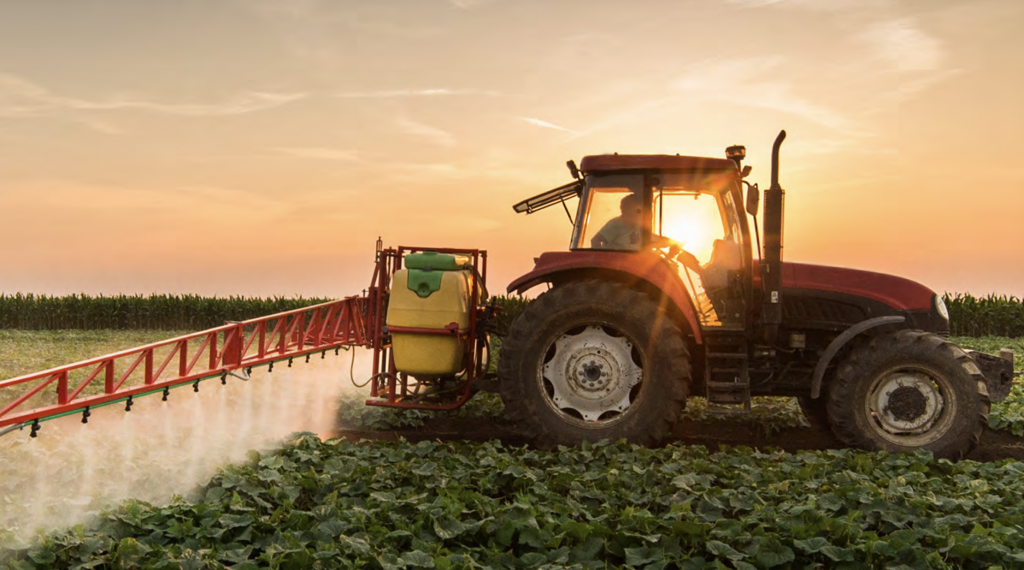 Most mornings, farmers and ranchers wake up worrying about uncooperative weather and volatile commodity prices. Just the same, they pull themselves out of bed to spend the morning tinkering with crotchety machinery or wrangling uncooperative livestock. When they break for lunch, the kitchen radio alerts them to trade wars with distant countries and the unintended results of federal regulation. As they make their way back outdoors for the afternoon’s work, they can’t help but notice another new house taking shape in the distance as suburban sprawl encroaches on the fields and pastures. By evening, their thoughts have turned to their need for short-term capital and how the local banker seems increasingly wary of providing funds.
It’s that last challenge where the alternative small-business funding industry might be able to help, says Peter Martin, a principal at K-Coe Isom, an accounting and consulting firm focused on the ag industry. “If you as a farmer need operating funds and you can’t get them from a bank, you don’t have a lot of options,” he says. “Historically, nobody outside of banks has had much interest in lending operating money to a farmer.”
The result of that reluctance to provide funding? “I can’t tell you the number of calls I get to say, ‘Hey, I need $100,000 and I need it in a couple of days because of X, Y, Z that’s come up,’” says Martin. “We don’t have a place that we can send those people to. You could make a lot of quick turnaround loans in rural America.” What’s more, it’s a potential clientele that makes a lot of money and prides itself on paying back what they owe.
Martin’s not alone in that assessment. While farmers enjoy abundant long-term credit to buy big-ticket assets, such as land and heavy machinery, they’re struggling to find sources of short-term credit for operating expenses like labor, repairs, fuel, seed, feed, fertilizer, herbicides and pesticides, notes Mike Gunderson, Purdue University professor of agricultural economics.
 But remember that nobody’s saying it would be easy for alt funders to break into the agricultural sector. City folks accustomed to the fast-paced rhythms of New York or San Diego would have to learn a whole new seasonal business cycle. Grain farmers, for example, plant corn and soybeans in April, harvest their crops September or October, and may not sell the grain until the following January, says Nick Stokes, managing director of Conterra Asset Management, an alternative-funding company that places and services rural real estate loans.
That seasonality results in revenue droughts punctuated by floods of revenue – a circumstance far-removed from the more-consistent credit card receipt split that launched the alternative small-business funding industry. Alternative funders seeking customers with consistent monthly cash flow won’t find them in the agricultural sector, Stokes cautions.
And while the unfamiliarity of farm life might begin with wild swings in cash flow, it doesn’t end there. Operating in the agricultural sector would require urbanites to learn the somewhat alien culture of The Heartland – a way of life based on hard physical labor, the fickle whims of the weather, and friendly unhurried conversations, even with strangers.
Even so, the task of mastering the agricultural funding market isn’t hopeless, and help’s available. Experts in agricultural economics profess a willingness to help outsiders learn what they need to know to get involved. “Selfishly, the first place I’d love to have them reach out to is me,” Martin says of alternative funders. “I’ve been writing and thinking for years about the importance of getting some non-traditional lenders into agriculture.” He would have “no qualms” about featuring specific prospective funders in a column he writes for one of the nation’s largest farm publications.
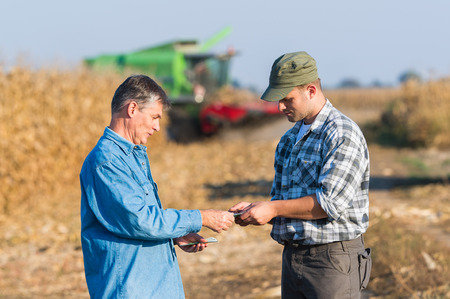 It also requires meet-and-greets. During the winter, when farmers aren’t in the fields, funders could make connections at trade shows, Martin advises. “Word would get around rural America really quick,” he predicts. Networking with advisers such as crop insurance agents, agronomists and ag CPS’s – all of whom deal with farmers daily – would also help funders find their way in agriculture, he contends.
Investors who are curious about extending credit in the agricultural sector could rely upon Conterra to help them locate customers and help them service the loans, says Stokes. He can even help acclimate them to the world of agriculture. “If they’re interested in investing in agricultural assets – whether that be equipment, real estate or providing operating capital – we would enjoy the opportunity to visit with them,” he says.
GETTING STARTED
Alt funders could begin their introduction to the agrarian lifestyle by taking to heart a quotation attributed to President John F. Kennedy: “The farmer is the only man in our economy who buys everything at retail, sells everything at wholesale and pays the freight both ways.”
“Agriculture is a very different animal,” Martin notes. He sometimes presents a slide show to compare the difference between a typical farm and a typical manufacturer of the same size. At the factory, revenue ratchets up a bit each year and margins remain about the same over time. On the farm, revenue and margins both fluctuate wildly in huge peaks and valleys from one year to the next.
The volatility makes it difficult to manage the risk of lending, Martin admits, while noting that agriculturally oriented banks still have higher returns than non-ag banks, according to FDIC records. “You have to go back to 2006 to find a time when ag banks didn’t outperform their peers on return on assets,” he says. “What this tells us is that, generally speaking, ag borrowers are better at repaying their loans,” he asserts. Charge-offs and delinquencies in ag portfolios are lower than in other industries, he says.
Many of the nation’s farms have remained in the same family for more than a century – a stretch of time that’s seldom seen in just about any other type of business. Besides making potential creditors comfortable that a particular operation will stay in business, the longevity of farms provides lots of documents to examine – not just tax records but also production history that’s tracked by government agencies. A particular farmer’s crop yields, for example, can be compared with county averages to calculate how good the borrower is at farming.
Debt to asset ratio on the nation’s farms stands at about 14 percent, which Martin views as “insanely low.” But that’s not the case on every farm. Highly leveraged farms have ratios of 60 percent or even 80 percent when farmers have grown their businesses quickly or encountered debt to buy land from their parents, he says. Commodity prices are low now, but farms with 14 percent debt to asset ratios still don’t have a problem, even in hard times. Farmers deeply in debt, however, have little ability to climb out of the hole. The latter are using operating capital to fund losses.
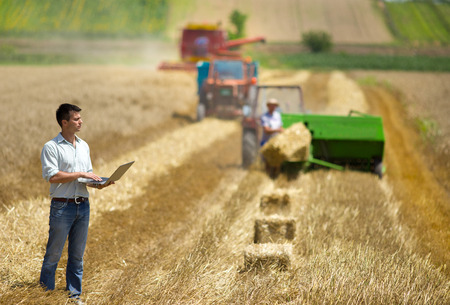 Farmers with debt to asset ratios of 10 percent have little trouble finding credit and aren’t going to pay anything other than bank rates, Martin says. The target audience for non-traditional funding are farmers who are having trouble but will be fine when commodity prices rebound. Another potential client for alternative finance would be farmers who are quickly increasing the size of their operations when opportunities arise to acquire land. Both groups need funders willing to contemplate the future instead of demanding a perfect track record, he maintains.
Farmers generally need loans for operating capital for about 18 months, according to Martin. “Let’s say I borrow that money, get my crop in the ground, harvest that and I may not sell my grain right after harvest,” he says. The whole cycle can easily take 18 months, he says. Shorter-term bridge lending opportunities also arise in situations like needing a little extra cash quickly at harvest time. Farmers usually have something to put up as collateral – like producing 50 titles to vehicles or offering up some real estate, he says.
An unsecured loan – even one with high double-digit interest – could succeed in agriculture because no one is offering that type of funding, Martin says. Small and medium-sized farms would probably benefit from funding of $100,000 or less, while larger farms might sign up for that amount but often require more, he notes.
LAY OF THE LAND
The Farm Credit System, a nationwide quasi-governmental network of borrower-owned lending institutions, provides more than a third of the credit granted in rural America. That comes to more than $304 billion annually in loans, leases and related services to farmers, ranchers, rural homeowners, aquatic producers, timber harvesters, agribusinesses, and agricultural and rural utility cooperatives, according to published reports.
Congress established the Farm Credit System in 1916, and the Farm Credit Administration was established in 1933 to provide regulatory oversight. “All they’re doing is lending money to agriculture,” says Martin.
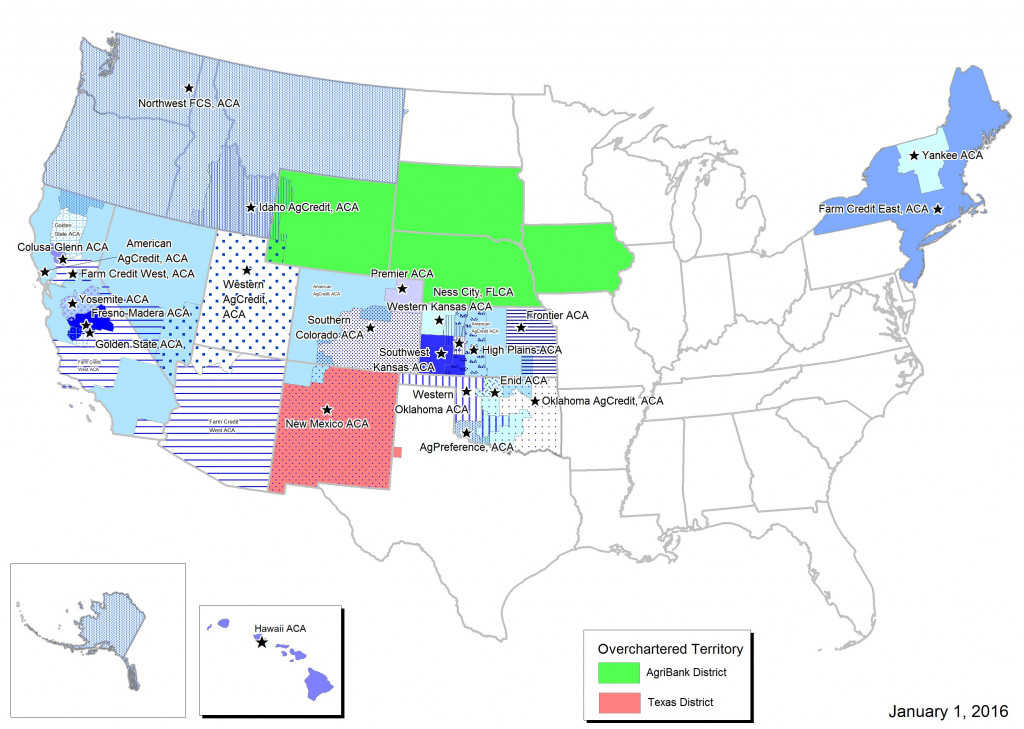
However, the system can go astray in the eyes of some observers. An arm of the Farm Credit System called CoBank lends to co-operatives and other rural entities. At one point Verizon Wireless became a borrower from CoBank, which angered some observers because the system was supposed to be helping rural America, not corporate America, Martin says.
That anger arises partly because the federal government doesn’t require Farm Credit to pay income tax, which enables it to lend at lower rates, Martin says. “Part of the allure of borrowing from Farm Credit is you can typically borrow cheaper,” he notes. “You’d be very hard pressed to find a farmer who over the years hasn’t had some interaction with Farm Credit.”
Observers sometimes fault the system for what they perceive as a tendency to extend credit only to those who don’t really need it, notes Purdue’s Gunderson. People working for the system believe they’re doing a good job of supporting agriculture, he says, noting that the system is charged with the responsibility of helping new and young farmers.
Another entity, the Federal Agricultural Mortgage Corp., also known as Famer Mac, works with lending institutions to provide credit to the agricultural sector. It’s a publicly traded company that serves as a secondary market in agricultural loans, including mortgages. It purchases loans and sells instruments backed by those loans and was chartered in 1988. Conterra, the alternative-funding company mentioned earlier in this article, -works with Farmer Mac and financial institutions to make real estate loans to farmers and ranchers in financial distress. The loans are designed to help borrowers get back on their feet in three to five years so that they would then qualify for regular bank loans.
Then there are the ag lending divisions at the large banks such as Wells Fargo, Chase and the Bank of the West, Martin says. “Lots of these big national banks are doing at least some ag lending,” he says. “Some, obviously, have bigger ag portfolios than others.”
Some regional banks focus on agriculture, Martin continues. “When you get into the middle of the corn belt, there are going to be some regional banks where traditional ag lending’s a huge part of what they do,” he says. Local banks in small towns get involved, too. “Most small community banks are going to have some kind of ag lending portfolio,” Martin notes. Hometown bankers can provide operating capital to some farmers, but only to those who haven’t experienced recent hiccups in revenue or expenses.
THE NON-BANKS
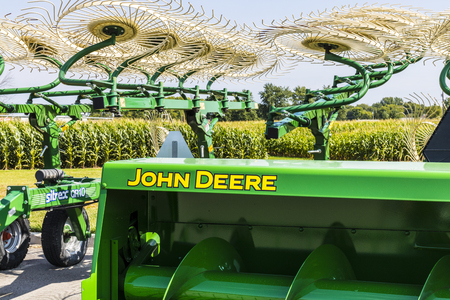 “Then you get into the non-bank lenders,” Martin observes. “A really good example of this is John Deere,” the tractor and equipment manufacturer. The company provides a tremendous amount of capital to rural America through equipment lending and also through other credit facilities, he says. In fact some observers estimate that John Deere is the largest lender to agriculture. Even so, the company usually doesn’t provide enough non-equipment credit to become the only lender a farmer would use, he says.
The same holds true with other lenders to agriculture, Martin says. Co-operatives, for example, lend money to agriculture even though they’re not banks. Typically, they begin by extending credit for products like seed, fertilizer or pesticides and then start making additional credit available to farms and ranches. In recent years, a large co-operative called CHS loaned hundreds of millions of dollars in addition to selling products on credit. Some large CHS loans went bad caused a ripple effect throughout the cooperative structure, Martin maintains. Other co-ops have looked at CHS and wondered if they’re moving too far outside their core competency. So now many co-ops are tying funding to products they’re selling.
Some other non-bank lenders have shown up in agriculture, and they fall into two categories, Martin says. One group is making real estate loans in agriculture, so their loan programs are geared to farmers looking to buy land or anything that can be secured by land. Conterra and Ag America are examples. Farmer Mac lends a lot of money against farmland, as well. So farmers who have agricultural land have a lot of access to capital and a lot of lenders who want to provide it, he says.
The second group of non-bank lenders is providing operating capital. “That is a very, very small club,” Martin says. “There’s really not anybody doing this on a regular basis – with just one or two exceptions.” Probably the biggest name among the exceptions is Ag Resource Management, usually known as ARM, he continues. ARM places a value on the potential productivity of a famer’s land. Then it looks at the crop insurance the farmer’s able to buy to protect the investment in that crop. ARM then lends part of the value of that crop insurance.
Let’s say a farmer can grow $10 million worth of crops, according to ARM’s projection,” Martin says. “You can get crop insurance to cover 80 percent,” he continues. “For a total crop failure, you will get $8 million for that crop.” Using a formula based on type of crop, location and type of crop insurance, ARM will lend some amount less than $8 million. “Their collateral is pretty rock solid,” Martin observes.
ARM uses a system to make sure farmers use the funds only for expenses related to growing the crop they’re using as collateral. “Their risk of not getting a crop in the ground that qualifies for the insurance is next to nothing,” Martin says. ARM offers differing interest rates, depending upon risk, in at least the high single digits or double digits, and they also charge fees. “So you’re going to be paying a lot, but they are the lender of last resort in agriculture right now,” he says, adding that ARM operates multiple offices has grown quickly.
Through lenders like ARM, the agricultural sector’s becoming familiar with alternative finance. But much remains to be done if alt fin pioneers want to venture into the sector. Those who do will encounter a complicated credit landscape, but one that offers opportunities for anyone willing to learn about unfamiliar business cycles and lifestyles.