
How Mike Rose and Fidelity Funding Group Charged Like a Rhino
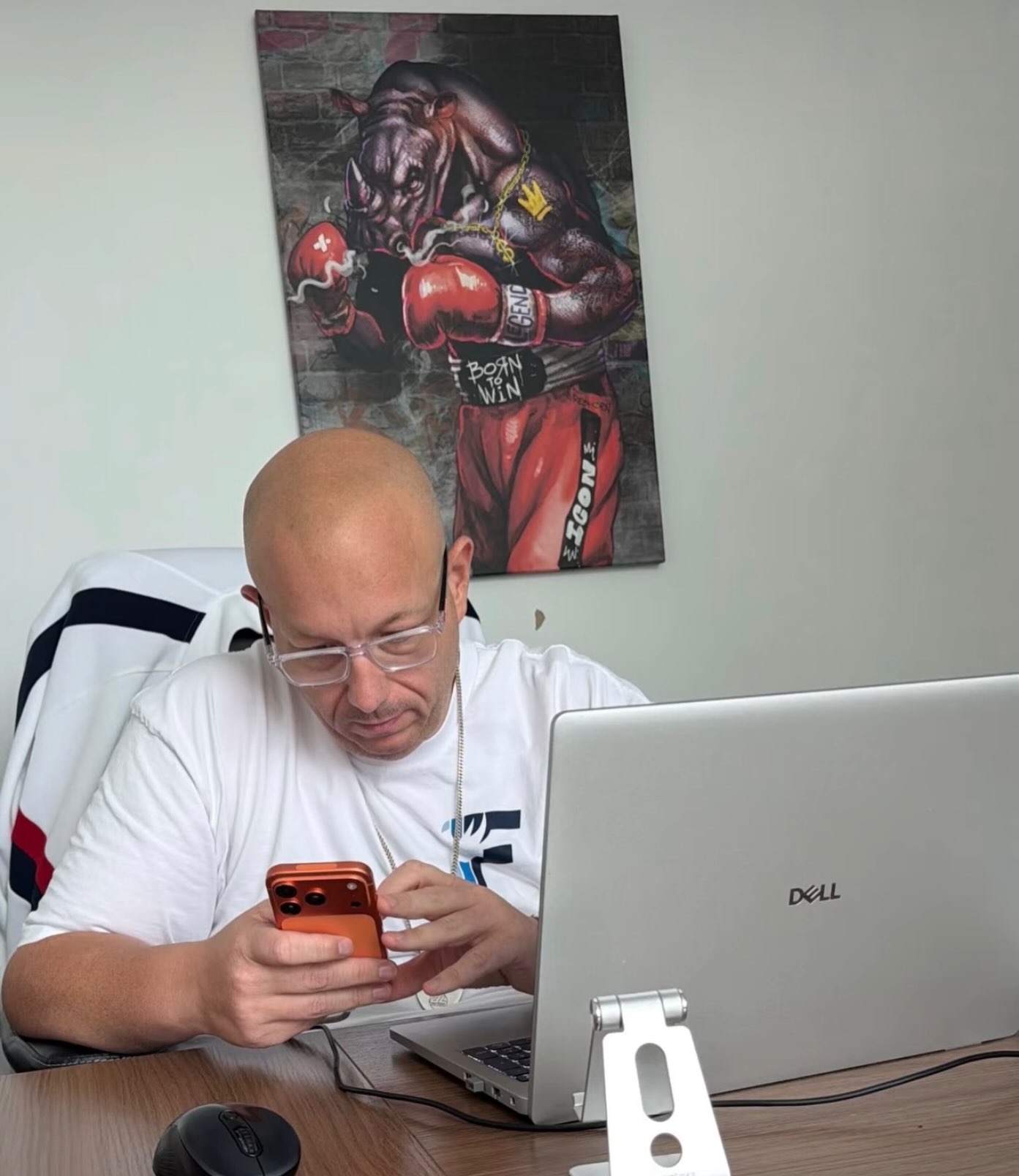 “We teach our guys to be rhinos: wake up every day, brush your horns, charge after what your heart desires, and don’t take no for an answer,” said Mike Rose, CEO of Fidelity Funding Group, a revenue-based financing brokerage.
This past July, Fidelity funded $24 million. The achievement was announced on Instagram with a splashy graphic declaring a new record and crediting his team, the Rhino Army. Scroll through Rose’s page and you’ll see that the previous record had been set in June—and the record before that in May. The new records just keep coming.
“I have like a 40-page success guide that I give every employee when they start here,” Rose said. “The first seven pages don’t talk about cash advances. It doesn’t mention it. It’s the rhino mentality: how a rhino eats, how a rhino breathes, how a rhino talks, how a rhino conducts themselves, and that’s the culture we instill here in everybody.”
Rose attributes his obsession with rhinos to Rhinoceros Success, a 1980 book by Scott Alexander that argues the key to success is developing a rhinoceros mindset. Rose has become a true believer in the philosophy, and it has helped him grow and manage a sprawling brokerage empire spread across eight office locations.
“I spend about 80% of my time in the Wall, New Jersey office, but I bounce around to all of the locations,” Rose said. “I go down to Florida once every couple of months, I spend time in St. Pete, I spend time in the Plantation office, the three offices that are in Jersey, and the two that are in New York City: Brooklyn and Staten Island, I go to about once every two weeks.”
The system works for him, and there is demand to open even more locations, but Rose doesn’t want to get too far ahead of himself.
“I’m capping my growth because I have to control it and make sure that I give the guys the infrastructure and time they need with what I’m building,” Rose said.
Part of maintaining that control means delegating operational responsibility to a manager in each office, with those managers checking in with him every day. Each office specializes in traditional outbound sales, a job spent almost entirely on the phone. It’s a model Rose knows well. In a former life, he owned several AT&T authorized retail stores, and before that, he was cold-calling to sell phone plans when he was just 18 or 19 years old.
“AT&T wanted to go corporate, right? And they started getting rid of a lot of the authorized retailers, so they changed the commission structures,” Rose said.
That shift prompted Rose to explore other options in 2017, when he was introduced to the concept of merchant cash advance.
Rose ended up working at Universal Merchant Funding, where he learned the nuts and bolts of the business from the company’s CEO, Michael Genovese. He started in July 2017, got his feet wet by funding a few deals, and soon became so close with Genovese that Genovese and his wife attended Rose’s wedding that November.
“I would spend the night sitting in his back office there on Buel Avenue, talking with him about the business, just picking his brain, asking him questions,” Rose said. “and annoying him sometimes because I wanted to learn so much about it because I wanted to be good at what I do.”
Meanwhile, Rose, who rarely missed a day of work, had to leave the office on the afternoon of January 24, 2018, after snacking on a co-worker’s almonds and suffering a severe allergic reaction.
“I called Mike at like 6 o’clock, and he’s like, ‘Don’t worry about it, kid. I’ll see you tomorrow,'” Rose said.
An hour later, Michael Genovese and Carl Clark, a manager at the office, were killed in a double murder that sent shockwaves through Staten Island and the industry in which Rose worked. The perpetrator, who was later convicted, was a former employee and known ex-con whom Genovese had given a chance in an effort to help him turn his life around. He is now serving 30 years to life in prison.
While grieving the loss, Rose explored his options and eventually went to work for another Staten Island-based brokerage. There, he and a partner, Phil, had the opportunity to build an operation of their own out of the basement of a building.
“I think we funded $150,000 our first month, and we thought we were rock stars,” Rose said.
During that experience, he learned how every part of the brokerage business worked, including hiring, training, signing up with funders, submitting deals, cold calling, closing deals, and more.
“I’ve done every role that you could imagine for a broker shop,” Rose said.
The company grew, new locations opened, and financial success followed. Then that company also suffered a personal tragedy, and the situation changed.
“We had 30 people all looking to me and Phil for answers,” Rose said.
So Rose and his partner launched Fidelity Funding Group at the end of 2021. The team went with them.
They were very intentional about the name they chose.
“The definition of fidelity is a group of people or persons all supporting one cause and loyal to one cause,” he explained.
 Starting over again, still in Staten Island, Rose and the crew charged forward.
“And we just started funding, and we built up to $2 million a month to $4 million a month,” he shared.
Eventually, that range jumped to $5 million to $7 million a month. As the company continued hiring—and as it became increasingly apparent that many employees were enduring long commutes to Staten Island—Fidelity opened another office in New Jersey.
Their success attracted attention, and soon much smaller brokerages began reaching out about coming under Fidelity’s umbrella, recognizing the strength that can come with greater scale.
“When you start in this industry, the bigger companies don’t take you seriously…you have to be in business for two years at least to get signed up with these companies,” Rose explained. “And then if you don’t fund volume with them, they cut you off because it’s a waste of their time, energy, and resources.”
An important component of Fidelity’s process is that its brokers conduct their own merchant interviews before the full paperwork is submitted to any funders.
“I want to build a relationship with them. I want to see that they’re not just another name and number on a piece of paper, I’m not shot-gunning it to 10 places and praying for the best,” Rose said. “I also want to know what they’re doing with the money.”
Even in 2026, brokers across the industry continue to tell deBanked that personal human involvement remains a critical element of succeeding in the business. Rose explained the persistence of that phenomenon in the age of AI this way:
“…a lot of business owners want to be able to talk about their business and tell you what they’re doing. Their business is their baby. The same way Fidelity is my baby, and I will talk to anybody who will listen about it. I’ll talk to the guy at the car wash about my business. These business owners do the same thing. They spend more time with the business than they do with the family. They need somebody to talk to.”
These days, after reaching $24 million in funding in a single month, Rose remains heavily involved in the hiring and training process. During this interview, he sat beneath a large painting of a boxing rhinoceros poised in a fighting stance. Its belt reads “Born to Win.”
“There’s two types of animals in the world,” Rose said, referring to his favorite book’s philosophy. “There’s cows, which are lazy animals that eat the grass at their feet and take what the world gives them. That’s 99% of the world, and there’s nothing wrong with that… we teach our guys to be rhinos.”
Last modified: August 31, 2026
Sean Murray is the President and Chief Editor of deBanked and the founder of the Broker Fair Conference. Connect with me on LinkedIn or follow me on twitter. You can view all future deBanked events here.