

Sean Murray is the President and Chief Editor of deBanked and the founder of the Broker Fair Conference. Connect with me on LinkedIn or follow me on twitter. You can view all future deBanked events here.
Articles by Sean Murray

Layoffs At Ondeck
July 10, 2020 OnDeck issued a round of layoffs this week, new former employees report.
One said that the company had “made changes needed to navigate these unprecedented times.” The layoffs were announced on Wednesday and appear to span both the company’s New York and Denver offices.
Ironically, when deBanked sent an email to OnDeck’s head of corporate communications to obtain a comment on the news, the message was returned with an auto response that said that he too was no longer with the company.
Discussion: The State of The Industry With Matthew Washington at PIRS Capital
July 9, 2020I recently connected with Matthew Washington, the Chief Revenue Officer of PIRS Capital to get his take on the state of the industry right now and whether or not there are opportunities in the market. Video below:
Breakout Capital Weathered The Storm And Came Out With Expanded Access to Credit
July 8, 2020 Breakout Capital never stopped funding. That’s what CEO & President McLean Wilson recently shared with deBanked. The company not only weathered the storm but has come out with expanded access to credit totalling $20MM with Medalist Partners, one a current term loan facility and the other a new term loan facility with “attractive” forward flow features.
The company said in its announcement that these facilities will allow Breakout to increase loan originations across all of its product offerings, including its term-loan product, FactorAdvantage®, and its newest factor product, FactorBridge.
“Small businesses are at the core of our economy and they were, as we were, largely blindsided by recent economic interruptions,” Wilson told deBanked. “We adapted quickly and rolled with the punches and never stopped funding. It is a testament to the resiliency, loyalty and borrower first mentality that Breakout Capital has not only weathered the storm, but has strengthened our company throughout the past few months. We quickly adapted to a new way of thinking, which helped us serve our clients in real time and forge ever closer relationships with our factor partners, lenders, online marketplaces, ISOs and borrowers.”
John Slonieski, Director of Private Credit for Medalist Partners, said in the announcement that “We are pleased to enhance our relationship with Breakout Capital in our asset-based lending strategy. Their high-quality underwriting and SMB-friendly lending solutions, coupled with their talented credit and management team, provide us confidence as we continue working closely with them to successfully scale their lending program.”
The State of Securitizations in Alternative Lending
July 6, 2020Over the last few months, “securitizations” were frequently cited as a reference point for the health of a small business lender or alternative finance provider. Given the vague information and inferences that circulated, I decided to schedule a chat with Methodical Management co-founder Gunes Kulaligil to get his perspective. Our discussion on the state of securitizations in alternative lending below:
Canadian Small Business Lender Looks Doomed In Wake of COVID-19
June 29, 2020 As well-known (1, 2) small business lenders in the United States continue to negotiate COVID-19 era workouts with their creditors, another in Canada appears to be falling off the cliff.
On Thursday, Lendified’s President & Director Kevin Clark tendered his resignation effective July 3rd. He follows other board members Edward Kelterborn and Benjy Katchen whose resignations went into effect on June 25th. Company CFO Norman Tan previously resigned on June 9th and no replacement has been named.
COVID-19’s arrival came at a difficult time for Lendified. Before COVID, the company had never turned a profit or reported positive cashflow in its entire history.
“Lendified is in default in respect of credit facilities with its secured lenders. Forbearance and standstill agreements are being discussed with these senior lenders, with none indicating to date that any enforcement action is expected although each is in a position to do so,” the company said. “However, no formal agreements in this regard have been concluded as of the date hereof.”
The company expressed that it would not be able to continue operations if it was not able to finalize a forbearance on its defaults AND simultaneously obtain an immediate infusion of capital to fund its operations.
Lendified’s board of directors is presently considering selling its assets or its entire business in order to raise revenue.
A wholly owned subsidiary of Lendified, Judi.ai, an automated loan underwriting platform, is poised to cease operations as a result of a cashflow shortfall. “[Judi.ai] requires cash infusions in the amount of approximately $100,000 per month in order to maintain operations,” Lendified reported. “Its cash reserves at this time are approximately $80,000. At this time, the Company is not in a position to continue to fund the Business and there can be no assurances that it will be able to do so in the future.”
The company went public on the Toronto Stock Exchange on May 26th via a reverse merger and has since experienced a 95% drop in its share price. The company’s market cap on Monday hovered around $700,000 USD.
If You Do MCA, You’re Not a Lender (Part Two)
June 16, 2020 A three-year-old deBanked blog post turned out to be a bit prophetic.
Titled If You Don’t Make Loans, You’re Not a Lender (And definitely not a ‘direct lender’) and posted on January 19, 2017, I hypothesized that the misuse of financial language on the phone or in an e-mail, particularly if one conflated merchant cash advances with lending, could one day result in a subpoena for a deposition to explain it.
In the People of the State of New York, by Office of the New York State Attorney General v. Richmond Capital Group LLC et al, that very scenario played out. Several people were subpoenaed last year and were required to give testimony to lawyers for the New York State Attorney General to explain why internal company communications allegedly referred to MCAs as loans or why a purported MCA company website made use of lending terminology.
The answers, which are public record, were not great. At least two individuals answered that line of questioning by pleading the fifth to potentially avoid self-incrimination.
While there are a lot of colorful details to consider in this case, the AG’s lawsuit dives into the various ways in which the defendants allegedly conflated financial products, including that a defendant company allegedly advertised itself as a “lender” when it actually was not.
While the allegations in the AG’s complaint are probably somewhat unique, there are claims and arguments within them that may be worth further legal review and analysis. Contact an industry-knowledgeable attorney if you have questions.
Broker Fair Has Completed A Historic Milestone
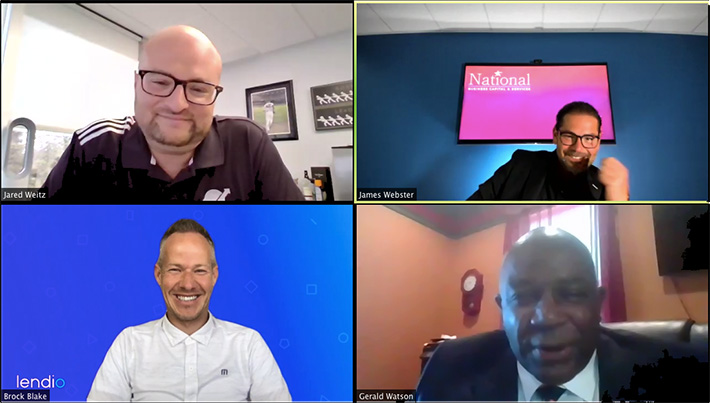
June 12, 2020Broker Fair reached a milestone yesterday by successfully completing the industry’s first-ever virtual conference. The experimental concept was a response to this year’s restrictions and precautions on large gatherings.
We hope that the hundreds of attendees found the event fun, educational, and productive! The in-person show is still happening at Convene at Brookfield Place in Lower Manhattan on March 22, 2021.
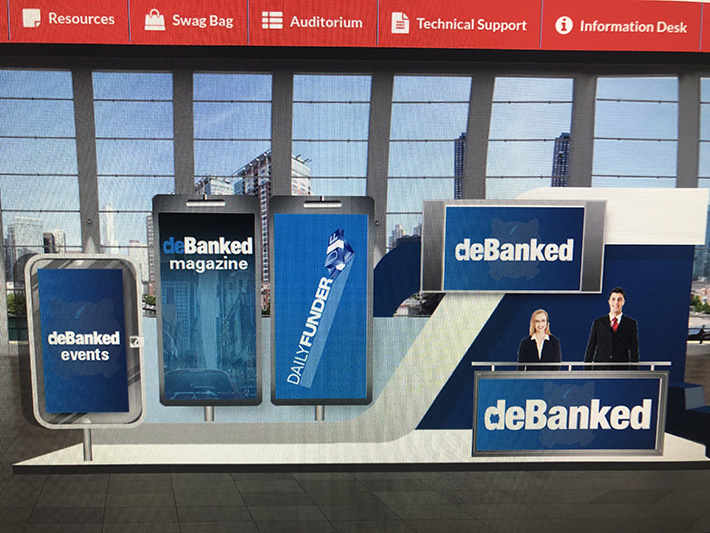
Yesterday’s show included live sessions, a networking chat, and a virtual exhibit hall. Attendees will have formal access to the recorded sessions very soon (There were a lot of them).


Broker Fair 2020 Virtual Video Q&A
June 6, 2020Broker Fair 2020 Virtual is this week! Still have questions? I answered some of Johny Fernandez’s questions in this video interview below: