Sean Murray is the President and Chief Editor of deBanked and the founder of the Broker Fair Conference. Connect with me on LinkedIn or follow me on twitter. You can view all future deBanked events here.
Articles by Sean Murray

The SEC Already Suffered a Major Defeat in the Par Funding Battle – But Who is the Real Loser?
August 8, 2020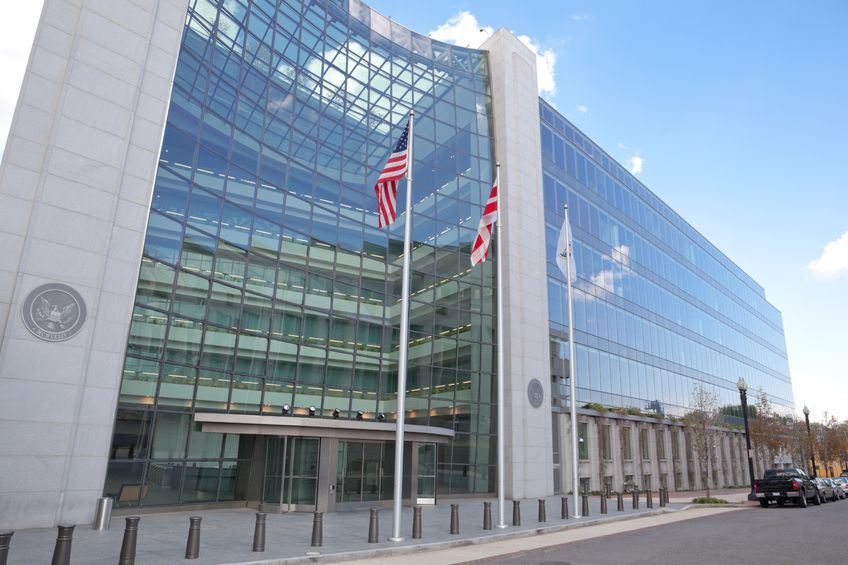 While the news media, regulatory agencies, and law enforcement are high-fiving each other over the course of events in the Par Funding saga (a lawsuit, a receivership, an asset freeze, and an arrest), there lies a major problem: The SEC already suffered a major defeat.
On July 28th, rumors of a vague legal “victory” for Par Funding circulated on the DailyFunder forum. The context of this win was unknowable because the case at issue was still under seal and nobody was supposed to be aware of it.
Cue Bloomberg News…
In December 2018, Bloomberg Businessweek published a scandalous story about a Philadelphia-based company named Par Funding. And then not a whole lot happened… that is until Bloomberg Law and Courthousenews.com published a lengthy SEC lawsuit less than two years later that alleged Par along with several entities and individuals had engaged in the unlawful sale of unregistered securities.
 At the courthouse in South Florida, those documents were sealed. The public was not supposed to know about them and deBanked could not authenticate the contents of the purported lawsuit through those means. According to The Philadelphia Inquirer, the mixup happened when a court clerk briefly unsealed it “by mistake” thus alerting a suspiciously narrow set of news media to the contents. deBanked was the first to publicly point this out.
In court papers, some of the defendants said that they learned of the lawsuit that had been filed under seal on July 24th from “news reports.” Bloomberg Law published a summary of the lawsuit on its website in the afternoon of July 27th.
“It is fortuitous that the Complaint was initially published before it was sealed,” an attorney representing several of the defendants wrote in its court papers. “Otherwise, [The SEC] would have likely accomplished its stealth imposition of so-called temporary’ relief, that would have led to the unnecessary destruction of a legitimate business.”
 The day after this, on July 28th, a team of FBI agents raided Par Funding’s Philadelphia offices as well as the home of at least one individual. Rumors about the office raid landed on the DailyFunder forum just hours later, along with links to the inadvertently public SEC lawsuit now circulating on the web.
The New York Post caught wind of the story and published a photo of an arrest that had taken place fifteen years ago, creating confusion about what, if anything, was happening. Nobody, was in fact, arrested.
The SEC lawsuit was finally unsealed on July 31st, along with the revelation that Par Funding and other entities had been placed in a limited receivership pursuant to a Court order issued just days earlier. The receivership order was a massive blow to the SEC. It failed to obtain the most important element of its objective, that is to have the court-ordered right to “to manage, control, operate and maintain the Receivership Estates.” The SEC specifically requested this in its motion papers but was denied this demand and others by the judge who leaned in favor of granting the Receiver document and asset preservation powers rather than complete control of the companies.
The language of the Court order was interpreted differently by the Receiver, who immediately fired all of the company’s employees, locked them out of the office, and then suspended all of the company’s operations which even prevented the inbound flow of cash to the company (of which in the matter of days amounted to nearly $7 million). The SEC did successfully secure an asset freeze order.
In court papers, Par Funding’s attorneys wrote that: “The Receiver’s and SEC’s actions are ruining a business with excellent fundamentals and a strong financial base and essentially putting it into an ineffective liquidation causing huge financial losses. In taking this course of action against a fully operational business, the key fact that has been lost by the SEC, is that their actions are going to unilaterally lead to massive investor defaults.”
 The Receiver, in turn, tried to fire Par Funding’s attorneys from representing Par. Par’s attorneys say that the Receiver has communicated to them that it is his view “that he controls all the companies.”
“The SEC is simply trying to drive counsel out of this case, as an adjunct to all the other draconian relief that they insist must be employed to ‘protect the investors,'” Par’s attorneys told the Court. “Due Process is of no regard to the SEC.”
As lawyers on all sides in this mess assert what is best for “investors,” seemingly lost is the collateral damage that is likely to be thrust on Par’s customers. The Philadelphia Inquirer has repeated the SEC’s contention that Par made loans with up to 400% interest. Bloomberg News has called Par a “lending company” whose alleged top executive is a “cash-advance tycoon.”
A review of some of Par’s contracts, however, indicate that they often entered into “recourse factoring” arrangements. “This is a factoring agreement with Recourse,” is a statement that is displayed prominently on the first page of the sample of contracts obtained by deBanked.
Parallels between the business practices of Par Funding and a former competitor, 1 Global Capital, have been raised at several junctures in the SEC litigation thus far. But some sources told deBanked that in recent times, Par has been offering a unique product, one that is likely to create disastrous ripple effects for hundreds or perhaps thousands of small businesses as a result of the Receiver’s actions (even if well-intentioned).
The “Reverse”
Par offered what’s known as a “Reverse Consolidation,” industry insiders told deBanked. In these instances Par would provide small businesses with weekly injections of capital that were just enough to cover the weekly payments that these small businesses owed to other creditors.
One might understand a consolidation as a circumstance in which a creditor pays off all the outstanding debts of a borrower so that the borrower can focus on a relationship with a single lender. In a “reverse” consolidation, the consolidating lender makes the daily, weekly, or monthly payments to the borrower’s other creditors as they become due rather than all at once. Once the other creditors have been satisfied, the borrower’s only remaining debt (theoretically) is to the consolidating lender.
 Par does not appear to have offered loans but sources told deBanked that Par would provide regular weekly capital injections to businesses that could not afford its financial obligations otherwise. Par, in essence, would keep those businesses afloat by making their payments.
That all begs the question, what is going to happen to the numerous businesses when Par breaches its end of the contract by failing to provide the weekly injections?
As the Receiver makes controversial attempts to assert the control it wished it had gotten (but didn’t), the press dazzled the public on Friday with the announcement that an executive at Par Funding had been arrested on something entirely unrelated, an illegal gun possession charge. The FBI discovered the weapons while executing a search warrant on July 28th but waited until August 7th to make the arrest.
It remains to be seen what the 1,200 investors will recover in this case or what will become of the Receiver in the battle for control, but sources tell deBanked that the authorities are all fighting over the wrong thing.
They should all be asking “what’s going to happen to the small businesses when their weekly capital injection doesn’t come in the middle of a pandemic?”
Enova & OnDeck: Behind The Biggest Deal of 2020
July 29, 2020 Enova CEO David Fisher kicked off his company’s 2nd quarter earnings call on Tuesday and one could tell from the pitch in his voice that he was excited. And why shouldn’t he be? Despite the catastrophe that gripped the nation over the months of April, May and June, Enova still manages to report a consolidated net PROFIT of $48 million.
But that’s not even it. After a long introduction about a major acquisition, a rather familiar voice is asked to deliver some prepared remarks.
“Thanks David, I am equally excited…”
It’s Noah Breslow, the CEO of OnDeck. Less than an hour earlier it was revealed that Enova had bought 100% of OnDeck’s outstanding shares for $90 million in a deal paid for almost entirely with stock. And now suddenly he’s here on this call talking about how great it is that the companies are combining forces.
“Following an extensive review of our strategic options, we believe this is the right path forward for our customers, employees, and shareholders,” Breslow says.
That OnDeck has been acquired is no surprise. The devastating impact of COVID in Q1 reveals weaknesses in the company’s business model and the share price drops by 80% from the period of February to July. This all while two of their competitors in the small business lending space, Square and PayPal, experience enormous gains of more than 40%.
 In May, Forbes reported grim news, that OnDeck is being shopped around in “what amounts to a fire sale.”
The rumor creates further despair in an industry that is preoccupied with survival. If this can happen to OnDeck, then…?
The truth is, OnDeck’s momentum had stalled long before COVID. The company walked away from a sale to Wonga in 2012 that had valued them at $250 million and they went on to have a successful IPO in 2014 at a value of $1.32 billion on the selling point that they were a tech company.
But by mid-February of this year, the company’s market cap is down to less than $250 million, turning the clock backwards by about eight years. After losing the partnership with Chase in 2019, OnDeck seemed to have lost its swagger and direction. They planned to pursue a bank charter and do a stock buyback. Then the news pretty much stops.
COVID happens and it hits them hard. The company stopped lending entirely, although they still recorded originations of $66 million in Q2.
As a standalone entity, OnDeck’s upside had greatly diminished. Getting back to where it was pre-COVID may not have been an entirely enticing prospect for investors. Its market cap recently plummeted to less than $50 million and so by the time the Enova price of $90 million is announced, it sounds almost generous. (Knight Capital sold for $27.8M in November).
Enova says that the acquisition increases their concentration in small business lending from 15% to 60%. That puts consumer lending, their historical core business, now in the minority. This is not by accident. On the earnings call, Enova executives say that they believe that “there will be strong demand for capital from small businesses as the economy begins to open back up.” They even believe the opportunity is better than the consumer lending market right now, particularly from a regulatory perspective, they say. Therefore it makes sense to “double down or triple down” on the small business side, they contend.
Enova’s small business lending business was largely spared by COVID. Unlike OnDeck’s brutal Q1, Enova had reported something “very much manageable” thanks to not having “large exposures to entertainment, hospitality and restaurants.”
“Our portfolio has been extremely stable,” Enova says on the call. With the acquisition of OnDeck, the company appears to be gearing up for the opportunity they believe awaits in small business lending right around the corner.
Interview With Chad Otar, CEO of Lending Valley
July 28, 2020I recently spoke with Lending Valley CEO Chad Otar, who told us that not only is his funding company still working remotely, but that he’ll probably never return to an office ever again. Watch below:
Michael Scalise Passes Away
July 27, 2020Michael Scalise, an early entrant in the MCA industry, passed away on July 22nd. He was 40 years old. A gofundme has been set up to help his children pay for the funeral expenses.
New York State Legislature Passes Law That Requires APR Disclosure On Small Business Finance Contracts (Even If They’re Not Loans)
July 24, 2020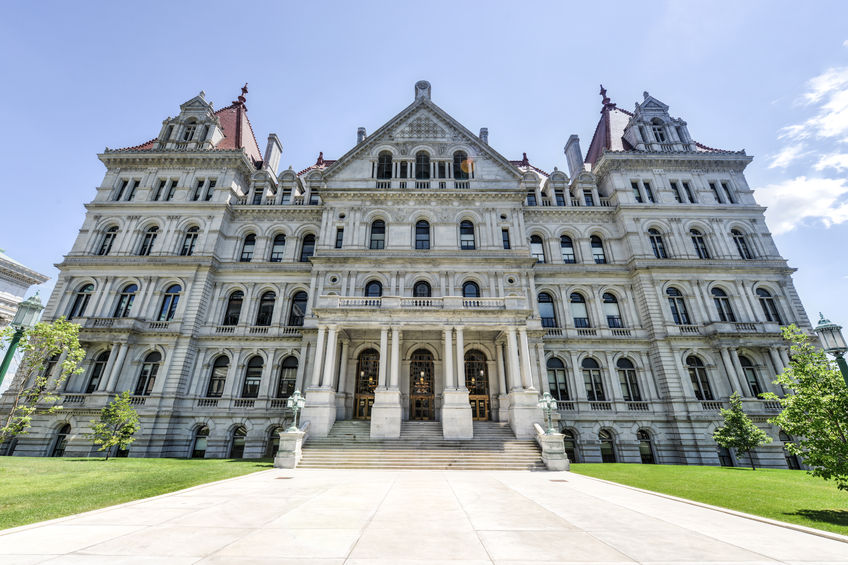 Factoring companies and merchant cash advance providers may be in for a rude awakening in New York. The legislature there, in a matter of days, has rammed through a new law that requires APRs and other uniform disclosures be presented on commercial finance contracts… even if the agreements are not loans and even if one cannot be mathematically ascertained.
The law also makes New York’s Department of Financial Services (DFS) the overseer and regulatory authority of all such finance agreements. DFS can impose penalties for violations of the law, the language says.
The bill was passed through so quickly that unusual jargon remained in the final version, increasing the likelihood that there will be confusion during the roll-out. One such issue raised is the requirement that a capital provider disclose whether or not there is any “double dipping” going on in the transaction. The term led to a rather interesting debate on the Senate Floor where Senator George Borrello expounded that double dipping might be well understood at a party where potato chips are available but that it did not formally exist in finance and made little sense to have it written into law.
Senator Kevin Thomas, the senate sponsor of the bill, admitted that there was opposition to the “technicalities” of it by some industry groups like the Small Business Finance Association and that PayPal was one such particular company that had opposed it on that basis. Senator Borrello raised the concern that a similar law had already been passed in California and that even with all of their best minds, the state regulatory authorities had been unable to come up with a mutually agreed upon way to calculate APR for products in which there is no absolute time-frame. Thomas, acknowledging that, hoped that DFS would be able to come up with their own math.
APR as defined under Federal “Regulation Z”, which the New York law points to for its definition, does not permit any room for imprecision. The issue calls to mind a consent order that an online consumer lender (LendUp) entered into with the Consumer Financial Protection Bureau in 2016 after the agency accused the lender of understating its APR by only 1/10th of 1%. The penalty to LendUp was $1.8 million.
Providers of small business loans, MCAs, factoring and other types of commercial financing in New York would probably be well advised to consult an attorney for a legal analysis and plan of action for compliance with this law. The governor still needs to sign the bill and New York’s DFS still has to prepare for its new oversight role.
Passage of the law was celebrated by Funding Circle on social media and retweeted by Assemblyman Ken Zebrowski who sponsored the bill. The Responsible Business Lending Coalition simultaneously published a statement.
Bitty Advance Has Been Acquired By Industry Veteran Craig Hecker
July 23, 2020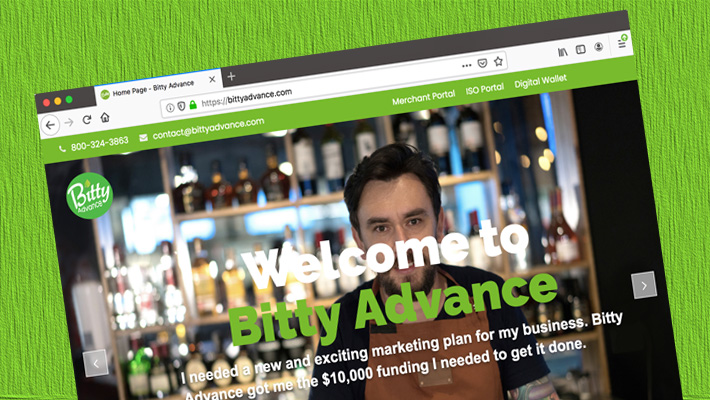 There’s new management over at Bitty Advance. The Fort Lauderdale-based funding company has been acquired by long-time industry veteran Craig Hecker. Hecker, who years ago founded, grew, and sold Rapid Capital Funding had originally acquired a stake in Bitty earlier this year, but in the following months purchased the remainder of the business from founders Eddie Siegel and Lenny Duvdivani.
Hecker told deBanked that under his management Bitty has committed capital that will allow the business to fund up to $10 million per month.
“I’m very excited to take my industry experience and knowledge and apply it to this segment of the MCA space,” he says.
As part of the takeover, Hecker says that he has “re-assembled his dream team of technologists and ops” that have been part of his inner-circle for nearly a decade and “were critical in building out the platform” that had made Rapid Capital Funding successful.
Bitty has historically focused on micro-advances and the company plans to really scale up its efforts in the $2,500 – $12,500 small merchant market segment with the aid of automated technology. In addition to this, Bitty has launched a new sales partner portal for ISOs. “That way [ISOs] will always know what’s going on with merchant applications,” hecker said.
New York State Legislators Resume Push of Commercial Finance Disclosure Bill
July 17, 2020 A bill (A10118A / S5470B) intended to create uniform disclosures for comparison purposes while also placing control of the commercial finance industry under the purview of the superintendent of the New York Department of Financial Services, is moving forward.
The March 2020 initiative was picked back up this week by members of the Assembly where it passed the banking committee and codes committee on a unanimous and bipartisan basis.
“When enacted, this bill will become the strongest commercial lending disclosure law in the country that covers all commercial financing products,” wrote Ryan Metcalf, Head of US Regulatory Affairs and Social Impact at Funding Circle, on LinkedIn. “It includes strong provisions that ensures enforcement and eliminates loopholes that will prevent gaming & abuse, & requires APR to be disclosed for all products.”
Metcalf further wrote that they and the Responsible Business Lending Coalition (RBLC) have been working diligently with NY state legislators for the last year or so to craft this bill. Among RBLC’s membership is Fundera, Nav, Lendistry, LendingClub and about 4 dozen other companies.
7/17 Update: OnDeck Still Negotiating Workouts With Creditors
July 17, 2020This morning, OnDeck disclosed that it was still actively engaged in securing workout arrangements with its creditors.
For its corporate debt facility, OnDeck’s lenders consented to an additional two week extension on the increased monthly principal repayments that OnDeck is required to pay as a result of the company’s covid-impacted portfolio triggering a rapid payout event. The circumstances mean that OnDeck has to make millions of dollars in loan payments but temporary workouts like these are enabling the company to slow them down.
OnDeck’s asset-backed revolving debt facility, meanwhile, has been spared the consequences of a borrowing base deficiency under a renewed agreement to suspend any designation of such to at least through August 18th.