
Articles by deBanked Staff

Morgan Stanley Backs Online Lender Affirm with $100 Million in Debt
October 13, 2016Consumer lending startup Affirm aims to replace credit card purchases with personal loans and has found a backer in Morgan Stanley.
Founded by former PayPal CTO and entrepreneur Max Levchin, Affirm secured a $100 million credit line from Morgan Stanley to expand its lending capacity. This latest round of financing totals the company’s fundraising to about $525 million in cash and debt financing with a $800 million valuation.
Affirm’s consumers are typically immigrants and recent college grads who do not own credit cards and have no credit history, who take out loans for big dollar online purchases like high end furniture, jewelry and gym equipment.
Affirm partners with ecommerce and internet service companies like Expedia, Casper Sleep and Eventbrite to offer personal loans (10-30 percent APR to be paid back within 12 months) to buyers at checkout.
The San Francisco-based company’s loans are funded by Cross River Bank and its investors include marquee Silicon Valley names like Lightspeed Ventures, Khosla Ventures and Andreesen Horowitz.
“The financial industry has managed to avoid significant disruptive innovation since the mid-90s, and we are working hard to change that. Our first goal is to bring simplicity, transparency, and fair pricing to consumer credit,” says Levchin on the company website. Is replacing credit card debt with personal loans a way to go about it?
UK Banks Will No Longer Be Allowed to Decline Small Businesses For Loans as Alt Lending Wins
October 10, 2016UK Banks better have a strong reason to turn down loan applicants, and if not, turn them over to another lender.
In an attempt to break the might of the big banks and back the thriving alternative finance industry, the UK Treasury will make it obligatory for banks to refer rejected small businesses to other lenders. Nine of the country’s largest banks including Royal Bank of Scotland, Lloyds, Barclays and HSBC will be legally obligated to do so when the plan goes into effect in the next three months, The Times reported.
The applicants will be referred to three loan marketplaces — Funding Options, Funding Xchange and Bizfitech that will make referral fees for loans funded on their platforms.
Online lending across the pond operates differently. The UK online alternative finance sector grew 84 percent in 2015, with support from the government and was one of the first countries to establish a regulatory framework where The Financial Conduct Authority (FCA) defines and categorizes crowdfunding, P2P lending and online lending. The UK is home to many early starters in the industry like Zopa and RateSetter.
Merchant Alleged To Have Forged Partner’s Signature On Merchant Loan Charged Criminally
October 9, 2016
It’s not a good idea to forge your partner’s signature, Troy Milbrath has learned, after being arrested on Thursday and charged with 16 felonies and three misdemeanors.
According to the Wisconsin State Journal, Milbrath, an owner of Mullen’s Dairy Bar & Eatery in Watertown, WI, took out loans and opened credit cards in his partner’s name and his partner’s wife’s name, in addition to taking out a merchant loan that his partner didn’t sign for.
His business partner, Todd Narkis, “found a business agreement with his name and Milbrath’s that allowed a financial company to take 35 percent of all credit card swipes at the business in order to pay off a loan,” the Wisconsin State Journal reports.
The business closed last month after the landlord refused to renew the lease. Just days before Milbrath’s arrest, he was reportedly looking to relocate. The business had been open since 1932.
The case number is 2016CF000392 in Jefferson County.
Brief: SMB Credit Rating Agency PayNet Releases Data Scoring for Alternative Lenders
October 7, 2016PayNet, an Illinois-based company that provides credit ratings to small businesses released a pooled-data score for alternative lenders to assess risk.
This new score builds on the existing PayNet MasterScore v2, which contains a total of over 587 variables. PayNet maintains a proprietary database of small business loans, leases and lines of credit worth over $1.4 trillion.
“Alternative loans are higher risk than traditional bank loans, but the nature of their risks is also different, as are a number of the warning signs of risk,” said Thomas Ware, PayNet’s senior vice president of analytics & product development, in a statement.
Brief: PE Giant Warburg Pincus to Acquire Texas Funder Ascentium Capital
October 6, 2016New York-based private equity firm Warburg Pincus agreed to acquire Texas-based equipment financing company Ascentium Capital. The details of the deal remain undisclosed.
Ascentium Capital, with $1.1 billion in assets provides vendor financing, partnering with distributors, resellers to fund their small business customers. And in March this year, it started lending to ISOs and retail merchants directly. The company will be continued to run by CEO Tom Depping who will roll over his stake in the business.
“We see a compelling market opportunity to continue to build Ascentium to become a multi-product capital provider to small businesses through both organic growth and complementary acquisitions,” said Arjun Thimmaya, Managing Director, Warburg Pincus in a statement.
The five year old firm has financed over $2 billion since inception, and funded $225.4 million during Q2 this year. Ascentium’s financial advisor was Goldman Sachs and Vinson & Elkins LLP served as legal counsel.
Debanked: Europe’s ING Bank, Commerzbank to Slash Jobs, Go Digital
October 3, 2016Europe is debanking.
Last week, two large European banks — ING and Commerzbank announced they are slashing jobs and spending the savings on digitizing its their businesses.
Amsterdam-based ING Bank will slash 7,000 jobs, around 3500 jobs in Belgium and another 2300 in the Netherlands. The savings ( around 900 million euros in five years) under the bank’s ‘Think Forward’ strategy, will be used to migrate to a single integrated banking platform in the Netherlands and Belgium. Separately, ING will also invest 800 million euros in digital initiatives over the next five years.
“Customers are increasingly digital and bank with us more and more through mobile devices. Their needs and expectations are the same, all over the world, and they expect us to adopt new technology as fast as companies in other sectors,” said CEO Ralph Hammers in a statement.
ING is not alone in marching towards technology; Germany-based Commerzbank also said that it will slash approximately 7,300 jobs over the next four years and spend 700 million euros annually on technology under its ‘Commerzbank 4.0’ strategy. Later this month, the bank plans to roll out ‘One,’ an integrated sales interface, enabling the bank’s sales staff and customers to interact and transact on the same platform and by 2020, it aims to have 80 percent of its relevant business processes digitized.
“It is inevitable that the various measures and intentions announced today may have a significant impact on many of our colleagues. It means some functions will change significantly in nature,” said Hammers.
The move from major banks is coming at a time when fintech is heating up — Europeans startups raised $348 million (£238.2 million) in the first quarter of the year, up from $337 million (£230.6 million) in the first three months of 2015. And with banks deciding to go lean, it could only open up the opportunity for more collaboration than competition among banks and startups.
Payday Loan King Scott Tucker Loses FTC Fight: Must Pay $1.3 Billion
October 2, 2016
Deceptive payday lending has come at a steep price for one Scott Tucker, who was briefly an accomplished professional race car driver. On Friday, September 30th, United States District Judge Gloria M. Navarro ordered a judgment be entered in favor of the FTC in the amount of $1,301,897,652. That concludes a case that had carried on for four years.
The $1.3 Billion judgment is no doubt a bad omen for Tucker as he awaits his criminal trial in New York. He was arrested earlier this year in February and charged with multiple counts of conspiracy, collection of unlawful debts and false TILA disclosures. In that case, US Attorney Preet Bharara seeks a forfeiture of at least $2 Billion. An initial accounting of his assets subject to forfeiture are his ferraris, porsches, a private jet, homes and more than a dozen bank accounts, according to the indictment.
 That should be a big blow to Tucker considering that an asset freeze has forced him to rely on court-appointed attorneys in the criminal case. However, the FTC alleged last month that Tucker was still managing to live a lavish lifestyle that included steakhouses, country clubs, and spa visits. Documents filed in the FTC case show that as recent as July 22nd, the court was still ordering newly discovered bank accounts related to Tucker to be frozen. Given the billions sought in damages, one local newspaper in Kansas City, named The Pitch, questioned back in May where all of the money went.
We may soon find out. The judge’s order in the FTC case not only banned Tucker and his co-defendants from participating in consumer lending for life but also ordered that he must identify all business activities for which he performs services whether as an employee or otherwise and any entity in which he has an ownership interest in. The FTC was also awarded the authorization to obtain additional discovery without court consent and the permission to pose as a consumer, supplier, or other individual or entity to the defendants or any individual or entity affiliated with the defendants without the necessity of identification or prior notice.
The judgment was entered in case number 2:12-cv-00536.
Personal Network Lender Able Lending Raises $100 Million As Debt
September 28, 2016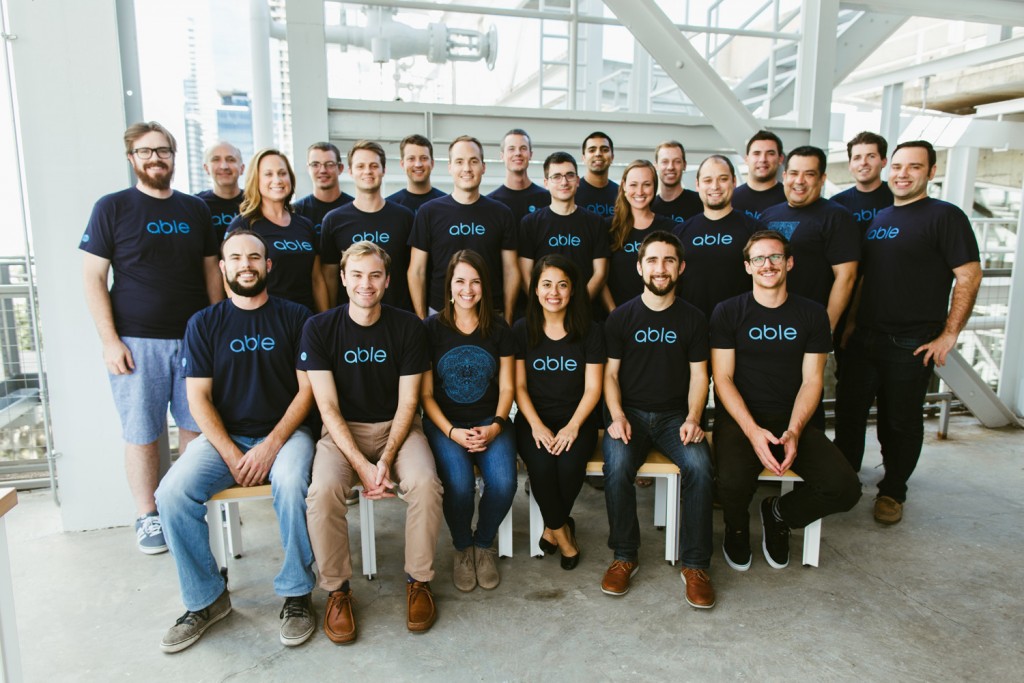
Austin, Texas-based small business online lender Able Lending has secured $100 million in debt financing from San Francisco-based investment firm, Community Investment Management (CIM).
Able prefers lending to entrepreneurs who raise part of the funds from their personal network of family and friends that Able calls ‘Backers.’ These ‘backers’ typically fund as much as 10 percent of most Able loans whose term loans go up to $1 million with rates starting at 8 percent for companies with revenues over $100,000.
In June this year, the startup committed to deploy $5 million to fund companies in the Dallas-Forth Worth area right about the time when its rival San Francisco-based Vouch Financial closed shop. Vouch made personal loans based on a ‘vouching network’ of sponsors.
“During a time when investors’ confidence in alternative lending has plunged, this investment is a vote of confidence in our loan model and our team,” said Able Lending CEO Wills Davis in a statement. The company estimates that it will fund approximately 500 small businesses from the CIM deal.