
Articles by deBanked Staff

Nulook Capital Bankruptcy Envelops PSC
April 27, 2017Nulook Capital was not the only casualty of its April 4th Chapter 11 bankruptcy filing. On Wednesday, April 26th, a federal judge in a separate action issued an order aimed at one of Nulook’s alleged creditors, PSC. PSC is also a Long Island-based company engaged in the merchant cash advance business.
In the order, the Honorable Arthur D. Spatt appointed a receiver for International Professional Services Inc. dba PSC and PSC Financial, granting him exclusive dominion and control over all of their assets, books, records and business affairs.
PSC was originally listed as a creditor in the Nulook bankruptcy with $400,000 owed. Another creditor however, GWG MCA Capital, Inc., argued that PSC had interfered with its first position lien and taken possession of its collateral. Alas, in the suit that GWG brought, the court found the full extent of their arguments compelling enough to appoint a receiver over PSC.
Rough Year? Market Tells Different Story for Alternative Lenders So Far
April 25, 2017 A decent day for OnDeck’s stock on Tuesday was enough to place the company’s share price in positive territory year-to-date, where just about every other public online lender finds themselves as well. According to the new deBanked Tracker, Square is up more than 33% on the year and Yirendai up 19%. Even Lending Club, whose stock is still miles below their IPO price is still up more than 12% in 2017.
Meanwhile, Elevate just only went public earlier this month, singlehandedly putting an end to the drought of fintech IPOs. They’re already up 33% from their $6.50 IPO price.
On the publicly traded fund side, Ranger Direct Lending’s YTD struggles stem mainly from their exposure to Argon Credit who is going through bankruptcy. Ranger invested in the Princeton Alternative Income fund who had invested in Argon.
While the deBanked Tracker shows Canadian-listed IOU Financial as significantly underperforming their lending peers, very little volume of the stock trades on a daily basis. A major shareholder of the company however, FinTech Ventures LLLP, shed more than half their holdings of the company last week. As that amounted to nearly 10% of all of IOU’s outstanding shares, the company had to file a document announcing the move.
As an aside, the S&P 500 was up 6.69% YTD by market close on Tuesday and Bitcoin, which doesn’t get as much attention anymore, is up nearly 22% over the same time period.
—
The deBanked Tracker is still in beta and for now is automatically updated once per day after markets close in the US.
FinTech Ventures Fund, LLLP Sheds More Than Half of its Shares in IOU Financial
April 22, 2017FinTech Ventures Fund, LLLP (“FinTech”), a major shareholder of IOU Financial, shed more than half of its holdings in the Canadian-listed company last week. The 7 million shares sold represented nearly 10% of IOU’s outstanding common shares.
According to a statement:
FinTech will review and monitor its options and alternatives with respect to additional acquisitions of Common Shares in light of all relevant factors from time to time, including general market conditions, prevailing market prices for the Common Shares, the business and prospects of IOU and alternative investment opportunities available to FinTech.
Catching Up With Marketplace Lending – A Timeline
April 20, 20172/17
- Prospa, an online small business lender based in Australia, was valued at $235M (AUD) in a $25M capital raise
- Square announced funding $248 million worth of business loans in Q4 2016
2/21 A Massachusetts state court vacated a merchant cash advance COJ
2/24 SoFi raised $500M in a financing round led by Silver Lake Partners that reportedly gave SoFi a $4.3B valuation
2/27 Prosper Marketplace closed a loan purchase agreement with a consortium of lenders for up to $5 billion of loans that has a provision that also enables the lenders to buy up to 35% of the company
2/28 BlueVine secured a warehouse line of up to $75M from Fortress
3/1 Lendio launched a new franchise program, allowing local offices around the country to become Lendio franchisees
3/3 Citing Madden v Midland, Colorado regulator brought a federal lawsuit against Marlette Funding for violating the state’s usury cap
3/5 Two trade associations, the Innovative Lending Platform Association (ILPA) and the Coalition for Responsible Business Finance (CRBF), joined forces. The merged company will continue to be known as ILPA
3/6 Upstart raised $32.5M
3/7
- It’s reported that former CAN Capital CFO Aman Verjee is now the COO of 500 Startups
- Kabbage priced a $525M securitization. It was oversubscribed
3/9 Citing Madden v Midland, Colorado regulator brought a federal lawsuit against Avant for violating the state’s usury cap
3/13
- Melvin Chasen, the founder of Rewards Network (originally Transmedia Network, Inc.) passed away. He was 88.
- The New York State Assembly rejected the Governor’s proposal to grant the Department of Financial Services (DFS) regulatory authority over any online lender doing business in the state
3/15
- The New York State Senate also rejected the proposal to further regulate lending
- The OCC published a manual on how it will evaluate charter applications from fintech companies
- The New York DFS published a statement rejecting the OCC’s plans
- The WSJ reported that Marlette Funding was cutting nearly 1/5th of its workforce
3/16 WebBank announced that it had a net income of $29.2M for 2016 and that it had a market valuation of $319.4M
3/20 Prosper Marketplace announced that it had originated $2.2B in loans in 2016, down from $3.7B in 2015, and had a net loss of $119M.
3/21 It’s reported that Kabbage will set up its European headquarters in Ireland
3/22 OnDeck expanded its credit facility with Deutsche Bank by $52M to a total of up to $214M
3/27 IOU Financial wins Gold Stevie Award for Best Use of Technology in Customer Service
3/30 In Advance Capital announced that they had secured access to an additional $50M
4/5
- Budget passes in New York. Proposed lending legislation was not included in it.
- Kabbage surpasses $3 billion funded to small businesses
See previous timelines:
12/16/16 – 2/16/17
9/27/16 – 12/16/16
Nulook Capital Has Filed Chapter 11
April 13, 2017NY-based merchant cash advance funding company Nulook Capital filed for Chapter 11 on April 4th, according to court records. They listed more than $2.6 million in creditor claims. The largest among them was a secured claim for $2 million by a specialty finance company.
Two other creditors in the bankruptcy proceeding are also involved in the merchant cash advance industry.
The voluntary petition was filed in the Eastern District of New York in the United States Bankruptcy Court.
Sneak Peek at the Mar/Apr 2017 Issue of deBanked
April 11, 2017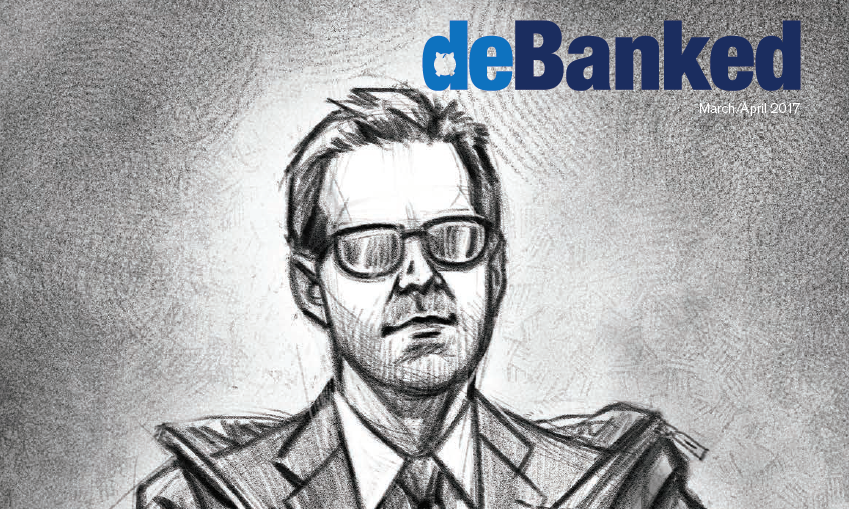 In the March/April 2017 issue of deBanked magazine, we delve into the industry’s latest trend, the push back towards traditional banking. The featured story is titled accordingly as “Re-Banked” and our many sources lay out a compelling narrative. Our cover, a sketch of a young tech CEO shedding the hoodie to reveal the suit-and-tie attire of a banker underneath, was one of several pieces of art we commissioned for this issue.
And for you brokers out there, we’ve got something really special, the inside scoop on the latest way that reps are winning deals. Today’s broker is hanging up the phone and texting merchants instead and the merchants are responding in kind. Phone calls and emails are going the way of the fax machine when it comes to gathering documents and pitching offers. The lesson we learned from the several people we interviewed is that when merchants want to know what’s next, send a text.
There’s more of course, so if you haven’t already subscribed to our free print magazine, make sure you do so here. This issue has already printed and shipped so you’ll be getting it very soon.
We hope you enjoy it!
Subscribe FREE
Lending Club to Beta Hardship Plans for Borrowers (and Protect Returns for Investors)
April 5, 2017Lending Club wants to make it easier to accommodate borrowers facing hardship and in the process potentially protect the investor from unnecessary losses. A full explanation of the program was sent out to Lending Club investors on Wednesday, the full text of which we’ve pasted below:
At Lending Club, we are committed to improving experiences for both borrowers and investors. We’re excited to announce that after a beta test, we will begin offering hardship plans to borrowers effective May 4, 2017. Hardship plans allow borrowers to temporarily make interest-only payments to accommodate an unexpected life event. As part of this change we are also making additional data fields related to these plans available for investors.
Lending Club continuously looks to put lending industry best practices to work. Hardship plans are commonly offered to borrowers in the lending industry because they allow borrowers time to adjust to a life event (like a medical emergency, temporary job loss, unexpected car or home repairs, death in the family, or other events). Hardship plans are in accordance with commercially reasonable efforts to service and collect on loans, as well as with our prospectus, which provides us flexibility to work with a borrower to structure a new payment plan if needed.
Our hardship plan program specifically targets borrowers who are more likely to return to repaying their loan. Under the plan, borrowers are allowed to temporarily make interest-only payments for a period of 3 months to accommodate an unexpected life event. After 3 months, regular payment terms and obligations resume. Only borrowers who fulfill specific characteristics (such as a demonstrated history of repayment) and who claim a hardship will be offered plans. Importantly, borrowers’ loans must be either current or between 1 and 30 days past due to qualify for a hardship plan.
We believe the hardship program will work to protect investor returns as borrowers whose loans may otherwise progress to charge-off status have the opportunity to make interim payments and some portion may revert to current status.
Finally, we are adding 15 new data attributes of borrowers who utilize hardship plans to investor reports and the API. The fields will only apply for hardship plans offered as of May 4, 2017 and going forward. You can find more information on these new data fields here.
Offering hardship plans is both consistent with our values – doing the right thing by borrowers while they’re getting back on their feet – and helps to protect investor returns. We will potentially look to expand to different types of hardship plans in the future as we gain further insight into borrower behavior and continue to listen to customer feedback.
Please feel free to reach out with any questions – we welcome your feedback.
Best regards,
The Lending Club Team
Does Fintech Have a Distinctively British Accent? – From Congressman McHenry’s Speech
April 1, 2017Regulation around technology-enabled lending has generally been a point of contention in the US. Even regulators are finding themselves at odds with other regulators, like the OCC vs. the NYDFS for example. Might relationships like these be contributing to America’s innovative decline?
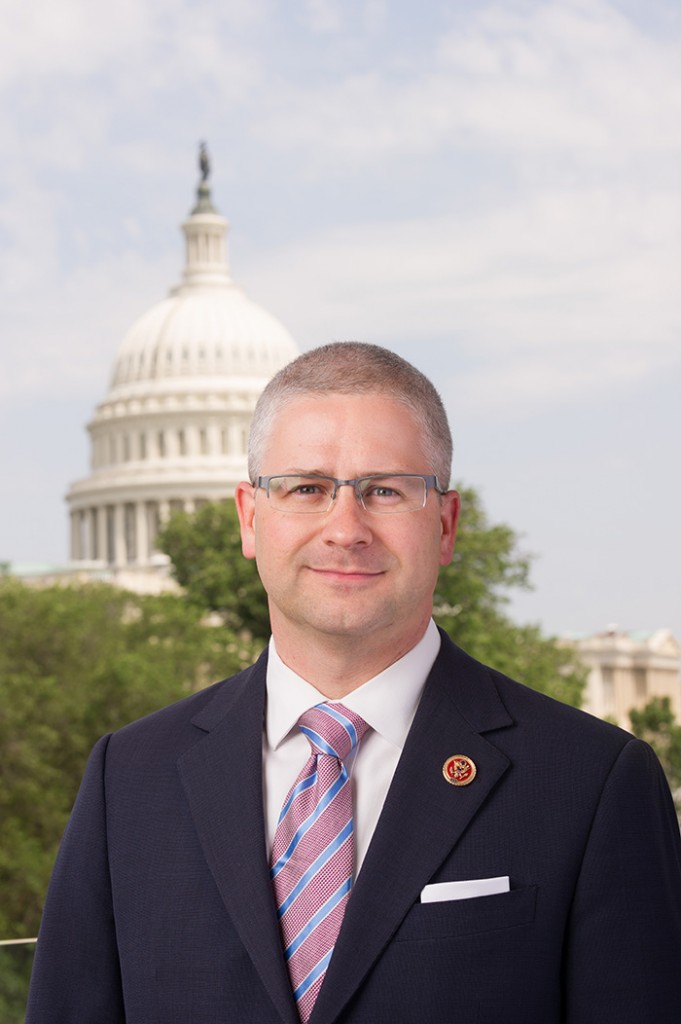
At LendIt last month, Congressman Patrick McHenry (R-NC) said, “Is it any wonder that Fintech has a distinctively British accent these days? It’s good reason. We have regulatory competition around the globe, but we don’t have the right regulatory competition here in the United States. And while we have a patchwork of conflicting, and overlapping, and confusing regulations, in places like the U.K., they’re creating an entire ecosystem of financial innovation and allowing it to flourish. And they become the model for the rest of the world and the intellectual property center for the rest of the globe when it should be here in the United States.”
Forward-looking regulation has helped a nation like Kenya make the movement of money cheaper in their country than it costs to move money here, McHenry said. “They’ve moved generations ahead overnight,” he exclaimed.
If you haven’t seen the video, check it out below:
Or you can read the full text from our transcription of it:
“And thank you all for being here. This is a wonderful celebration on, you know, a stereotypical February or March day here in New York. Cold as can be. Good to be inside. But thank you for taking the time to gather. The work that you’re about improves the American economy, gives more options for my constituents and for the citizens across this great country of ours, and gives them better options and opportunities to make decisions for themselves and put power back into their hands in a very competitive environment.
In fact, it’s really liberating to be out of D.C. especially at moments like this. You don’t know what the latest news story is gonna be or the latest tweet, so good to talk about something meaningful over the long run. And the reason why I’m here is because my focus legislatively has been around utilizing technology for innovative forms of finance.
I came about this in a very simple way that’s relatable to other people. But you know, the idea of Fintech, in 10 years, in 20 years, the term “Fintech” will be scoffed at kind of the way that we scoff at how they described Amazon 20 years ago. They said it was an e-Commerce site, that it was a webpage. Right? And we laugh at people that would describe it that way today. Every company that’s in the retail space has an e-Commerce site. Everyone is competing in this new form that Amazon represented the new wave of 20 years ago. So, the term “Fintech” may be much like referring to something as not a website, but a webpage. And in time, the way people are interacting with the banking system is going to continue to change in fundamentally different ways.
 It’s exciting to think about how consumers and small businesses across America are gonna find these new ways to access capital over the next generation. And you all are at the forefront of that. And at D.C., I’ve tried to lead the change of that change in mindset. And you know, this is not only about helping Fintech companies, but also about fundamentally altering how regulators interact with innovative companies. And so, the focus on lending, helping families access capital as I said in the beginning, I came to it in a very natural way.
I saw my father start a small business as a child. When I was a child, the youngest of 5 kids, I saw my father start a business in the backyard mowing grass. Very simple, relatable thing. Most of us have mowed grass at some point in our life. And my father started that small business in our backyard and he used the great financial innovation of his time to buy his second piece of equipment, which he put on a MasterCharge. Great financial innovation and that helped him start a small business.
Now, that small business didn’t change the world, but it changed my brother’s and sister’s lives and put the 5 of us through college. That’s a meaningful thing and that is the American dream as my father defined it and as I define it. Now, that’s not creating Facebook. It’s not this other sort of revolution of internet technology, but it certainly made a huge difference in our community and for our family.
So, how did we utilize technology and help those small businesses like my father access and grow? The plight of small business in America though right now is real. The next generation of small business owners are struggling to get off the ground. The facts are that small business loans used to make up a majority of bank balance sheets. Now, 20 years— Well, in 1995, they were majority of the bank balance sheets. Now, it’s 20% of bank balance sheets.
Now, you also see small town America, which used to lead the country in small business starts, small counties, small communities across the country have lagged. So, smaller counties used to lead the nation in new businesses even as late as the 1990s, mid `90s. But just in this decade alone, small counties have lost businesses. U.S. counties with 100,000 people or fewer residents lost more businesses than they created. We see stagnation among small business owners and small business starts. This is why Fintech is so vital and so important. Technology is the only way to ensure that we spread and democratize capital outside of Austin, Boston, Silicon Valley, and New York.
How do we get the rest of the country, small town America, and even the urban areas that don’t get the focus and attention? And so, I think the power of harnessing big data is gonna fundamentally change the way we look at debt. It’s already happening. And you’re the leaders of it. Instead of relying on the credit score, which was a great innovation in the 1970s, fixed the problem in the 1970s, today, companies are using big data to better understand who will and who should qualify for loans. And what we’re discovering is that the way we help people out of debt is by understanding the data behind the debt.
Look at the way technology is fundamentally changing lives and places like Kenya. Think of this. In Kenya, the phone, your smartphone, our smartphone is that way to financial inclusion in Kenya. The movement of money cheaper in Kenya than it is here because of this simple device. It’s more powerful in that jurisdiction than in ours because of regulation and forward-looking regulation. And instead of loading buses filled with luggage that’s filled with cash in moving money in Kenya, they’re now doing it through a fast transfer over their mobile device. They’ve moved generations ahead overnight. And in fact, in many ways, they’re leading the world in Fintech deployment. So, we’re living in a new and exciting era in financial services. It’s actually matched the best interest of consumer protection with the demands of global smartphone-led revolution that we, as consumers, are driving. Now, that’s what’s happening in the real world.
So, let me translate back to you what is happening in the analog world of Washington. D.C. The regulatory challenges of Fintech are real. It’s major in Washington. We have a diversity of regulators. That’s certainly part of our American system. And that’s not gonna change any time soon. So, what is the current landscape? If you are in Fintech and you wanna make sure you’re complying with financial laws and regulations, where do you go? Who do you ask? Who do you talk to? Is there an open door in Washington? Do you know who your regulator is? Do you know who your regulator should be? Do they meet with you? Are they willing to meet with you? What’s your legal and compliance cost before you even get a product hashed out? These are major things you have to wrestle with in starting your businesses or growing your businesses. So, believe it or not, the difficult question is who do you talk to in Washington? And there is no simple answer. And because there’s so little clarity on which regulator to go to, often there’s even less clarity of how the underlying laws or regulations are being enforced by that regulator in this new marketplace.
And so, this is the hidden secret of Washington. The regulators themselves are so behind when it comes to understanding technology that they themselves do not really know how to apply regulation to innovations in Fintech. They just simply do not know. And trust me, I realize this as a legislator. 5 years ago, I helped craft what is called the JOBS Act. I wrote a piece of the JOBS Act. It resulted in 14 pages of legislative text around investment crowdfunding. 14 pages of legislative text. 3 years later, the Securities and Exchange Commission wrote 700 pages of regulation around my 14 pages of law. And if you are all involved in investment crowdfunding under Title 3 of the JOBS Act,— three of you, right— there will be a lot more had they written good regulation and actually complied with the mindset of Congress when we passed the JOBS Act.
So, I see this when regulators don’t actually know how to meet the demands of innovation and what’s happening in this information revolution that we have. And so, as a result, America is actually falling further behind the rest of the world. And unlike other areas of the world, which have created regulatory sandboxes for banks and technology companies to innovate and find a light-touch regulation, here in Washington or there in Washington, regulators are struggling to adapt.
And is it any wonder that Fintech has a distinctively British accent these days? It’s good reason. We have regulatory competition around the globe, but we don’t have the right regulatory competition here in the United States. And while we have a patchwork of conflicting, and overlapping, and confusing regulations, in places like the U.K., they’re creating an entire ecosystem of financial innovation and allowing it to flourish. And they become the model for the rest of the world and the intellectual property center for the rest of the globe when it should be here in the United States.
Well, while we’re all trying to figure out whether or not virtual currencies are more like property or money here in the United States, top countries around the world are using digital currency to move payment platforms overnight, change payment platforms, make it cheaper, more affordable to move funds for the smallest and the biggest. So, while the world’s rapidly adopting new financial technology to expand the middle class, our country’s regulators have created capital deserts here in the United States in rural and in urban areas. We understand the notion of an urban food desert. If you can get good food that is close to your home in an urban area, you can actually feed your children wholesome meals. We understand that. That’s a big discussion. Well, likewise, we’re starving off small business innovators in urban areas and let’s say less desirable zip codes in urban areas and less desirable zip codes in rural areas. And so, we’re starving off opportunity and that has a result in small business starts and the rise from the turn in the economy from those that are living on the margins to those that move up to the upper middle class and upper class based off being starved from capital.
We have to fix that. Fintech is the solution, but the regulation has to change. And that is something that I’ve been focused on over the last 6 years. And I think we have a trilogy of good ideas that I would submit to you this morning. First is let me just tell you my mindset in regulating and legislating. And to borrow from startup culture, the bills that I try to focus on are minimal viable bill. It’s a simple idea.
One idea that focuses on solving a discrete problem. Something in the marketplace that needs a regulatory fix in order to flourish. And it will help the greatest number of people and have the greatest impact on tech companies, bank startups, and small business folks and families. So, looking at the headache test, one of the areas of interaction with the government that’s creating unnecessary delay is the IRS not having a piece of technology that will allow people to verify income data.
And so, as a result of that, I’ve — legislation that is called the IRS Data Verification Modernization Act, 45060 for those of you who are in the game on this, but it simply will do this. It will automate a bottleneck manual process that is utilized via e-mail and fax with the IRS in verifying basic information that you, as lenders, need to allow mortgages, student debt, refinancing, and small business loans. It’s the taxpayer’s information. You pay for the service to verify it. We should have better service rather than the shoddy service IRS is currently giving you. You should be able to get this in an instant with an API rather than getting something faxed to you in 7 to 10 days. It’s absurd that the IRS can’t update and we’re gonna force them to update.
Our second bill, it goes directly to returning consistent uniform systems for our capital markets, which I believe is a fundamental thing in our 50-state regime with a variety of regulators. We have to have some base level of understanding on what is valid. And the bill is simple. It codifies the Valid-When-Made Doctrine that we’ve had in this country for nearly 100 years. And that was an established legal precedent prior to the Second Circuit Court’s decision in the Madden case. Madden versus Midland. And our view is the Second Circuit’s opinion was unprecedented. It’s created uncertainty for Fintech companies, banks, and the credit markets; making credit less available and more expensive. So, the simple fix is returning to the Valid-When-Made Doctrine. Congress under our constitutional system has the right to make this very clear to the courts of our intention when we pass the original law and nothing has changed when it comes to this. And this is the second bill that I’ll be pushing this year.
And finally, a third piece of legislation that is broader in discussion and it’s the Financial Services Innovation Act. This bill creates a new paradigm for regulators in Washington. It says in a first of a kind way, it forces regulators to meet the demands of rapid innovation in financial services. Instead of the old analog version of command and control regulation that’s messy and rigid based off of opinion, not fact, my bill requires agencies of jurisdiction to create offices of innovation that will engage with entrepreneurs and provide a regulatory on-ramp for financial innovation. It basically forces all the regulators, all the financial regulators to create a new door for financial innovation. A welcoming door. Come in with your ideas. Let’s talk about regulations that can enable this technology to flourish. And in getting data in return, the agency would be in permanent beta testing mode, which would give them data to prove out consumer benefit or consumer harm. It will give them data to adopt the whole footprint of regulation in all these financial regulators.
Now, that is a major mindset shift for our financial regulators, a major mindset shift for any regulator in our American system of governance. But with thorough analysis, I believe that innovators will be better off in this regime when you have data that is driving the decision making of regulators and regulators driving decisions that are informed rather than opinion based.
Now, saying that we’re gonna base our politics off of fact these days is its own enormous political challenge, but I think it’s important that we all agree facts are important things and we should base our decision-making solely on that set of facts in order to do the right thing for our country, the right thing for our economy, right thing for families, right thing for small business starts. So, permanent beta testing involves continuously evolving, testing, and proving. It’s what you do everyday as innovators.
Now, those are 3 major pieces of legislation that can have an impact, but the mindset in Washington is much— Well, it’s much different than you might think. Legislators are eager for new ideas, for new information. They’re eager to hear what you are about and what you’re doing. And given the nature and the speed of innovation, you have an obligation to be engaged in Washington. If you’re not engaged in Washington, Washington is still gonna be engaged in what you do. You’re just gonna get worse rather than better. So, if you inform decision makers you have data to backup what you’re expressing, what you’re advocating for, we’re gonna be better off, but you all in your pitches, right, have to— The basic startup pitch, you’ve got to answer one question. Why now? Why now? I think American financial innovation is at an inflection point. I really do. We’ll either lead the world in the next few years or we’re gonna be left behind. It’s our choice. It’s our choice. And it’s time that regulators treat innovation no longer as a threat, but as an opportunity to consumers. It’s time to recognize that regulators need to recognize— I think it’s time that they recognize that consumer protection and innovation are not mutually exclusive. Now, that’s the reason why it’s now, but it’s not gonna happen unless you engage in Washington and make your voices heard. You’ve gotta make your voices heard in order to get the results we need so we can have innovation flourish in this country, that we can be the market leader for the world, that we can be an exporter of these ideas rather than having to export ourselves to different markets in order to take that data and that mindset and deploy those resources globally.
Let’s make sure that we can lead this market to better and greater things. With your engagement, we can. Without your engagement, we’re gonna be left behind. So please, please engage in Washington. Make your voices heard. And with your voices being heard, I think we can have change for the better. So, thank you for your leadership. Thank you for the opportunity to be here with you. God bless.”