Building a High-Trust Lending Platform in a Low-Trust Environment
Richard Henderson is the Chief Executive Officer of BriteCap Financial, a technology-enabled small business capital platform that has deployed over $1 billion to support American small businesses. He brings more than two decades of leadership experience in financial services and small business lending, with a track record of driving growth, strengthening operational discipline, and leading strategic transformation. Prior to BriteCap, Richard served as Chief Revenue Officer at CAN Capital and held senior leadership roles at Marlin Capital Solutions and CIT Bank.. Learn more at https://www.britecap.com
Let’s start with something most people in this industry understand but don’t always say clearly: The barrier to entry into the revenue-based financing space is relatively low. That’s true for brokers. It’s also true for funders.
And that matters. Because when barriers are low, standards tend to vary. A lot.
There are exceptional operators in this space—on both sides. I’ve met and worked with many who actually care about their customers, about building real relationships, and about seeing their businesses and customers thrive long term. There are also aggressive players. Some cross lines; some don’t even realize they’re crossing them.
Over time, the market reflects all of it: Borrowers come in skeptical. Good brokers feel like they have to defend themselves, funders feel the same, and an entire industry gets lumped together. And when viewed as a whole that way? The industry doesn’t look that great.
That’s the environment.
The Scaling Problem
In my experience, most businesses in this industry don’t break because of bad intentions. They break when they scale.
A great broker or funder can run a clean, high-integrity operation as an individual or small team. But what works at 1–5 people doesn’t automatically work at 25, 50, or 100.
Why? Because standards that live in someone’s head don’t scale. They have to be explicit, operationalized, and enforced. If they’re not, small decisions start to drift:
• Deals are framed a little too aggressively.
• Details are left out because they “probably won’t matter.”
• Customers are pushed a bit further than they should be.
Nothing dramatic. Until it compounds.
Where Things Actually Go Wrong
Let’s talk about something real.
There are cases where a business owner takes a loan, then quickly gets stacked—sometimes multiple times—with compounded payments outstripping cash flow. In the worst cases, that same customer ends up being referred into a debt settlement situation by the same bad actor who just keeps getting paid. This happens at the expense of the customer we’re all supposed to be trying to help, not harm.
They’re over-leveraged, their credit is damaged, and their access to capital is effectively shut down for a long time—if not permanently. Or worse, it turns a business owner into a former business owner.
That’s not a one-off issue. It’s a structural vulnerability. And here’s the uncomfortable part: Without the right controls, well-meaning organizations can participate in that outcome without even realizing it. It just takes one bad actor within your organization.
Intent isn’t enough.
The Foundation: The Big Three
If you want to build a high-trust platform, you have to start with alignment. At BriteCap, we’ve distilled our model into three non-negotiables:
• A strong business model that delights customers profitably.
• A sales system that ensures customers are delighted consistently and predictably.
• A high-performing talent environment that drives excellence and ownership.
If your business model depends on outcomes that hurt the customer, it will fail in the long run. If your sales system isn’t consistent, the experience will drift. If your talent environment doesn’t reinforce awareness of your vision and accountability, none of it holds.
Then You Build the Controls
Trust doesn’t scale without structure. We’ve invested heavily in making sure ours does:
• Achieving SOC 2 Type II certification.
• Participating in the Secure Funder program.
• Implementing continuous inspection of vulnerabilities across our systems and processes.
And just as important: ownership. Our Chief Administrative Officer & General Counsel and our Chief Technology Officer actually own governance, compliance, and operational controls as mission-critical mandates. This is not a back-office function. It’s core to the business.
You Also Decide Who You Work With
This is where I’ve seen many platforms compromise. We don’t. And neither should you.
We run a highly selective, by-invitation-only broker and overall partner acquisition strategy. We set a very high bar for whom we’ll invite into (and allow to stay in) our ecosystem. When that standard isn’t met, we act quickly.
We walk away from brokers delivering or promising to deliver million-plus per month origination volume. That’s not theoretical; we’ve done it. Because once you let standards slip, they don’t come back.
That includes a clear stance on something that’s become increasingly common: We do not work with brokers who sell debt settlement services. Not because we don’t understand the economics, but because we understand them too well. It creates a structural conflict that almost always ends the same way for the customer. That’s not a system we’re willing to be part of.
Culture and Incentives Drive Everything
You don’t get high-trust outcomes from low-trust incentives. If your organization is purely volume-driven, behavior will follow.
We focus heavily on alignment: what we reward, what we tolerate, and what we reinforce. Our Guiding Principles act as absolute operating constraints:
• Truth-Seeking and Radical Transparency: We deal in reality.
• Ethical Decision-Making: No shortcuts, no cutting corners.
• Building a Culture of Purpose and Connection: People perform at their best when they understand what they’re building, why it matters, and how their actions impact others.
That alignment is what keeps standards high as you scale. And underneath all of it: Trust is our most valuable asset.
Technology Is Necessary—But Not Sufficient
We believe the borrowing experience should be ridiculously fast, smooth, and predictable. Technology gets us there, but technology doesn’t create trust. It amplifies whatever is already there.
If your system is disciplined, technology scales discipline. If it’s not, it simply scales problems faster.
What This Means for Brokers and Funders
If you’re building in this space, the challenge is simple—and hard: Can you maintain your standards as you scale?
That means making expectations explicit, aligning incentives with outcomes, building real oversight, and acting quickly when something isn’t right. The operators who figure that out will stand out.
The Long Game
At BriteCap, we’re building for the long term with an epic journey to number one. That’s not about being the biggest. It’s about building something that holds together at scale, delivers consistently, always keeps our customers’ best interest at the center, and earns trust over time.
In a low-trust environment, that’s the opportunity. Not to move faster than everyone else, but to build something better.
Bottom Line
Trust doesn’t break all at once. It erodes—through small decisions, unclear standards, and misaligned incentives.
The inverse is also true. Trust is built the exact same way: clear expectations, disciplined systems, aligned people, and consistent decisions. Every single day.
Do that long enough, and you’ll have built yourself a high-trust lending platform in a low-trust environment. And if enough of us do it long enough, we’ll create a high-trust, mainstream funding mechanism for small businesses. That is good for all of us.
Last modified: July 7, 2026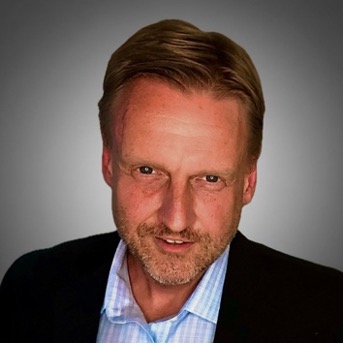
Richard Henderson the Chief Executive Officer of BriteCap Financial, a technology-enabled small business capital platform that has deployed over $1 billion to support American small businesses. He brings more than two decades of leadership experience in financial services and small business lending, with a track record of driving growth, strengthening operational discipline, and leading strategic transformation. Prior to BriteCap, Richard served as Chief Revenue Officer at CAN Capital and held senior leadership roles at Marlin Capital Solutions and CIT Bank.. Learn more at https://www.britecap.com