
A Path Forward to do More SBA 7(a) Loans
 “We just saw the SBA’s final year end numbers, and the [7(a)] loan count fell over 27%, the volume is down about 12% and ironically, the average loan size is up by 21%,” said Chris Hurn, CEO of Lendesca. “Well, that’s probably a direct result of ‘it’s not as easy and simple to make these small loans like it was in the recent past.'”
The shift follows changes the SBA announced last year to reduce default rates, including a return to more conservative underwriting criteria for smaller loans. As average loan sizes have increased, the agency has also sought to raise the maximum loan amount from $5 million to $10 million.
Other changes may have contributed to the decline in lending, including the new 100% citizen ownership requirement and economic uncertainty surrounding the tariff debate earlier in the year. For businesses already using merchant cash advances or factoring, changes to the SBA’s refinancing rules have further complicated access.
The SBA initially made those obligations ineligible for refinancing with an SBA loan. Its new SOP, effective October 1, reopened a path for merchant cash advances, but only after a business refinances the advance into a term loan and makes payments on that loan for two years.
“When the original SOP came out and said ‘you couldn’t use SBA 7(a) debt to refinance an MCA,’ I felt like that was a bit misguided because, candidly, you were taking away one of the few lifeboats that’s out there for folks who are trying to get off that hamster wheel,” Hurn said.
Hurn believes the revised guidance gives those businesses a route back to SBA financing while creating an opportunity for non-SBA lenders to provide the term loan that bridges the two.
“Wait the 24 months, and then hopefully they’ll be eligible to be taken out by an SBA 7(a),” he said.
That route, however, begins after a business has already taken on an MCA. Another way to address the problem is to make SBA financing accessible earlier, before a business turns to faster, higher-priced funding. For Hurn, that means shortening the application and approval process while meeting the program’s requirements.
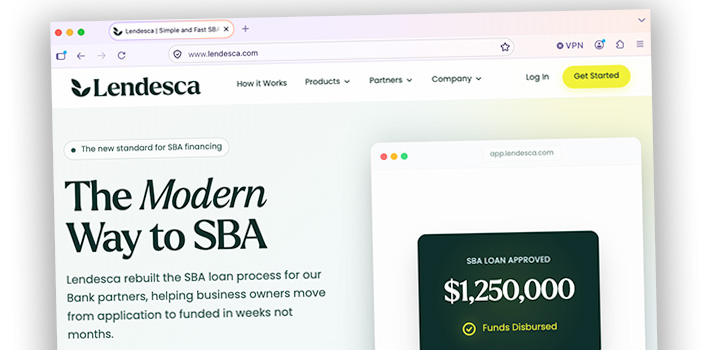 That is the work Lendesca is pursuing as an originating Lender Service Provider. Hurn has all the experience required. He previously founded and led Fountainhead.
“We actually have multiple bank clients—soon to actually have some non-bank clients as well, who hire us to not only do the traditional LSP services but also predominantly to do the origination,” Hurn said. “Whereas that funding source, that balance sheet has the final say, and they’re the lender of record, of course. But it’s really kind of bringing a true fintech sponsor bank type partnership into the government guaranteed lending arena.”
Using Lendesca’s technology, Hurn said, the company can move from an initial conversation with a prospective borrower to an automatically generated conditional approval letter in less than two hours.
“It can actually even take less [time] if, in fact, we’ve timed it right,” Hurn said. “And the loan summary gets to our credit people as quick as possible. And I don’t think that’s ever been done before in the SBA space.”
 The initial call is recorded, automatically transcribed and analyzed, with information from the conversation incorporated into the credit memo. Borrowers and referral sources can then upload supporting documents.
“Then we allow our borrowers or brokers, referral sources to drag and drop the preliminary information that we need,” he added. “These are things like the personal and the business tax returns, the interim financials, personal financial statement, debt schedule, use of proceeds, things of this nature, basic stuff. Drop and drag that in.”
Lendesca’s business development team reviews the material and makes any necessary edits.
“…taking all that data and pushing it through to an SBA-compliant credit approval memo is another big factor in how you shorten the timeline for an SBA loan,” he asserted. “So that’s actually the tech that we’ve developed.”
For Hurn, the value of that speed extends beyond Lendesca’s own operations. It could make 7(a) financing a more practical first choice for businesses whose funding needs cannot wait.
“I think that’s going to be a good thing for the economy because back to what we were talking about before, you’re going to see more and more small businesses if they can get access to the capital quicker, then that solves their funding needs and they don’t have to take much higher priced financing just because it was more expedient to get it through MCA or perhaps some other non-SBA option,” Hurn said.
Last modified: October 13, 2026
Sean Murray is the President and Chief Editor of deBanked and the founder of the Broker Fair Conference. Connect with me on LinkedIn or follow me on twitter. You can view all future deBanked events here.